Starting a microgreens business brings immense mental challenges; cultivating resilience, persistence, and a growth mindset that embraces innovation enables entrepreneurs to achieve sustainability. Aligning to purpose, setting goals, building strategic relationships, and maintaining positive cash flow are vital activities that strengthen the founder’s mindset to withstand the pressures of managing an emerging venture.
Funding a microgreens business involves exploring diverse options such as microgreen grants, USDA microloan rates, and urban agriculture grants. The most important activities include creating a detailed microgreens business plan, understanding the microgreens setup cost, and seeking specific grants like the USDA urban agriculture grants 2023. Often, new farmers overlook the availability of specialized resources like the USDA urban agriculture toolkit, missing opportunities to secure essential microgreens farm business financing.
To finance a microgreens farm, thoroughly assess personal and business finances, build conservative revenue projections, determine break-even volumes, secure financing through grants, loans, and creative strategies, tightly control costs and cash flow, mitigate risks and leverage experienced advisors. Critical oversights are personal finances, creative financing, break-even analysis, cost control, and contingency planning.
Evaluating a microgreens business using the business model canvas involves assessing the nine key areas: customer segments, value proposition, distribution channels, customer relationships, revenue streams, key resources, key activities, partner network, and cost structure. It’s crucial to regularly review and adjust these elements based on market feedback and business performance. It is essential to be adaptable and continuously learn in this process.
Creating a microgreens business model canvas involves defining nine key components: customer segments, value proposition, distribution channels, customer relationships, revenue streams, key resources, key activities, partner network, and cost structure. It is vital to regularly update the canvas to reflect evolving business strategies and market conditions. This tool is a dynamic blueprint for your microgreens venture, guiding decision-making and strategic planning.
To find your customers for a microgreens business, conduct comprehensive market research to understand local and global consumption trends. Identify the health and culinary benefits driving demand. Analyze local buying trends and competitor offerings. Segment your target customers based on demographics, psychographics, and buying behavior. Understand their needs, preferences, and pain points.
Creating a microgreens marketing plan involves identifying your target market in your locale, understanding the demand for microgreens, conducting competitive analysis, and developing a unique selling proposition. Considering the pricing strategy, distribution channels, and promotional activities is crucial. Pay close attention to the importance of continuous market research and adjusting the plan based on feedback and market changes.
The most potent phytonutrients in microgreens include vitamins A, C, E, and K, beta-carotene, allicin, polyphenols, carotenoids, flavonoids, phytoestrogens, and glucosinolates. These nutrients are crucial in promoting eye health, boosting immunity, enhancing bone health, and providing antioxidant protection, making microgreens nutrition a vital component of a balanced diet.
Kale microgreens are astoundingly teeming with vitamins: K (325%), C (103.78%), A (26.78%), B2 (26.69%), B6 (11.31%), and B9 (15.50%). They are just rich in calcium (25.40%), iron (20%), potassium (10.24%), and manganese (40%). In addition, they provide lutein, zeaxanthin (104.33%), moderate fiber (10.79%), and all 9 essential amino acids. They are a potent superfood for overall wellness.
Humble lettuce microgreens are a silent powerhouse of vitamins K (105% RDI), A (41.11%), and C (10.22%), lutein + zeaxanthin (28.83%), and manganese (10.87%). They contain 18 20 amino acids in small quantities, including all 9 essential ones. The high levels of antioxidants in lettuce microgreens, particularly beta-carotene, boost the immune system, promoting eye health and reducing the risk of chronic diseases.
Clover microgreens, Trifolium repens, are a nutritional powerhouse, rich in vitamin K (90.6% RDI) and essential minerals selenium (516%), chromium (158.0%), and iron (97.8%). They also contain potent bioactive compounds, including phenolics and flavonoids, and isoflavones, a phytoestrogen type, with antioxidant properties. Consuming clover microgreens can boost immunity, improve bone health, and reduce oxidative stress, contributing to overall health and wellness.
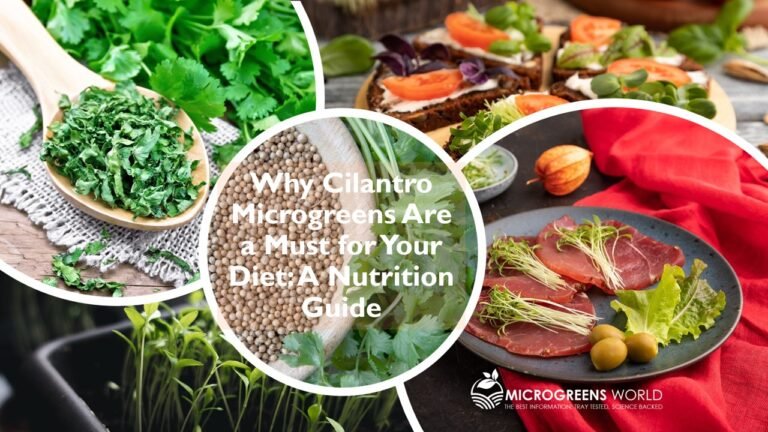
Cilantro microgreens are a tremendous source of vitamin K (258.33%), good for kidney function. They are also good sources of vitamins A (37.44%), B-Complex, C (30%), and E (16.67%), and provide moderate dietary fiber (10.00%), and essential minerals copper (25%), potassium (11.09%), and manganese (18.52%). Cilantro microgreens are well known for their high levels of lutein and zeaxanthin (14.42%), which are beneficial for eye health.[5] They are also rich in carotenoids (three times more than mature cilantro leaves [4]), including beta-carotene (21.83%), a fat-soluble antioxidant crucial for organ function and cellular structure protection.
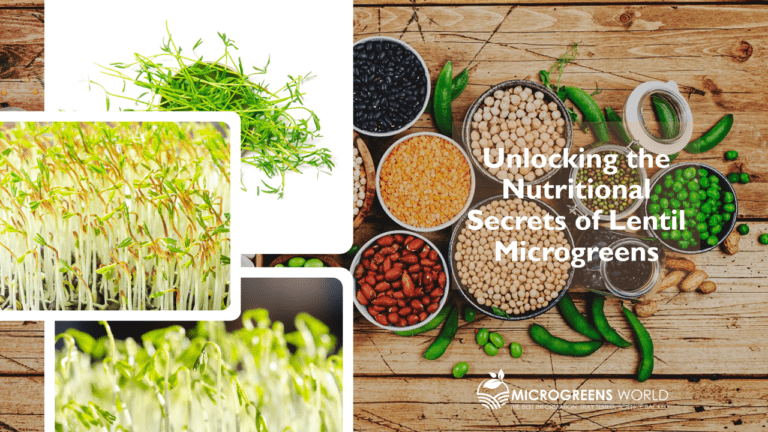
Lentil microgreens are impressive muscle-building plants. Vitamin C (18.33%) and a robust B-complex provide for cell and blood health, energy production, and other essential body systems. They are rich in protein (17.92%), boasting 17 of the 20 amino acids and 8 of the 9 essential ones, including leucine (0.63g), arginine (0.61g), and serin (0.50g). The array of minerals also supports bone and skeletal health, iron (17.83%), phosphorus (13.84%), zinc (13.73%), copper (39.11%), and manganese (22.00%).
Sorrel microgreens are rich in essential vitamins C (53.33%) and A (22.22%), with moderate amounts of minerals iron (13.33%), magnesium (24.52%), copper (14.56%), and manganese (15.17%). In addition to vitamins and minerals, sorrel microgreens are a rich source of antioxidants having eight of the nine essential amino acids, only lacking in tryptophan. It is also a moderate source of fiber (10.36%).
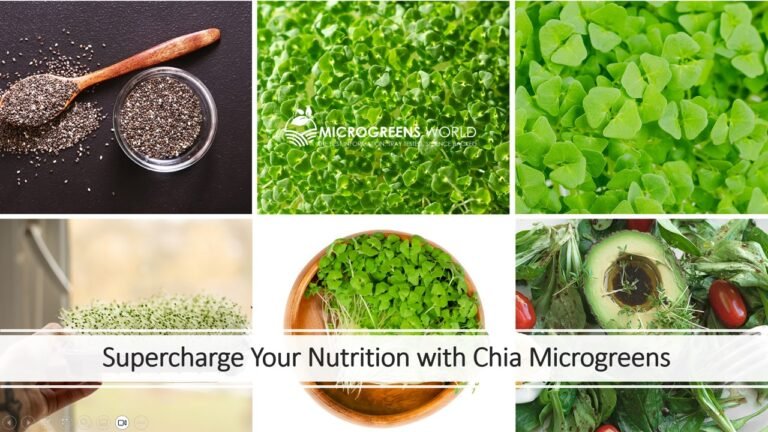
Chia microgreens are nutrient-packed, containing all 18 amino acids, 23.7g of omega-3 fatty acids, vitamins thiamin (B1), niacin (B3), and more than 100% daily fiber. It is a mineral storehouse containing calcium (48.5%), iron (42.9%), magnesium (79.8%), phosphorus (68.8%), zinc(41.6%), and more than 100% of the daily recommended value of copper (102.7%), manganese (118.3%), and selenium (100.4%).[1]
Chicory microgreens are a nutritional powerhouse, rich in vitamins A, B5, B9, C, and K, and essential minerals copper and manganese. They also contain high levels of antioxidants, including beta-carotene and phenolic compounds, lutein, zeaxanthin, Isoleucine, and arginine. These nutrients contribute to several health benefits, including boosting immune function, promoting bone health, and combating oxidative stress, reducing the risk of chronic diseases.
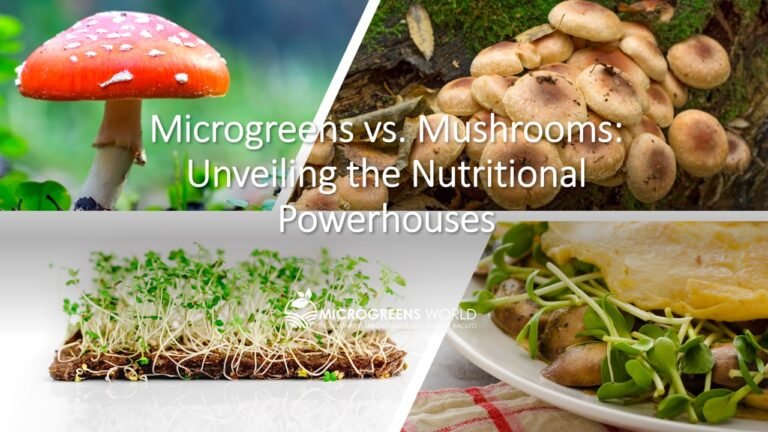
Microgreens and mushrooms, both nutrient-rich and versatile, are grown in controlled environments with a short growing period. Microgreens, young vegetable and herb seedlings, have a mild flavor and short shelf life. Mushrooms, fungi growing on organic matter, have an intense flavor and longer shelf life. Preparation and shelf life differ significantly.
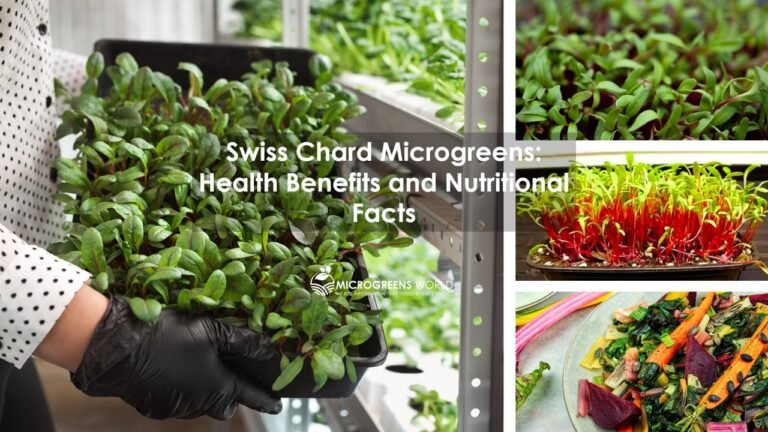
Experience the nutritional power of Swiss Chard Microgreens! Packed with vitamins & minerals, they boost your health & wellness. Learn more in our post.
Organic microgreen farming uses certified organically pathogen-free seeds, no synthetic chemicals or pesticides, follows good agricultural practices (GAP), and the resulting microgreens have increased nutrient content, reduced risk of contamination, and better taste. Some examples of microgreens that can be grown organically include broccoli, kale, radish, and arugula.
Borage microgreens are nutrient-dense, rich in vitamin C, gamma-linolenic acid (GLA), and antioxidants. Vitamin C supports immune function and skin health. GLA, an omega-6 fatty acid, has anti-inflammatory properties and supports heart health. Their antioxidants protect against cellular damage.
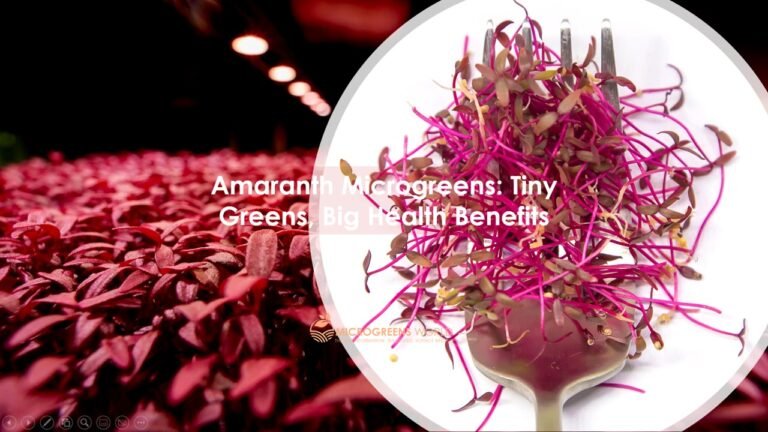
Amaranth microgreens are rich in Vitamin K, Vitamin C, and iron, which are crucial for blood clotting, immune function, and red blood cell production, respectively. They also contain protein, essential for tissue repair. Health benefits include enhanced immune function, improved bone health, and better digestion due to high fiber content.
Growing microgreens in low light conditions involve selecting light-tolerant varieties, such as kale or mustard, and providing supplemental light if necessary. Optimal light conditions for microgreens generally range from 50 to 200 µmol/m²/s, but these plants can adapt to lower light intensities.
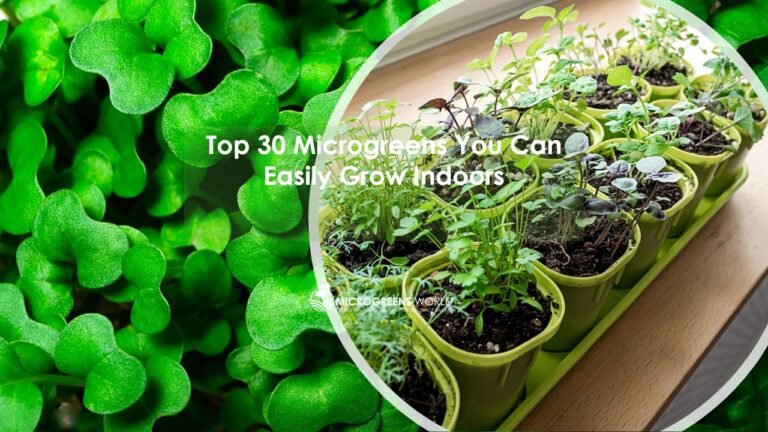
The top 30 microgreens you can easily grow indoors include radish, broccoli, arugula, kale, beet, sunflower, pea, basil, cilantro, and mustard greens. Grow these microgreens for their ease of cultivation, nutritional value, and flavor profiles. They can be grown in small containers, require minimal care, and are ready to harvest within 7-21 days, providing a continuous supply of fresh, nutrient-dense greens in your home.
Starting a microgreens business presents challenges such as ensuring optimal growing conditions, managing pests and diseases, handling the delicate harvest process, and navigating market demands. However, these hurdles can be overcome with proper planning, education, and persistence, leading to a profitable and sustainable microgreens business.
When you visit any web site, it may store or retrieve information on your browser, mostly in the form of cookies. Control your personal Cookie Services here.
For perfomance reasons we use Cloudflare as a CDN network. This saves a cookie "__cfduid" to apply security settings on a per-client basis. This cookie is strictly necessary for Cloudflare's security features and cannot be turned off.
__cfduid
These cookies allow us to count visits and traffic sources, so we can measure and improve the performance of our site.
Meet Doc Green—your intelligent guide to the science of microgreens. Search smarter, review faster, and interact directly with 2,000+ papers using AI-powered tools built for researchers, growers, and educators.
If you’re serious about microgreens. No more wasted time. No more guesswork.
The calculator shows you the numbers. This Playbook tells you what to do with them. It’s a complete guide to turning your data into dollars and building a resilient business.
Inside this 30-page guide, you get:
The 5 Levers for pushing yields from 1:5 toward a profitable 1:15,
getting more revenue from the same seed cost.
A step-by-step plan for fixing a negative Margin of Safety,
ensuring your business can survive a slow month.
The “Two Hats” method for paying yourself a real salary,
turning a demanding hobby into a real business.
This entire playbook costs less than one failed tray of microgreens. For $9, you are getting a professional framework that can add hundreds to your bottom line.
GET THE $9 PLAYBOOK NOW
If you’re serious about microgreens, this is the easiest way to start.
Includes 15 fast, delicious ways to use microgreens daily.
✔ No complicated techniques. Just real, practical meals. ✔ Breakfast, Lunch, & Dinner options. ✔ Minimal ingredients, maximum nutrition. ✔ Instant digital download. Get started today.
🔹 Not for everyone. This is for people who are serious about microgreens.
Get Instant Access for Just $7 and Join our Weekly Newsletter