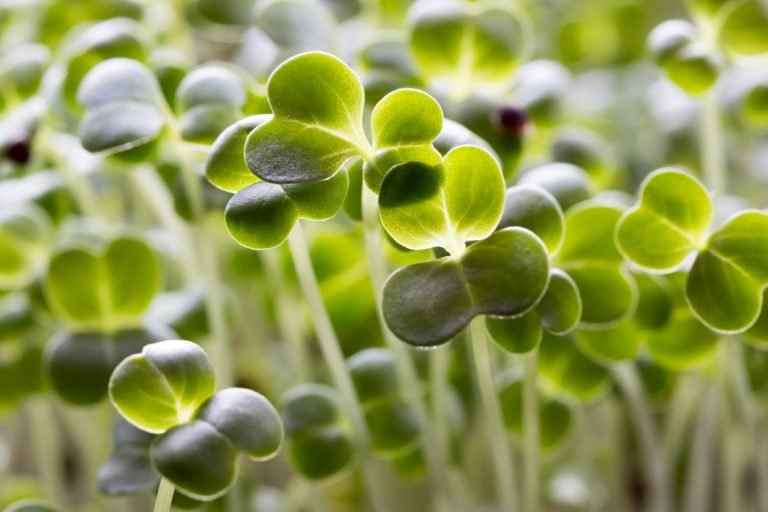
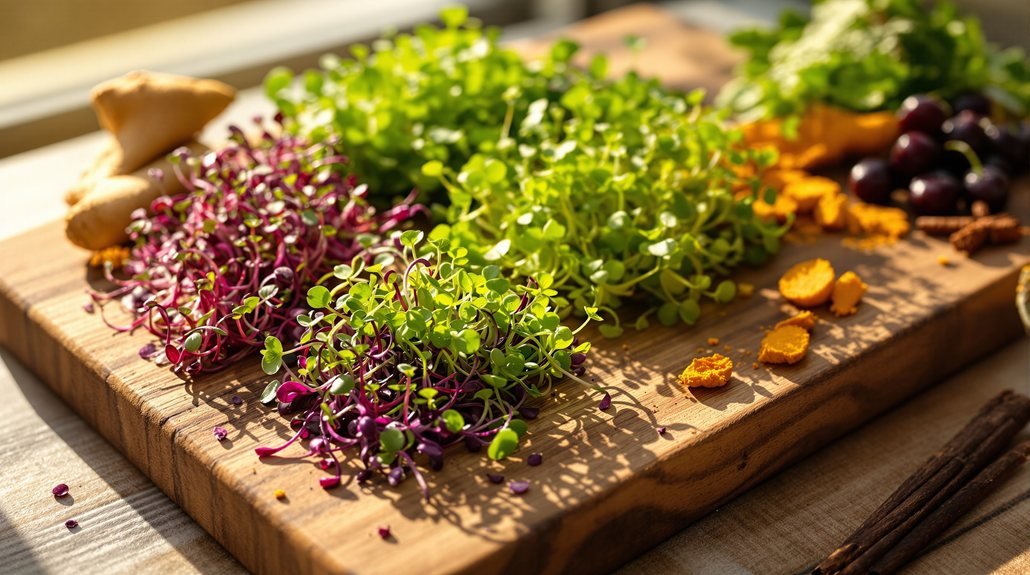
Have you ever wondered how a handful of tiny greens can pack a nutritional punch that rivals their full-grown counterparts?
Join me, Mr. Microgreens, as we journey into the captivating world of microgreens versus sprouts. These miniature powerhouses have been quietly transforming the culinary and gardening landscape, and today, we’ll unveil their secrets.
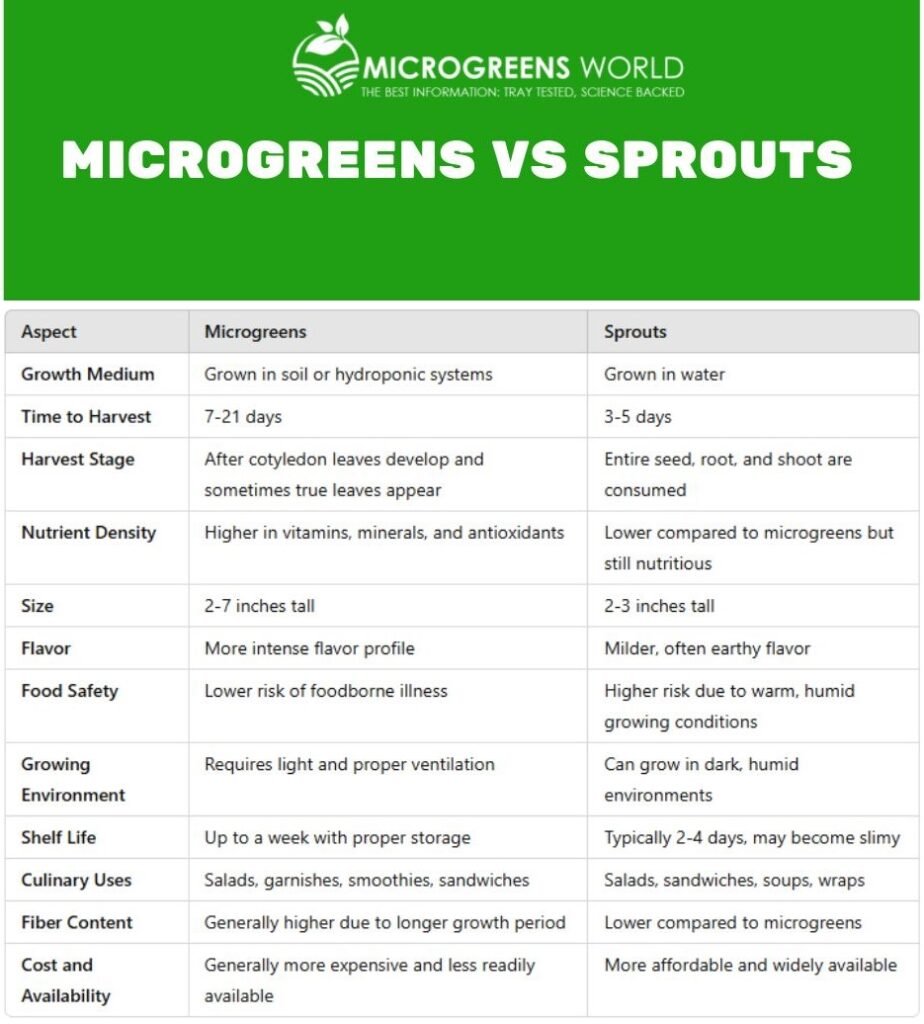
Microgreens, the young shoots of plants, are distinct from sprouts, germinated seeds grown in water. Microgreens require soil or a growing medium and ample sunlight, contrasting with sprouts that grow in low-light conditions without soil. Microgreens are harvested for their seed leaves (cotyledons), first true leaves, and stems. At the same time, sprouts are consumed entirely, including the seed, root, and shoot. That last line is the one that decides most nutritional comparisons between them, because eating the whole plant means eating parts a microgreen harvest leaves behind. Which one comes out ahead depends on the crop and on the compound, and broccoli is where it turns around.
Get ready to discover their hidden potential, learn how to grow them at home, explore creative culinary applications, and make informed choices for a healthier lifestyle.
Let’s dive into the microgreens vs sprouts debate, starting with defining these remarkable greens and unraveling the magic they bring to your plate and garden.
Microgreens vs Sprouts: Key Takeaways
After this extensive journey through the world of microgreens and sprouts, it’s time to recap the significant differences and highlights.
| Nutritional Highlights | Microgreens stand out for their concentrated nutrients, offering abundant vitamins, minerals, and antioxidants. Sprouts, while nutritious, may not match the same nutrient density. |
| Safety Considerations | Microgreens grown in soil or controlled environments generally carry fewer microbial risks than sprouts, which are susceptible to contamination during sprouting. |
| Cultivation Contrasts | Microgreens require soil or growing medium and specific environmental conditions, making them ideal for indoor gardening. Sprouts can be grown in water with minimal light and are a beginner-friendly option. |
From Andrew
Growing it right is the easy half
Glucoraphanin is what the plant stores. Sulforaphane is what it becomes, when the conditions let it.
In the one experiment that measured both ends, the share that made the crossing ran from 8 to 48 per cent, and the only thing that changed was what happened to the leaf on its way to your plate.
You can do everything right in the tray and still leave most of it on your board. So I wrote down the handling: the serving, the two-minute prep, a seven-day plan, the grow-your-own steps, and a fridge checklist.
Eleven pages, seventeen dollars, and your money back if it does not earn its keep.
Educational only, and not a substitute for medical advice.
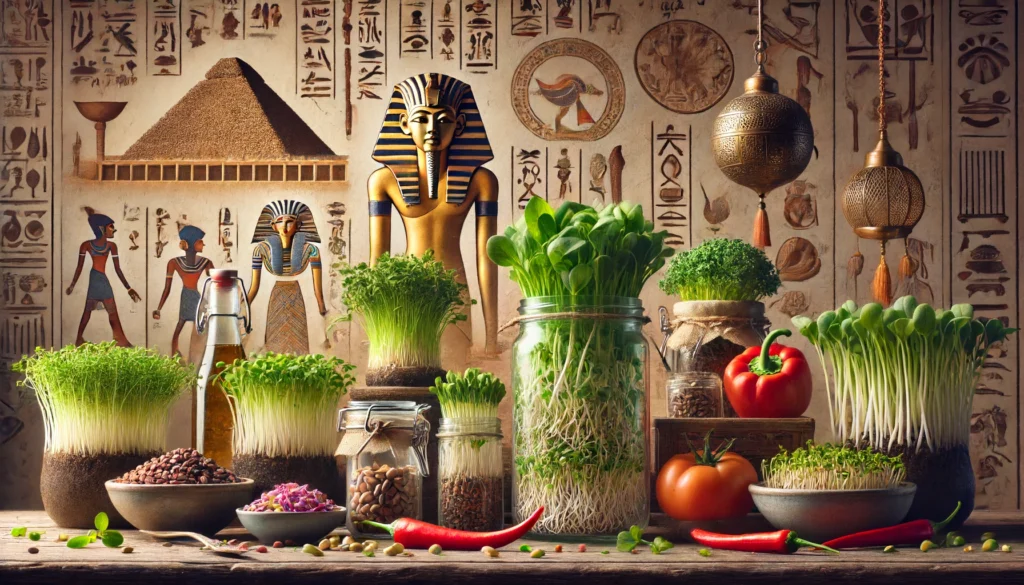
To truly appreciate the present, it’s essential to delve into the historical roots of microgreens and sprouts. These tiny greens have quietly played a role in culinary traditions across various cultures.
Early Uses of Sprouts
Sprouts have a long history, dating back thousands of years. Ancient civilizations, including the Egyptians and Chinese, recognized the nutritional value of sprouted seeds. These ancient cultures prized sprouts for their ability to provide fresh greens even in harsh climates, making them a valuable addition to diets.
The Emergence of Microgreens
While sprouts have an ancient lineage, microgreens are a relatively recent phenomenon. The concept of harvesting vegetable seedlings at such an early stage gained popularity in the culinary world during the last few decades. Chefs in gourmet restaurants were among the first to embrace microgreens for their unique flavors, vibrant colors, and delicate textures.
Cultural Significance
Both sprouts and microgreens have held cultural significance in various parts of the world. Sprouts symbolize renewal and growth in some cultures, often prominently in religious rituals. Microgreens, with their visual appeal and flavor diversity, have found their way onto the plates of food enthusiasts and home gardeners worldwide.

Microgreens have become a sensation in the world of gastronomy and nutrition. These miniature greens are essentially the seedlings of various vegetables, flowers, and herbs, harvested at a very early growth stage, typically within 7 to 21 days after germination. What sets microgreens apart is their impressive array of flavors, vibrant colors, and concentrated nutrients.
Common varieties of microgreens include broccoli, arugula, kale, and basil, to name just a few. Their short growth cycle and compact size make them ideal for indoor gardening, even in small spaces. The intense flavors and textures they offer have made them a favorite among gourmet chefs and home cooks alike.
In contrast, sprouts are the earliest stage of plant growth, where seeds are germinated and grown in water until they develop tiny shoots, roots, and, sometimes, leaves. Sprouting is a relatively simple process that requires minimal effort, making it accessible even to beginners in gardening.
Popular sprouts include alfalfa, mung bean, and radish sprouts, each with a unique taste and texture. One of the distinctive features of sprouts is their crisp and crunchy texture, making them an excellent addition to salads, sandwiches, and wraps.
Now that we’ve defined microgreens and sprouts, let’s compare these two green wonders directly.
Nutritional Content
Health enthusiasts like you and I celebrate microgreens for their exceptional nutritional density. They are packed with vitamins, minerals, and antioxidants that give a potent dose of essential nutrients in small pieces. Research has shown that compared to their mature counterparts, microgreens can contain up to 40 times the nutrient content [1]. It is no wonder that they are a good choice for health-conscious people who want to boost their intake of nutrients.
Sprouts, on the other hand, while still nutritious, may not reach the same level of nutrient concentration as microgreens [2]. Their appeal lies more in their unique textures and versatility in dishes.
Growing Conditions
Microgreens require soil or a suitable growing medium for their cultivation. They thrive in well-lit areas with adequate moisture and temperature control. The growth cycle is relatively short, making them an ideal choice for those looking for a quick gardening project.
Sprouts, on the contrary, do not need soil. They grow in water or a moist environment, and their cultivation process is less labor-intensive than microgreens. This simplicity attracts many beginners to sprouting as it requires minimal gardening knowledge.
Culinary Uses
Both microgreens and sprouts have found their place in the culinary world. Due to their intense flavors and vibrant colors, professional and home chefs use microgreens as garnishes, salad additions, or ingredients in various dishes. They add a burst of freshness and nutrition to culinary creations.
With their crunchy texture and mild, nutty flavors, professional and home chefs use sprouts mainly in salads, sandwiches, and wraps. They provide a delightful contrast in texture and taste, enhancing the overall eating experience.
Stay with us as we unravel the fascinating world of microgreens and sprouts in this comprehensive comparison.
As our understanding of nutrition has deepened, so has our appreciation for the health benefits of microgreens and sprouts.
Key Studies on Health Benefits
Research studies have illuminated the remarkable nutritional profiles of these tiny greens [2][3][4]. They are abundant sources of vitamins, minerals, antioxidants, and phytochemicals, all contributing to their potential health benefits. Studies examining the specific advantages of microgreens and sprouts have gained significant attention [5][6].
Trends in Health-Conscious Communities
In recent years, health-conscious communities have embraced microgreens and sprouts as superfoods. Their exceptional nutrient density and potential role in supporting various aspects of health have led to increased consumption. These greens have become staples in the diets of those seeking to optimize their nutrition.
The Role in Modern Diets
Microgreens, particularly sprouts, have become a significant part of our menus, thanks to the growing popularity of plant-based diets and increasing awareness about the importance of fresh, whole foods, microgreens, and sprouts. Whether as a garnish, salad ingredient, or stand-alone dish, their culinary versatility aligns perfectly with modern dietary trends.
Cultivation Techniques Over Time
Gardening practices have evolved significantly, which has left its mark on the cultivation of microgreens and sprouts.
Traditional vs. Modern Methods
Traditionally, sprouts were cultivated in simple containers with water, while microgreens often required more intensive gardening practices. However, modern technology and agricultural innovations have transformed how we grow these greens. Hydroponics, controlled environments, and specialized substrates have made microgreen and sprout cultivation more efficient and scalable.
Technological Advancements
Advancements in technology have allowed for year-round cultivation and precise control over growing conditions. These advancements not only increase yield but also ensure consistent quality. From automated watering systems to indoor lighting solutions, modern techniques have made it easier than ever to grow these greens.
Impact on Yield and Quality
The transition from traditional to modern cultivation methods has not only boosted yield. Still, it has also enhanced the quality of microgreens and sprouts. With a better understanding of optimal growing conditions, we can now enjoy these greens at their peak flavor and nutritional value.
From Andrew
You have the comparison. You still need a starting point.
A comparison tells you how two things differ, and it stops there. It does not tell you which one to put in your basket on Saturday, or what to do with it when you get home.
That is a different question and I wrote a different answer for it. The starter guide covers what these things actually are, which varieties to begin with, and the simplest ways to add them without rebuilding how you eat.
Seven dollars, and it downloads the moment you buy it.
Educational only, and not a substitute for medical advice.
Microgreens vs Sprouts: A Comprehensive Nutritional Analysis
Now that we’ve explored the historical context and evolution of microgreens and sprouts, it’s time to dive deep into their nutritional profiles. Understanding the specific nutrients they offer can help you make informed choices about incorporating these greens into your diet.
Vitamins and Minerals
Microgreens are renowned for their exceptional vitamin and mineral content. They are like miniature nutrient powerhouses. For instance, broccoli microgreens contain high levels of vitamins A, C, and K and essential minerals like calcium and iron [3].
While nutritious, sprouts may not reach the same nutrient concentration level as microgreens. However, they still provide a valuable source of vitamins and minerals. Alfalfa sprouts, for example, are rich in vitamins K and C.
In our comparative analysis, we’ll break down the specific nutrient profiles of various microgreens and sprouts, clearly showing the vitamins and minerals they offer and how they can contribute to your overall health.
Protein and Fiber Content
Protein is an essential macronutrient, and both microgreens and sprouts offer protein in varying amounts. Microgreens, such as pea shoots and sunflower microgreens, are known for their relatively high protein content, making them an excellent choice for vegetarians and vegans.
Conversely, sprouts are not as protein-dense as microgreens but still provide a source of plant-based protein. Mung bean sprouts, for example, are famous for their protein content.
Fiber is another critical component of a healthy diet. While microgreens are not typically high in fiber, sprouts, such as broccoli sprouts, offer a crunchy texture and a mild dose of dietary fiber, which can contribute to digestive health.
Antioxidants and Phytochemicals
Antioxidants help reduce the risk of chronic illness by protecting our cells from oxidative stress. Microgreens are rich in antioxidants, particularly carotenoids, flavonoids, and polyphenols [4]. These compounds give microgreens vibrant colors and contribute to their potential health benefits.
Sprouts also contain antioxidants, albeit in different forms. For instance, broccoli sprouts are known for their high levels of sulforaphane, a potent antioxidant with anti-inflammatory and anticancer properties [5].
As we progress through this comprehensive comparison, we’ll also address food safety considerations, cultivation methods, and their impact on yield and quality, providing a holistic understanding of microgreens and sprouts.
Where broccoli runs the other way
Sulforaphane is the one place this comparison flips, and the reason is anatomy rather than nutrition.
Broccoli keeps glucoraphanin, the compound sulforaphane is made from, almost entirely up in the cotyledons. Guo and colleagues measured 93 to 97 percent of it sitting there. Myrosinase, the enzyme that does the converting, runs the opposite way. The hypocotyl carried about four times what the cotyledons did, with the roots between them. The raw material and the machinery are in different parts of the plant [7].
Timing pulls the same direction. Glucoraphanin drops 71 to 84 percent in the first four days after germination, while myrosinase roughly triples by day seven [7].
Now put that against how each one is eaten. A sprout goes in whole at about day three, roots and all. A broccoli microgreen gets cut above the medium a week later, so the tissue carrying most of the enzyme stays behind in the tray. For sulforaphane, from broccoli, the sprout has the better of it on both counts.
Two honest limits. This is a per-gram comparison, and nobody has published the weight per plant you would need to settle it per tray. And conditions at the moment you crush the leaf move sulforaphane yield further than either stage does [8], which is a separate subject with its own page.
When it comes to consuming raw greens, food safety is paramount. Both microgreens and sprouts carry specific considerations in this regard.
Microbial Risks
Consumers have associated sprouts with foodborne illness outbreaks due to their cultivation conditions. Common pathogens like Salmonella and E. coli can thrive in warm, moist environments where sprouts are typically grown [7]. As such, ensuring proper sanitation and hygiene during sprout cultivation is crucial to reduce the risk of contamination.
Microgreens grown in soil or other suitable mediums have different potential risks. However, they are generally considered safer than sprouts, provided they are grown and handled appropriately. In our comparative analysis, we’ll delve deeper into these microbial risks, offering insights into safety measures for both microgreens and sprouts.
Handling and Storage
When you practice good handling and storage, you ensure the preservation of the freshness and safety of microgreens and sprouts.
Ensuring clean water, regular rinsing, and adequate drainage are essential for sprouts during their short growth cycle. Additionally, proper refrigeration after harvesting can help extend their shelf life while minimizing the risk of bacterial growth.
Microgreens require careful harvesting and cleaning to remove residual soil or growing medium. Once harvested, storing them in airtight containers in the refrigerator can keep them fresh for extended periods.
We’ll provide you with best practices for handling and storing microgreens and sprouts to ensure their safety and quality when incorporating them into your meals.
Regulatory Standards
Government agencies have recognized the risks associated with sprouts, leading to the establishment regulatory guidelines. These guidelines aim to protect the health of consumers with sprouts. Compliance with these standards is crucial for commercial sprout producers to minimize the risk of foodborne illnesses.
In contrast, microgreens have fewer specific regulations governing their cultivation. However, as the popularity of microgreens continues to grow, there is a growing emphasis on safe practices. We’ll delve into the existing regulatory standards for sprouts and their impact on consumer safety. Additionally, we’ll explore the emerging standards and guidelines for microgreen cultivation.

Now that we’ve covered nutritional aspects and food safety considerations let’s focus on microgreens and sprouts’ cultivation methods and yield potential.
Cultivating microgreens and sprouts requires specific environmental conditions to ensure optimal growth and yield.
Ideal Conditions for Microgreens
Microgreens thrive in well-lit areas with consistent moisture and temperature control. They are commonly grown in trays or containers filled with potting mix or growing medium. The short growth cycle of microgreens allows for multiple harvests throughout the year, making them a popular choice for indoor and urban gardening.
Sprout Cultivation Requirements
Sprouts have different requirements. They are typically grown in water or a moist environment with minimal exposure to light. You commonly use sprouting jars or trays to facilitate the germination process. Unlike microgreens, sprouts do not require soil, making them an attractive option for those with limited gardening space.
From Andrew
You have the comparison. You still need a starting point.
A comparison tells you how two things differ, and it stops there. It does not tell you which one to put in your basket on Saturday, or what to do with it when you get home.
That is a different question and I wrote a different answer for it. The starter guide covers what these things actually are, which varieties to begin with, and the simplest ways to add them without rebuilding how you eat.
Seven dollars, and it downloads the moment you buy it.
Educational only, and not a substitute for medical advice.
Harvesting Techniques
Harvesting methods for microgreens and sprouts differ due to their growth characteristics.
Harvesting Methods for Microgreens
You typically harvest microgreens by cutting the entire plant just above the soil or growing medium. This method allows for a clean and easy harvest, ensuring you enjoy the entire plant, including stems and leaves.
Sprout Harvesting Process
You harvest sprouts differently. They are typically harvested by rinsing and draining the sprouting container to separate the edible shoots from the seeds and roots. This process requires some care to ensure that the sprouts remain intact and free from any contamination.
Yield Comparison
Productivity is a crucial consideration for both home gardeners and commercial growers. Understanding the yield potential of microgreens and sprouts can help you make informed decisions.
Microgreens are known for their relatively high yield potential. You can expect several harvests from one plant with the correct care and maintenance. Microgreens are an excellent choice for those looking to maximize their gardening efforts, even in limited spaces.
Sprout Yield Metrics
Sprouts have a different yield structure. You measure the yield of sprouts in terms of the weight or volume of edible shoots produced per unit of seeds used. While sprouts may not yield as much in bulk as microgreens, they still offer a rewarding harvest.
Whether you’re a home gardener or considering commercial cultivation, this knowledge will help you make the most of your green endeavors.
Commercial Cultivation Tips
We’ve got you covered if you’re considering scaling up production for personal or commercial purposes. Learn about best practices for growers, market trends, and opportunities in the microgreens and sprouts industry.
Stay with us as we conclude our journey through the world of microgreens and sprouts, summarizing key insights and providing avenues for further exploration. Whether you’re a gardening enthusiast, a culinary explorer, or someone seeking to enhance their diet, This knowledge will allow you to make informed choices and take advantage of the potential of these remarkable greens.
With a wealth of knowledge about microgreens and sprouts at your disposal, it’s time to put this information into action.
Growing at Home
For those eager to try their hand at home gardening, we’ll provide a step-by-step guide for growing microgreens and sprouts. You’ll learn to choose the right seeds, create optimal growing conditions, and nurture your greens from seed to plate.
Incorporating into Diet
Discover creative recipes that feature microgreens and sprouts as star ingredients. From salads to sandwiches and even smoothies, you’ll find various ways to incorporate these greens into your daily meals. We’ll also offer guidance on nutritional planning, helping you maximize the health benefits of these greens in your diet.





Culinary Influence
Microgreens and sprouts have earned their place in the culinary world, influencing gourmet chefs and traditional cuisines.
Gourmet chefs often prefer microgreens for their intense flavors, vibrant colors, and delicate textures. These miniature greens add an element of sophistication to delicate dining dishes, elevating visual presentation and taste.
In traditional cuisines, chefs have used sprouts in various dishes for generations. In Asian cuisine, for instance, bean sprouts are a common ingredient in stir-fries and noodle dishes. The mild, nutty flavor and crunchy texture of sprouts make them versatile additions to various recipes.
Sustainability and Eco-Friendliness
In recent years, the ecological impact of our food choices has become more and more prominent. The sustainability benefits of both microgreens and sprouts are very different.
Microgreens are known for their eco-friendliness. It is an ideal choice for those who wish to reduce their environmental footprint because it requires minimal space and resources to grow. Efficient water and energy use in microgreen cultivation aligns with sustainability goals.
Sprouts also have their place in sustainable agriculture. Their rapid growth and minimal resource requirements make them a resource-efficient option for adding fresh greens to your diet. Additionally, sprouts can be grown year-round, further enhancing their sustainability appeal.
Community and Cultural Impact
Microgreens and sprouts have made a significant impact not only in the culinary world but also within various communities and cultures.
Home Gardening Trends
The popularity of home gardening has surged in recent years, driven by a desire for fresh, organic produce and a deeper connection to nature. With their compact size and relatively quick growth, microgreens have become a favorite among urban dwellers and gardening enthusiasts alike. They offer the satisfaction of cultivating your greens, even in limited spaces.
Sprouts, however, have gained attention as a beginner-friendly option for those new to gardening. Their simplicity and rapid growth make them an excellent introduction to home cultivation.
From Andrew
You have the comparison. You still need a starting point.
A comparison tells you how two things differ, and it stops there. It does not tell you which one to put in your basket on Saturday, or what to do with it when you get home.
That is a different question and I wrote a different answer for it. The starter guide covers what these things actually are, which varieties to begin with, and the simplest ways to add them without rebuilding how you eat.
Seven dollars, and it downloads the moment you buy it.
Educational only, and not a substitute for medical advice.
Related Questions
Which is healthier: microgreens or sprouts?
Both microgreens and sprouts offer exceptional health benefits, but the choice depends on your specific nutritional needs and preferences. Microgreens are nutrient-dense, while sprouts provide plant-based protein and fiber. Including both in your diet can provide a well-rounded nutritional profile.
Which is easier to grow at home?
Sprouts are generally easier to grow for beginners due to their minimal requirements and short growth cycle. While more involved, you can grow microgreens successfully with some knowledge and care.
How do microgreens and sprouts differ in taste and use?
Microgreens are known for their intense flavors and vibrant colors, ideal for garnishes, salads, and gourmet dishes. Sprouts offer a mild, nutty flavor and a crisp texture, perfect for adding crunch to sandwiches, wraps, and stir-fries.
How long do microgreens and sprouts last after harvesting?
Both microgreens and sprouts are best consumed fresh. You can store microgreens in the refrigerator for up to five days before senescence sets in (read my article, “How Long Can You Store Microgreens At Home?”). Sprouts are best enjoyed within a few days of harvesting to maintain their crispness and flavor.
Are broccoli sprouts better than broccoli microgreens for sulforaphane?
Per gram, yes, and it comes down to two things. The precursor falls sharply in the first four days, and sprouts are eaten whole while microgreens leave the enzyme-rich root behind in the tray. This applies to sulforaphane and to broccoli. It says nothing about carotenoids, vitamins, or yield.
References
Based on the research conducted on “Microgreens vs Sprouts,” here are the top relevant articles:
- Xiao, Zhenlei, et al. “Assessment of Vitamin and Carotenoid Concentrations of Emerging Food Products: Edible Microgreens.” Journal of Agricultural and Food Chemistry, 60, no. 31, 2012, pp. 7644–7651. PubMed. This study aimed to determine the concentrations of ascorbic acid, carotenoids, phylloquinone, and tocopherols in 25 commercially available microgreens. The results showed that microgreens provided varying amounts of vitamins and carotenoids, with some types having higher nutritional densities than mature leaves.
- Wojdyło, Aneta. “Sprouts vs. Microgreens as Novel Functional Foods: Variation of Nutritional Components.” Molecules (Basel, Switzerland), vol. 25, no. 20, 2020. PubMed. This study analyzes health-promoting and nutritional components like polyphenols, L-ascorbic acid, and carotenoids in sprouts and microgreens.
- Paradiso, Vito Michele, et al. “Nutritional Characterization and Shelf-Life of Packaged Microgreens.” Food & Function, vol. 9, no. 11, 2018, pp. 5913–5920. PubMed. The study indicates that broccoli microgreens, compared to mature vegetables, have higher levels of carotenoids, highlighting their enhanced nutritional value.
- Sharma, Shweta. “Vegetable Microgreens: The Gleam of Next Generation Super Foods.” Food Research International (Ottawa, Ont.), vol. 155, 2022. PubMed. The study discusses the nutritional significance of microgreens compared to sprouts and their mature counterparts, highlighting their role as next-generation superfoods.
- Ebert, Andreas W. “Sprouts and Microgreens-Novel Food Sources for Healthy Diets.” Plants (Basel, Switzerland), vol. 11, no. 4, 2022. PubMed. The article reviews the nutrient density in sprouted seeds and microgreens compared to ungerminated seeds or mature vegetables, emphasizing their importance in healthy diets.
- Pathan, Safiullah. “Nutritional Composition and Bioactive Components in Quinoa Sprouts and Microgreens.” Nutrients, vol. 14, no. 3, 2022. PubMed. The study focuses on bioactive components and health benefits of quinoa sprouts and microgreens, offering insights into their nutritional composition.
- Liu, HongKai. “Cold Plasma Effects on the Nutrients and Microbiological Quality of Sprouts.” Food Research International (Ottawa, Ont.), 159, 2022. PubMed. The paper examines the health benefits and taste of sprouts and the impact of cold plasma on their quality, contributing to the understanding of sprout safety and nutrition.
- Christofi, Aristi, et al. “Determining the Nutrient Content of Hydroponically-Cultivated Microgreens with Immersible Silicon Photonic Sensors: A Preliminary Feasibility Study.” Sensors, vol. 23, no. 13, 2023, p. 5937.
- Lake, Julie A. “Microgreen Production: An Evaluation of Types of Growing Media.” 2017, https://mountainscholar.org/handle/10217/192851.
- Guo, Liping, et al. “Glucoraphanin, Sulforaphane and Myrosinase Activity in Germinating Broccoli Sprouts as Affected by Growth Temperature and Plant Organs.” Journal of Functional Foods, vol. 9, 2014, pp. 70–77. DOI. The study tracked glucoraphanin, sulforaphane and myrosinase across the first seven days of germination, and separately in the cotyledon, hypocotyl and root of broccoli sprouts.
- Hanschen, Franziska S., et al. “Optimizing Isothiocyanate Formation during Enzymatic Glucosinolate Breakdown by Adjusting pH Value, Temperature and Dilution in Brassica Vegetables and Arabidopsis Thaliana.” Scientific Reports, vol. 7, 2017, 40807. PubMed. The study measured how pH, temperature and dilution change which breakdown products form when glucosinolates are hydrolysed, including in broccoli microgreens.
Take Action
As we conclude this journey, I invite you, the reader, to take action:
Invitation to Share Experiences: Share your experiences with microgreens and sprouts. Have you tried growing them at home or experimented with new recipes? Your insights can inspire others.
Community Interaction: Consider joining Microgreens World. Engaging with like-minded individuals can enhance your knowledge and passion for these greens.
Further Learning Opportunities: If you’re eager to explore further, consider subscribing to the Microgreens World Newsletter. Learn more about health and nutrition with microgreens. Get the book, The Microgreens Method. Continuous learning can help you master growing and incorporating these greens into your life.