“Do I need a license to sell microgreens?” I get asked that more than almost anything else. The honest answer is yes, in most places, and the list runs longer than new growers expect. A business license, a seller’s permit, a food handler certification, and sometimes a food service establishment permit are all on the table before your first sale.
At jPure Farms, we sorted out licensing right at the start. Getting it right early kept us out of trouble later. The growers who skip it usually fall into one of two camps. Some get away with it for a while. Others learn the hard way at a farmers’ market when a vendor coordinator asks for a permit they do not have, and the day ends with packing up early.
Here is the part nobody tells you. The licensing path itself is well documented and pretty predictable. Most jurisdictions follow a similar order. The headaches come from the details: state-specific rules, cottage food confusion, what changes when you cross state lines, and a 2025 federal update that caught a lot of growers off guard.
Key Takeaways
Most microgreens businesses need a business license, a seller’s permit, a food handler permit, and food safety compliance before selling. In the US, the FDA’s Food Safety Modernization Act (FSMA) covers microgreens as produce, and a 2024 agricultural water rule began phasing in for farms by size starting April 2025. Requirements vary by state, county, and sales channel. Cottage food laws usually do not apply to microgreens growers, because growers count as farmers, not home food operators. Always verify with your local authority before you start.
That is the short version. The rest of this guide unpacks each piece: what you actually need to sell microgreens legally in the US, Canada, and a few key international markets, what food safety compliance requires after the latest FDA changes, and what your options look like if you are not ready for full commercial licensing yet. We will start with the core stack of licenses, then work through how your sales channel changes the list.
One note before we dig in: licensing rules change and vary by location, so treat this as your map, then confirm the specifics with a business advisor or your local authority before you file anything.
LEGAL, PERMITS & LICENCES

Most microgreens sellers need four things at a minimum: a business license, a seller’s permit, a food handler certification, and food safety compliance with FDA produce rules. Put simply, your license to sell microgreens is really a small stack of permits, not one card. Depending on where and how you sell, a food service establishment permit may join the list. The exact mix depends on your location, your sales channel, and how your business is structured.
Start with the business license. Almost every grower needs one, whether you run a greenhouse operation or a few shelves in a spare room. A business license registers your operation with your state or local government, usually for an annual fee. If you operate as a sole proprietor under your own name, this might be all you need to begin.
Things shift the moment you add a trade name. If you want to sell as “Green Leaf Microgreens” instead of your legal name, most local governments make you file an assumed business name (also called a DBA, short for “doing business as”). Worth knowing: a DBA lets you use the name, but it does not protect it the way a trademark would.
Choosing an LLC or corporation adds a registration step. You file articles of organization or incorporation with your state and pay a fee. Plenty of growers start as sole proprietors and restructure later once sales are steady. Both paths work. They just carry different paperwork.
A quick word on chemicals. If you ever treat crops with pesticides, you may need a pesticide applicator’s license, and using the treated product without following the rules can put you on the wrong side of microgreens food safety regulations. Most indoor microgreens growers avoid this entirely by not using pesticides, which is the cleaner path anyway.
Your sales channel changes the requirements, too. Selling at a farmers’ market, into a restaurant, or through a grocery store each carries its own permit layer. A retail or restaurant channel often triggers a food handler’s permit or a food service establishment license on top of the basics. We will map the channels later in this guide.
A note on getting it right: Licensing rules for food businesses are detailed and they change. Talking to an attorney or business advisor with food, farming, or food-handling experience in your area is genuinely worth the hour. They will catch the local quirks that generic advice misses.
What are the licensing requirements for selling microgreens in the US?
In the US, microgreens sit under two federal agencies and a stack of state and local rules. Getting a license to sell microgreens here means satisfying all three levels at once. The Food and Drug Administration (FDA) and the US Department of Agriculture (USDA) set the federal floor. Most of the day-to-day licensing, though, happens at the state and county level, because microgreens are an agricultural product and produce is regulated close to home.
Here is the federal piece that matters most. The Food Safety Modernization Act (FSMA) treats microgreens as covered produce. The Produce Safety Rule sets standards for growing, harvesting, packing, and holding produce meant to be eaten. If you grow, harvest, pack, or hold microgreens for human consumption, FSMA can apply to you, and shipping across state lines makes federal compliance even more likely to come into play.
The rules ask for sensible things: clean water, proper worker hygiene, and records of your growing and harvesting processes so a problem can be traced if one ever happens. None of it is exotic. It is the kind of documentation a careful grower keeps anyway.
What changed with FSMA in 2025
Here is the update that surprised a lot of growers. In May 2024, the FDA finalized a new pre-harvest agricultural water rule for covered produce, and it began phasing in by farm size. Large farms (over $500,000 in average annual produce sales) had to comply by April 7, 2025. Small farms ($250,000 to $500,000) come due April 6, 2026. Very small farms ($25,000 to $250,000) have until April 5, 2027 (US Food and Drug Administration, 2024).
The rule swaps the old water-testing checklist for an annual, systems-based water assessment. You look at your water source, how you apply it, and the surrounding conditions, then decide what hazards exist and how to handle them. There is one important carve-out for microgreens specifically: this particular water rule covers non-sprout produce. Sprouts have their own separate, stricter track. Many growers blur sprouts and microgreens together, so it is worth knowing they are treated differently under FSMA.
One more thing the FDA did in August 2025: it issued an inspection assignment telling federal and state inspectors to start surveillance inspections checking farms against the new water requirements (US Food and Drug Administration, 2025). Translation: this is not a rule sitting on a shelf. Inspectors are now actively looking at it. If your sales are climbing toward those farm-size thresholds, the water assessment belongs on your radar now, not later.
A California example
California shows how specific state rules get. Anyone selling sprouts or microgreens must get a permit from their local health department, and that permit comes with a facility inspection plus regular pathogen testing for the likes of E. coli and Salmonella. To sell at a California farmers’ market, you also need a Certified Producer Certificate, though a separate health permit may not be required for that channel (University of California Agriculture and Natural Resources, n.d.). The takeaway is not “memorize California.” It is “your state has its own version of this, and you need to find it before you sell.”
Licensing in other parts of the world
Most countries land in a similar place: protect public health, keep businesses legitimate, and require some form of registration to sell food publicly. The details differ.
In Canada, the Canadian Food Inspection Agency (CFIA) oversees production, packaging, labeling, and advertising, and you will likely need a selling license. Provinces add their own layer. Ontario growers, for example, work under the Food Safety and Quality Act, 2001 (Ontario Ministry of Agriculture, Food and Rural Affairs, n.d.).
In the United Kingdom, growers follow the General Food Law Regulation and the Food Safety Act, register with their local authority, and meet food safety standards. Germany classifies microgreens as a Novel Food, which requires a license to sell. Holland runs some of the strictest food safety rules anywhere, and growers must meet them before selling. In South Africa, microgreens are not yet formally regulated at the national agriculture level, though local food safety rules still apply.
Organic certification
If you grow with organic methods and want to market your microgreens as organic, you will need organic certification. It confirms that you use approved inputs and pest-control methods. It is optional, but the “organic” label carries real weight with the health-focused buyers who tend to pay the most for microgreens.
How do federal, state, and local rules stack up for microgreens?
Think of microgreens regulation as three layers, and you need all three to line up. Your license to sell microgreens is rarely a single document. Federal rules (mostly FSMA food safety) set the floor. State rules handle most licensing and add their own food safety requirements. Local rules (your county or city) often decide the permits you actually carry day to day.
That last layer trips people up. Two growers in the same state can face different permit lists because they are in different counties, or because one sells at a farmers’ market and the other ships online. A farmers’ market vendor permit, for instance, does not cover wholesale sales to a restaurant. Each market may also set its own rules for vendors, separate from the city’s.
Before the 2025 FSMA water update, a lot of advice told growers that local rules mattered more than federal ones. That used to be roughly true for very small operations. It is only half true now. The moment your sales push past the FSMA farm-size thresholds, federal compliance stops being optional background and becomes something inspectors check. The honest framing today: local rules govern your first sale, federal rules govern your growth.
What food safety standards apply to microgreens sellers?
Microgreens carry real contamination risk, so food safety standards focus on four things: a clean growing environment, proper handling and storage, accurate labeling, and ongoing monitoring. Food safety compliance is part of your license to sell microgreens, not a separate nice-to-have. Like any fresh food sold to the public, microgreens have to be safe, and the rules exist because the risk is genuine, not theoretical.
Why so much attention on a tiny plant? Microgreens are eaten raw, grown in warm and humid conditions, and harvested fast. Those exact traits also suit bacteria. Microgreens have not been tied to a confirmed foodborne illness outbreak, but they carry the potential to harbor pathogens and have already been the subject of seven recalls (Turner et al., 2020). The food safety risk also overlaps with sprouts, which have a long outbreak history, even though the two crops differ in how they are grown and handled (Riggio et al., 2018). That track record is the reason food safety sits at the center of every serious grower’s operation.
A clean growing environment comes first. Use clean water, skip chemicals that could harm health, and keep pests like rodents and insects out of the grow space. Most contamination problems trace back to one of these basics.
Handling and storage matter just as much after harvest. Harvest microgreens young and tender, usually within 10 to 14 days. Then refrigerate fast, holding them between 32 and 41°F (0 to 5°C) until they sell. Warm microgreens spoil quickly and grow bacteria faster.
Labeling is part of safety, not just marketing. Buyers should see the variety, the harvest date, and any allergens. Clear labels help customers choose well and protect you if a question ever comes up.
Ongoing monitoring closes the loop. Check your trays for spoilage or contamination, and pull anything showing discoloration, wilting, or mold right away. One bad tray left in place can spread trouble to good product.
Channel rules layer on top of all this. Selling at a public venue often means a food handler’s permit, which usually involves a short safety course and sometimes facility inspections. Selling on city streets can require more still. New York City, for one, makes street vendors carry a Mobile Food Vending License with its own handling and temperature rules.
When should you get licensed, before or after you find buyers?
Get licensed after you have validated real demand, not before. This is the single most expensive mistake I watch new growers make, and it has nothing to do with the permits themselves. They spend months filing paperwork for an operation that has zero confirmed buyers, burning time and money on overhead before proving anyone actually wants to purchase from them.
Here is the logic. Permits do not generate a single dollar of revenue. Buyers do. A grower with five committed restaurant accounts and pending paperwork is in a far stronger spot than a grower with a perfect license stack and an empty order book. Licensing is a cost. Customers are the return. Sequence them in that order.
That does not mean sell illegally while you “test.” It means do your demand validation first, the part that costs little: talk to chefs, visit market managers, line up the people who will actually buy. Once you have two or three accounts ready to order, get your license to sell microgreens sorted and become fully compliant before your first delivery. Done this way, your licensing fees get repaid in the first harvest cycle instead of sitting as dead overhead for months.
The restaurant channel rewards this approach especially well. Chefs buy from growers who show up professional and ready, and “how to sell microgreens to restaurants” is one of the most common questions I hear right after the licensing one. The two are connected. Most restaurant and wholesale buyers want proof you are a registered food business before they place an order, so your business license and seller’s permit double as a credibility signal. Walk in with those in hand, and you remove the easiest reason a buyer has to say “not yet.” For the full playbook on landing those accounts, see our guide on selling microgreens to the right customers.
What you sell matters as much as who you sell it to. Some varieties move faster and price higher than others, which is worth knowing before you commit your tray space. Our breakdown of the most profitable microgreens to grow and sell pairs naturally with the buyer-first approach here.
What are your options if you are not ready for full licensing?
If full commercial licensing feels like too much too soon, you have a few legitimate paths, but each one comes with real limits you need to understand before you lean on it. None of these removes the need for a license to sell microgreens once you grow past a certain point. The honest version: these options lower your paperwork, not your food safety responsibility, and a couple of them are riskier than the old advice suggests.
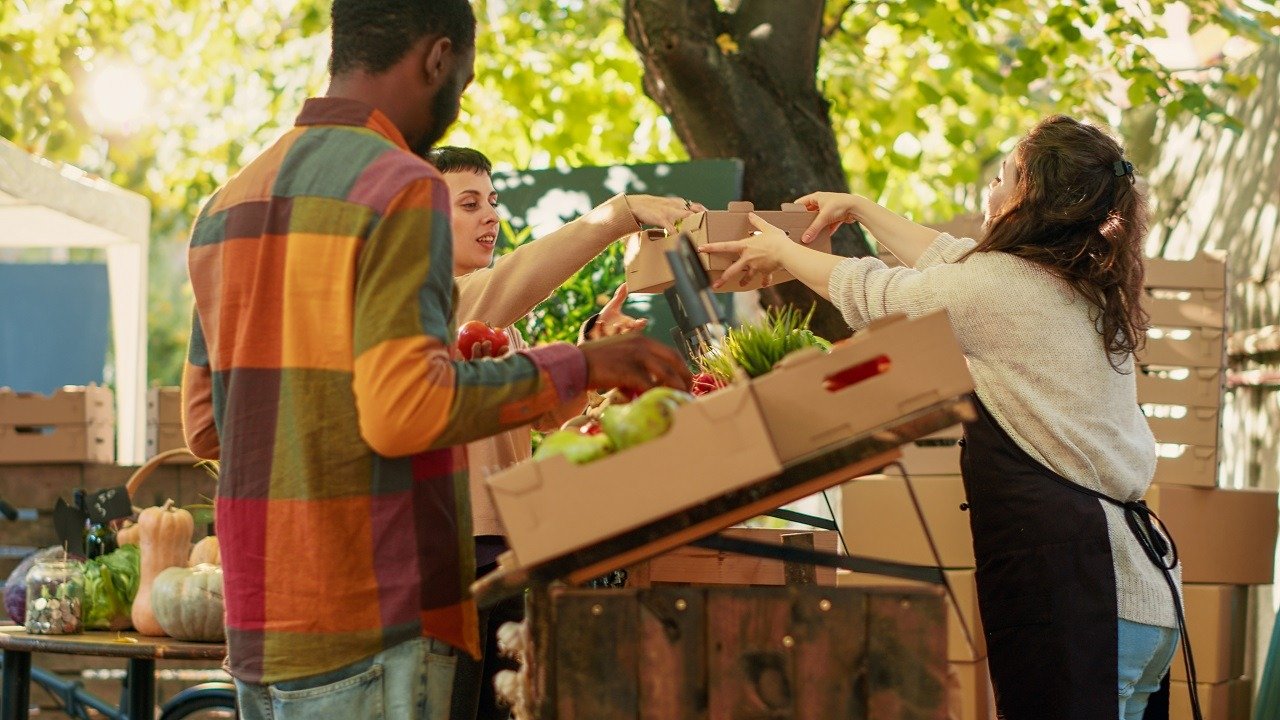
Sell at farmers’ markets or community events. Some local events, especially nonprofit-run ones, have lighter permit requirements. In Georgia, for example, food vendors at certain qualifying nonprofit community events are exempt from the standard food service permit requirements under state law (Georgia Department of Public Health, 2025). It is a real on-ramp for small-scale growers, and a great place to meet your first customers. Just confirm each event’s rules, since they vary widely.
Look at cottage food laws carefully, because they probably do not cover you. This is where a lot of growers get bad information. Cottage food laws are written for home kitchen producers (think jams, baked goods), and microgreens growers generally count as farmers, not home food operators. That means cottage food rules usually do not apply to you at all. A handful of states reference fresh produce in their cottage programs, but most do not, and assuming an exemption that does not exist is how growers get caught. Check your specific state’s Department of Agriculture before you count on this path.
Partner with a licensed grower or distributor, with eyes open. Selling under another operation’s license can work, but be careful here. It does not erase food safety law, and it does not cover you if you ship across state lines, where FSMA registration can still apply regardless of whose license is on the invoice. A partnership can give you access to established buyers and bigger markets. Just structure it properly rather than treating it as a way to skip the rules.
Join a CSA. Community Supported Agriculture connects farmers directly with customers who subscribe for a season. CSAs sometimes carry more flexible permit requirements, and they give you a predictable income during harvest. They are a solid middle step between hobby and full commercial operation.
Check with your local government for exemptions. Some areas have special permits or small-producer carve-outs for fresh produce. A quick call to your local government can surface options that are not obvious online. Ask specifically how they classify microgreens, since the answer drives everything else.
A caution worth repeating: selling to restaurants or online “because the buyer has their own license” does not remove your obligations. Most restaurants still want proof that you are a registered food business, and crossing state lines can trigger FDA FSMA registration, no matter who you sell to. Use these options to start lean and smart, not to dodge compliance you will eventually need anyway.
Wrap-up: getting legal is step one, getting paid is the goal
Selling microgreens can be a genuinely good business. The legal side is not the scary part once you see it laid out. A license to sell microgreens usually means a business license, a seller’s permit, food handler certification, and food safety compliance, with the exact mix shaped by your state, county, and sales channel. The 2025 FSMA water update added a real federal layer for growing operations, so build with that in mind if you plan to scale.
Licensing is one piece of a larger picture. Getting legal keeps you out of trouble. Finding and keeping buyers keeps you in business. The two work together, and the order matters: validate demand, then license, then deliver. If you want to see how the whole system fits, from compliance to customers to pricing, the microgreens business hub is where it all comes together.
Even where a license is not strictly required, getting one is usually still smart. It builds buyer trust, protects you legally, and signals that you run a real operation. In a market where chefs and retailers have choices, that signal is worth more than the fee.
Frequently asked questions
Are microgreens allowed under California cottage food law?
Generally no, and not because they are banned, but because microgreens growers usually fall outside cottage food law entirely. Cottage food rules are written for home kitchen producers like bakers and jam makers, while microgreens growers count as farmers. In California, selling microgreens typically means a permit from your local health department plus a Certified Producer Certificate for farmers’ market sales, not a cottage food permit. Always confirm your classification with the California Department of Public Health or your county before you sell.
Do I need insurance to sell microgreens?
Insurance is not usually a legal requirement, but it protects you from losses that can sink a small operation. Microgreens are perishable, so spoilage or contamination can mean real financial hits. Liability insurance covers claims tied to property damage, injury, or foodborne illness, while crop insurance protects against losses from disasters like floods or pests. Many wholesale and restaurant buyers also prefer or require suppliers to carry liability coverage, so it can double as a sales advantage.
Do I need a permit to sell microgreens at a farmers’ market?
Usually yes, though the specific permit depends on your state and the market itself. Many markets require a vendor permit, and some require a health permit on top of that. California asks for a Certified Producer Certificate for farmers’ market sales. Each market may also set its own vendor rules separate from city or county requirements, so ask the market coordinator exactly what they need when you apply, and confirm state rules with your Department of Agriculture. Once you know your permits, the harder part is often landing a spot, so our guide on how to get into a farmers market walks through what to do when the market you want is already full.
Where can I sell microgreens?
You have five main channels: farmers’ markets, restaurants, grocery stores, direct-to-consumer (including online), and caterers or specialty food businesses. Restaurants are often the easiest first sale, since a single chef can become a steady weekly account. Farmers’ markets are great for meeting customers and testing varieties. Each channel carries its own permit requirements and its own pricing, so most growers start with one or two and expand once they find what works in their area.
How much do microgreens sell for?
Pricing varies by variety, region, and channel, but microgreens are a high-value crop relative to the space they need. Many growers price by the ounce or by the tray, with premium varieties and restaurant accounts commanding more than bulk or market sales. Your real number depends on your production cost and your local market rather than a national average. The key is knowing your cost floor first, then setting margins that keep cash flowing rather than guessing at a price.
Is a microgreens business still profitable after licensing costs?
Yes. Licensing is a fixed cost, usually one-time or annual, and it does not change the per-tray economics of your operation. In most states, total licensing fees land somewhere in the range of $50 to $500 per year, which is small against the revenue a steady setup generates. The bigger factor in profitability is not what you paid to register. It is whether you have committed buyers lined up before you scale your growing.
References
1. Georgia Department of Public Health. (2025). Food service rules and regulations (Chapter 511-6-1). Revised 2/12/2025 to reflect adoption of the 2022 FDA Food Code; includes nonprofit food sales and food service exemption pursuant to O.C.G.A. § 26-2-391. https://dph.georgia.gov/environmental-health/food-service
2. Ontario Ministry of Agriculture, Food and Rural Affairs. (n.d.). Overview of food safety for sprouts and microgreens. https://www.ontario.ca/page/overview-food-safety-sprouts-and-microgreens
3. University of California Agriculture and Natural Resources. (n.d.). Selling locally grown produce. https://ucanr.edu/sites/CESonomaAgOmbuds/Produce_Farming/
4. US Food and Drug Administration. (2024). FSMA final rule on produce safety. https://www.fda.gov/food/food-safety-modernization-act-fsma/fsma-final-rule-produce-safety
5. US Food and Drug Administration. (2025). FSMA final rule on pre-harvest agricultural water. https://www.fda.gov/food/food-safety-modernization-act-fsma/fsma-final-rule-pre-harvest-agricultural-water
6. Riggio, G. M., Wang, Q., Kniel, K. E., & Gibson, K. E. (2018). Microgreens: A review of food safety considerations along the farm to fork continuum. International Journal of Food Microbiology, 290, 76-85. https://doi.org/10.1016/j.ijfoodmicro.2018.09.027
7. Turner, E. R., Luo, Y., & Buchanan, R. L. (2020). Microgreen nutrition, food safety, and shelf life: A review. Journal of Food Science, 85(4), 870-882. https://doi.org/10.1111/1750-3841.15049
8. Washington State Department of Agriculture. (n.d.). Selling sprouts and microgreens (Fact Sheet 51). https://cms.agr.wa.gov/WSDAKentico/Documents/DO/RM/RM/51_SellingSproutsAndMicrogreens.pdf