Microgreens, those tiny and nutrient-packed leafy greens, have gained immense popularity in the culinary world and among health-conscious individuals. While traditional methods involve growing microgreens in soil, alternative approaches are gaining traction – growing microgreens without soil. This method saves space, reduces water usage, and reduces the risk of soil-borne diseases.
Growing microgreens without soil allows you to utilize alternative mediums such as hydroponics, biodegradable mats, coconut coir, vermiculite, and perlite methods. These approaches allow for better control over moisture levels, pH balance, and nutrient intake, resulting in faster growth and higher yields. Moreover, the absence of soil makes for a cleaner and more efficient way to cultivate microgreens.
Growing microgreens without soil is a sustainable and space-efficient method of cultivation. This approach offers numerous benefits, including water conservation, disease prevention, and growing fresh and nutritious microgreens in any environment.
- Soilless works. Coco coir, vermiculite, jute, hemp mats and floating water setups all grew strong crops in trials. One indoor trial got 2 to 3 kg per square meter (Bulgari et al., 2021).
- Expect about the same yield, not more. Peat, coir and fiber mats came out about even side by side. One polyester mat came in 13% lower (Di Gioia et al., 2016).
- No medium wins for every crop. In one trial, rocket gave its best yield on jute and red basil its worst (Negri et al., 2021).
- No soil doesn't mean no germs. In lab tests, germs lasted longer on hemp and Biostrate mats than in coir or peat. Hydroponic radish carried more E. coli than peat-grown radish (Misra & Gibson, 2020; Xiao et al., 2015). Clean seed and clean water matter more than the medium.
- Pads can mean fewer minerals. Microgreens grown in compost held more minerals than ones grown on hydroponic pads (Weber, 2016).
Want the studies behind these? The growing media research hub compares 300+ of them.
In this post, I highlight the techniques, steps, benefits, and cons of growing microgreens without soil, empowering you to cultivate these vibrant greens right in your home.
No soil.
Still mold.
Still gnats.
Mats and coir stay wet. Wet is where mold and fungus gnats move in. Taking the soil out didn't take the problem out. This guide shows you what you're looking at, why it keeps coming back, and how to stop it without losing the tray.
- Every common pest identified by what you actually see, not a taxonomy list
- What causes each one to return after treatment
- The fix that does not cost you the crop
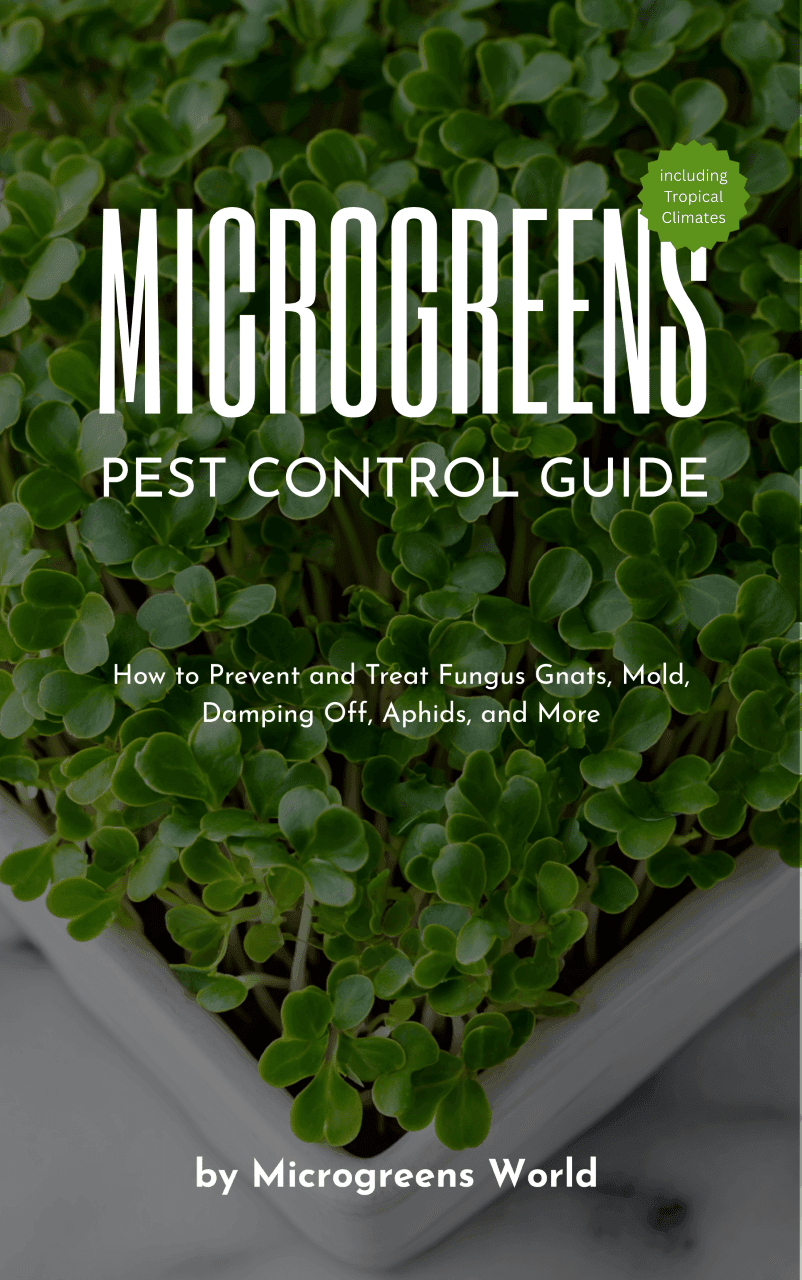
The Microgreens Pest Control Guide
Digital guide, instant download
How to grow microgreens without soil | Hydroponic method, by Dina's Garden
Techniques for Growing Microgreens Without Soil
Alternative mediums for growing microgreens without soil provide a suitable environment for the microgreens’ seeds to germinate and thrive. Let’s explore two popular techniques for growing microgreens without soil:
Hydroponics
Hydroponics is a soilless cultivation method that involves growing plants in a nutrient-rich water solution. Here’s a step-by-step guide to growing microgreens using hydroponics:
- Start by selecting a shallow tray or container with holes for drainage.
- Fill the tray with a growing medium like vermiculite.
- Pre-soak your chosen seeds in water for the recommended time.
- Spread the soaked seeds evenly on the growing medium and lightly press them in.
- Place the tray in a controlled environment with adequate lighting and temperature.
- Maintain the water solution by monitoring pH levels and nutrient concentration.
- Regularly mist the microgreens to provide moisture without over-saturating the medium.
- Harvest the microgreens once they reach the desired height, usually within 7-14
Hydroponics methods provide efficient nutrient delivery, water conservation, and a cleaner growing environment, making it advantageous for growing microgreens.
Growing Mats
Another popular soilless technique involves growing mats or pads made from biodegradable materials. Follow these steps to grow microgreens using growing mats:
- Obtain a tray or container with good drainage.
- Place a biodegradable growing mat, such as hemp or jute, in the tray.
- Moisten the growing mat with water or a diluted nutrient solution.
- Sprinkle the seeds evenly over the moistened mat, ensuring they are not overcrowded.
- Gently press the seeds into the mat to ensure good contact.
- To create a dark climate for growth, cover the tray with another tray or a plastic dome.
- Once the seeds have sprouted 2-3 days
- Place the tray in a well-lit area, preferably near a window or under grow lights.
- Maintain moisture by misting the microgreens regularly.
- Once the microgreens have reached the desired height, typically in 5-12 days, harvest by cutting them just above the growing mat.
Using growing mats for growing microgreens provides a convenient and user-friendly method, with excellent water retention and enhanced air circulation for healthy growth. They simplify harvesting and are eco-friendly and biodegradable. Overall, growing mats offer an efficient and sustainable solution for cultivating microgreens.
Coconut Coir And Perlite Methods
The coconut coir method of growing microgreens involves using a growing medium made from the fibrous husk of coconuts. It provides excellent moisture retention, promotes healthy root development, and is sustainable and renewable.
On the other hand, the perlite method involves using perlite, a lightweight volcanic rock that is heated and expanded. Perlite provides good drainage and aeration and prevents compaction, allowing for healthy root growth. It is also reusable and sterile, reducing the risk of disease transmission.
Both methods offer advantages such as water efficiency, root support, and versatility in different growing environments. They provide suitable alternatives to the soil for growing microgreens, allowing for successful cultivation and high-quality yields.
Steps For Successful Soilless Microgreen Cultivation
Regardless of your chosen technique, specific steps are crucial for successful soilless microgreen cultivation. Here are some general guidelines to follow:
1. Seed Selection
Choose high-quality seeds specifically labeled for microgreen production. Popular microgreen varieties include kale, broccoli, radish, sunflower, and pea shoots. To find your favorites, try out different varieties.
2. Light Requirements
Microgreens require ample light to grow properly. Place your trays near a sunny window or use artificial grow lights to provide sufficient light intensity. Aim for 12-16 hours of light per day.
3. Temperature And Humidity
Maintain an optimal temperature range of 60-75°F (15-24°C) for successful microgreen growth. Also, ensure adequate humidity levels by covering the trays or using a humidifier to create a microclimate.
4. Nutrient Supply
In hydroponics, monitor the pH and nutrient levels of the water solution regularly to ensure optimal growth. Before seeding, pre-moisten the mat with a diluted nutrient solution for growing mats.
The Benefits of Growing Microgreens Without Soil
Growing microgreens without soil offers several advantages over traditional soil-based cultivation. Here are some key benefits:
Space Efficiency
Soilless cultivation methods such as hydroponics or growing mats allow for vertical and compact growing systems, making them ideal for small spaces or urban environments where land availability is limited. This maximizes space utilization and enables year-round microgreen production.
Water Conservation
Soilless cultivation requires significantly less water than traditional soil-based gardening. Hydroponics or growing mats efficiently deliver water directly to the roots, reducing water waste through evaporation or runoff. This makes it a more sustainable and water-efficient option.
Fewer Soil Pests, Not Fewer Germs
Taking soil out of the tray does cut out some problems that ride in on dirty potting mix. But it doesn’t make your crop germ-proof. The lab studies point the other way.
When researchers added Salmonella and Listeria to different media, the germs held on for 10 days on hemp and Biostrate mats. In coir and peat, they faded over time (Misra & Gibson, 2020). A follow-up study found more germs moved into the plants from Biostrate than from peat (Deng et al., 2021). And in a direct test, hydroponic radish microgreens carried far more E. coli than radish grown in peat (Xiao et al., 2015).
Peat isn’t spotless either. In one trial where no germs were added, the peat-grown rapini had the most gut-type bacteria (Enterobacteriaceae). It was the only tray with E. coli (Di Gioia et al., 2016).
So what keeps a tray safe? Clean seed, clean water, and clean trays. Those count for more than the medium you choose. See every study side by side in our growing media research hub.
Good Yields, Not Bigger Ones
Soilless media can grow a full, heavy tray. Basil and rocket grown on water over vermiculite, coconut fiber or jute yielded 2 to 3 kg per square meter (Bulgari et al., 2021). But side-by-side trials don’t show that going soilless makes plants grow faster or yield more than peat.
In one trial, rapini grown on peat, jute-kenaf mats, and recycled textile mats all came in at about 1.5 kg per square meter. A polyester mat yielded 13% less (Di Gioia et al., 2016). Coir treated with lime and humic acid matched peat (Hoang & Vu, 2022). In another trial, the substrate made no difference to yield at all. The nutrient solution did (Wieth et al., 2019).
The crop often matters more than the medium. On the same jute mats, rocket gave the highest yield and red basil the lowest (Negri et al., 2021).
So pick a medium for cost, cleanup, and how it fits your setup. Then test it with your own seeds before you switch a whole rack. Our growing media research hub lists the yield results for each medium.
Consistent Nutrient Supply
In soilless agriculture, nutrients are given straight to the roots of the plants by the water solution or growing medium. This allows for precise control over nutrient concentrations, ensuring that microgreens receive an optimal balance of essential nutrients for robust growth and high nutritional value.
Year-Round Cultivation
Microgreens can be grown indoors under controlled conditions with soilless methods, enabling year-round cultivation regardless of seasonal limitations. This constantly supplies fresh, nutrient-rich microgreens regardless of external climate factors.
Minimal Maintenance
Soilless cultivation eliminates the risk of soil compaction and the associated maintenance tasks, allowing for a more streamlined and efficient growing process.
Overall, growing microgreens without soil offers space-saving advantages, water efficiency, disease prevention, faster growth, and the ability to control and optimize growing conditions. Because of these benefits listed above, soilless methods are desirable alternatives for individuals and organizations seeking a sustainable and productive approach to microgreen cultivation.
Cons of Growing Microgreens Without Soil
While growing microgreens without soil offers many benefits, there are also some cons to consider before venturing into soilless growing. A few potential drawbacks are listed below.
Higher Initial Setup Cost
Implementing hydroponic systems or purchasing specialized growing mats can involve a higher upfront investment than traditional soil-based methods.
Nutrient And pH Monitoring
The cultivation process becomes even more complicated since maintaining the ideal pH and nutrient balance in the water solution or growing media calls for constant observation and adjustment.
Increased Energy Consumption
Depending on the setup, growing microgreens without soil may require artificial lighting for indoor cultivation, leading to increased energy consumption.
Equipment And Maintenance
Soilless cultivation methods often require specialized equipment such as pumps, reservoirs, or grow lights, which may require additional maintenance and regular upkeep. This can include cleaning, replacing components, and ensuring the proper functioning of the equipment.
Dependency On Technology
Growing microgreens without soil often rely on technology such as pumps, timers, and environmental controls. In a situation where there are power outages or equipment failures, there can be a brief halt to the growth of microgreens.
Limited Nutrient Diversity
Soil naturally contains a wide range of nutrients that microgreens can absorb. In soilless cultivation, the nutrient solution or growing medium must be carefully balanced to provide the necessary nutrients for optimal growth. However, the nutrient diversity may be limited compared to the natural nutrient profile found in soil.
It’s important to note that while these drawbacks exist, they can be managed effectively with proper planning, knowledge, and experience, and the benefits of soilless microgreen cultivation often outweigh these challenges.
Summary
Growing microgreens without soil offers an exciting and sustainable way to cultivate these vibrant greens at home. Hydroponics or growing mats can save space, conserve water, and prevent soil-borne diseases. Experiment with different varieties and methods to discover the joy of growing fresh and nutritious microgreens, adding a touch of green goodness to your meals year-round.
You picked the medium.
Now keep it clean.
Every medium in this post can grow a great tray. Every one of them can grow mold, damping off and gnats too, once the water sits too long. This guide names each problem by what you see, tells you why it keeps returning, and gives you the fix before you lose the crop.
- Every common pest identified by what you actually see, not a taxonomy list
- What causes each one to return after treatment
- The fix that does not cost you the crop
The Microgreens Pest Control Guide
Digital guide, instant download
Related Questions
How do I learn more about microgreens?
Read my post, “The Beginner’s Nutritional Guide to Incredible Microgreens” to learn more.
How do I grow my own microgreens?
Growing microgreens at home is a great way to grow your own food. Read my post, “Growing Your Own Food is Big Business.”
How do I find microgreens recipes?
You can find hundreds of microgreens recipes on this site. You can cook with microgreens in may ways. Read my post “Beyond the Decorations: Cooking with Microgreens” to learn more.
References
Dalal, Dipika, Mainani, Ruchita, Thakker, Rohan and Solanki, Hitesh. “A STUDY OF SELECTED MICROGREENS IN SOIL-LESS MEDIA.” International Association of Biologicals and Computational Digest 1.2, 2022, pp. 228-230., Gujarat University, ISSN 2583-3995, https://doi.org/10.56588/iabcd.v1i2.74
Deng, Wenjun, Gina M. Misra, Christopher A. Baker and Kristen E. Gibson. “Persistence and Transfer of Foodborne Pathogens to Sunflower and Pea Shoot Microgreens during Production in Soil-Free Cultivation Matrix.” Horticulturae 7.11, 2021, p. 446, https://doi.org/10.3390/horticulturae7110446
Di Gioia, Francesco, Palmira De Bellis, Carlo Mininni, Pietro Santamaria and Francesco Serio. “Physicochemical, Agronomical and Microbiological Evaluation of Alternative Growing Media for the Production of Rapini (Brassica rapa L.) Microgreens.” Journal of the Science of Food and Agriculture 97.4, 2017, pp. 1212-1219 (published online 2016), https://doi.org/10.1002/jsfa.7852
Hoang, Gia Minh and Thuong Thi Vu. “Selection of Suitable Growing Substrates and Quality Assessment of Brassica Microgreens Cultivated in Greenhouse.” Academia Journal of Biology 44.2, 2022, pp. 133-142, https://doi.org/10.15625/2615-9023/16833
Khairunnisa, Noviandani, Warnita, Warnita and Hervani, Dini. “Impact of Growing Media and Nutrition on Growth and Yield of Broccoli Microgreens (Brassica oleracea).” International Journal of Environment, Agriculture and Biotechnology 8.3, 2023, pp. 30-34., AI Publications, ISSN 2456-1878, https://doi.org/10.22161/ijeab.83.4
Min Allah, S.; Dimita, R.; Negro, C.; Luvisi, A.; Gadaleta, A.; Mininni, C.; De Bellis, L. “Quality Evaluation of Mustard Microgreens Grown on Peat and Jute Substrate.” Horticulturae 2023, 9, 598. https://doi.org/10.3390/horticulturae9050598
Misra, Gina and Kristen E. Gibson. “Survival of Salmonella enterica subsp. enterica Serovar Javiana and Listeria monocytogenes Is Dependent on Type of Soil-Free Microgreen Cultivation Matrix.” Journal of Applied Microbiology 129.6, 2020, pp. 1720-1732, https://doi.org/10.1111/jam.14696
Negri, Marco, Roberta Bulgari, Piero Santoro and Antonio Ferrante. “Evaluation of Different Growing Substrates for Microgreens Production.” Acta Horticulturae 1305, 2021, pp. 109-114, https://doi.org/10.17660/ActaHortic.2021.1305.16
Priyadarshini and Kumari, V. M. P. Madhana. “EVALUATION AND PRODUCTION OF INDOOR-GROWN MICROGREENS FOR TROPICAL KITCHEN GARDEN.” PLANT ARCHIVES 23, 2023, pp. 70-73., Research Floor, ISSN 0972-5210, https://doi.org/10.51470/plantarchives.2023.v23.no1.012
Weber, Carolyn F. “Nutrient Content of Cabbage and Lettuce Microgreens Grown on Vermicompost and Hydroponic Growing Pads.” Journal of Horticulture 3.4, 2016, https://doi.org/10.4172/2376-0354.1000190
Wieth, Albertina Radtke, Wagner Dutra Pinheiro and Tatiana da Silva Duarte. “Purple Cabbage Microgreens Grown in Different Substrates and Nutritive Solution Concentrations.” Revista Caatinga 32.4, 2019, pp. 976-985, https://doi.org/10.1590/1983-21252019v32n414rc
Xiao, Zhenlei, Gary Bauchan, Lydia Nichols-Russell, Yaguang Luo, Qin Wang and Xiangwu Nou. “Proliferation of Escherichia coli O157:H7 in Soil-Substitute and Hydroponic Microgreen Production Systems.” Journal of Food Protection 78.10, 2015, pp. 1785-1790, https://doi.org/10.4315/0362-028X.JFP-15-063