In the summer of 2008, my doctor told me I had stage 2 prostate cancer. The choices were watch and wait, or surgery. My wife asked if there were other options, and we entered a clinical trial. Twenty-four hours of discomfort, three months of weekly testing, and results that were inconclusive.
Somewhere in there, my doctor told me to eat more cruciferous vegetables. I took that seriously, and I started wanting to understand why, what was actually in broccoli and cauliflower that made him point me toward them. That question is what pulled me into the research on sulforaphane and broccoli microgreens.
Sulforaphane is the compound that drove everything that followed. It led me to the work of Dr. Paul Talalay at Johns Hopkins, whose lab isolated it from broccoli in 1992 and spent years studying how it switches on the body’s own protective enzymes. The discovery drew front-page national attention that year. Years later, it led me to growing broccoli microgreens and to digging into how this compound actually forms in the plant.
This post covers how sulforaphane forms in broccoli microgreens, what the research is looking at, and how to get the most of it from every serving.
Key Takeaways
Three-day-old broccoli sprouts can carry 10–100 times more glucoraphanin (the sulforaphane precursor) than mature broccoli, per Fahey, Zhang & Talalay (1997). Microgreen levels are studied separately and vary by cultivar, growing conditions, and harvest timing.
This post covers how sulforaphane forms, what the research is looking at, and how to get the most of it from every serving of broccoli microgreens.
Most People Lose Half Their Sulforaphane Before They Eat It
Sulforaphane isn’t sitting in the leaf waiting for you. Your broccoli microgreens make it the moment you cut them. A few simple habits decide how much reaches your plate. The guide shows you how sulforaphane forms. It walks through the prep, timing, storage, and pairing steps that keep you from losing it.
The Science Behind Sulforaphane in Broccoli Microgreens
Get Instant Access
Broccoli Sprouts: Its Secret Healing Phytonutrient Sulphoraphane | Dr. Alan Mandell
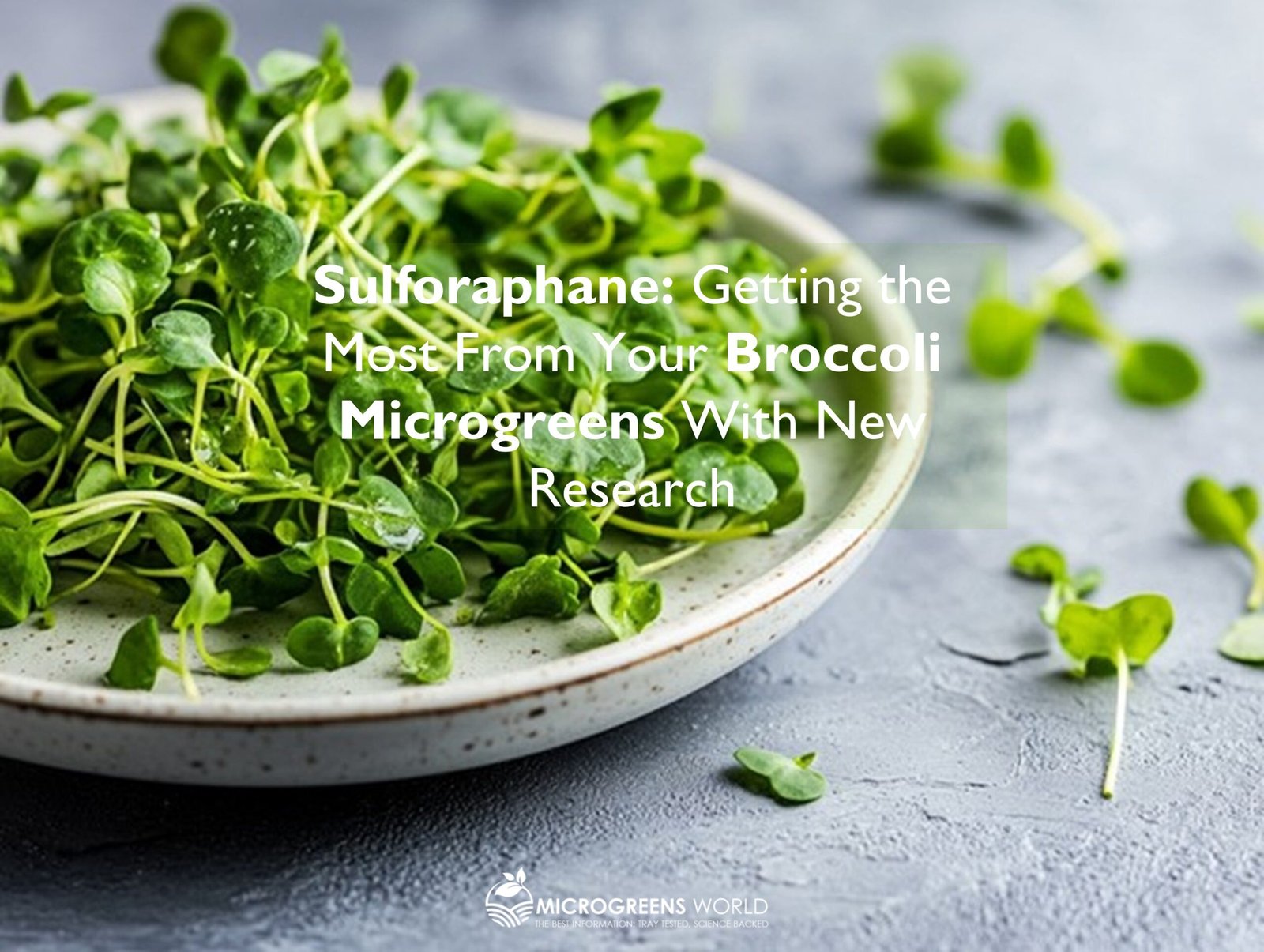
In recent years, sulforaphane has emerged as a powerful bioactive compound with extraordinary health-promoting properties. While mature broccoli has long been recognized as a nutritional powerhouse, new research suggests that broccoli microgreens contain significantly higher concentrations of this valuable compound. This has drawn considerable interest in the scientific community, since sulforaphane is one of the most-studied compounds to come out of cruciferous vegetables. Understanding how it forms, and how cultivation, harvest, and preparation affect it, is what lets you get the most of it from broccoli microgreens.
Sulforaphane (SFN, C6H11NOS2) stands at the forefront of bioactive compounds found in broccoli microgreens, representing one of nature’s most potent isothiocyanates. This extraordinary compound emerges when glucoraphanin, its precursor molecule, interacts with myrosinase enzymes – a transformation that typically occurs when we chew or cut these vegetables.
Sulforaphane activates cytoprotective pathways linked with detoxification enzymes, redox control, and normal inflammatory signaling. That reads technical; the practical takeaway is straightforward—regular small servings help you cover bases. yield varies with cultivar, age at harvest, storage, pH during preparation, and whether myrosinase remains active.
Broccoli microgreens represent a significant intersection of nutrient density and culinary innovation. They are harvested during their peak developmental stage between 7-21 days after germination. These tender young plants pack a striking nutritional punch, particularly in their concentration of glucoraphanin (GRN), the vital precursor to sulforaphane (Talalay et al., 1992). Among various microgreen varieties, broccoli stands out for its exceptional health-promoting properties.
While mature broccoli and sprouts have been extensively studied, broccoli microgreens remain a relatively new frontier in nutritional research. These delicate greens occupy a sweet spot in plant development – past the sprout stage but before full maturity – when their nutrient density reaches optimal levels.
Broccoli microgreens concentrate the key precursors for sulforaphane, a bioactive isothiocyanate formed when glucoraphanin meets the enzyme myrosinase. Brief chopping or chewing brings enzyme and substrate together, and light heat preserves activity better than prolonged cooking.


Microgreens fit because they require minimal prep, integrate into common meals, and travel well in small containers.
Microgreens sit between them: easier textures than sprouts, higher palatability than many mature crucifers, and good density of precursors per forkful. That balance makes them a reliable daily add‑on rather than a rare “health project.”
How does sulforaphane actually form in broccoli microgreens?
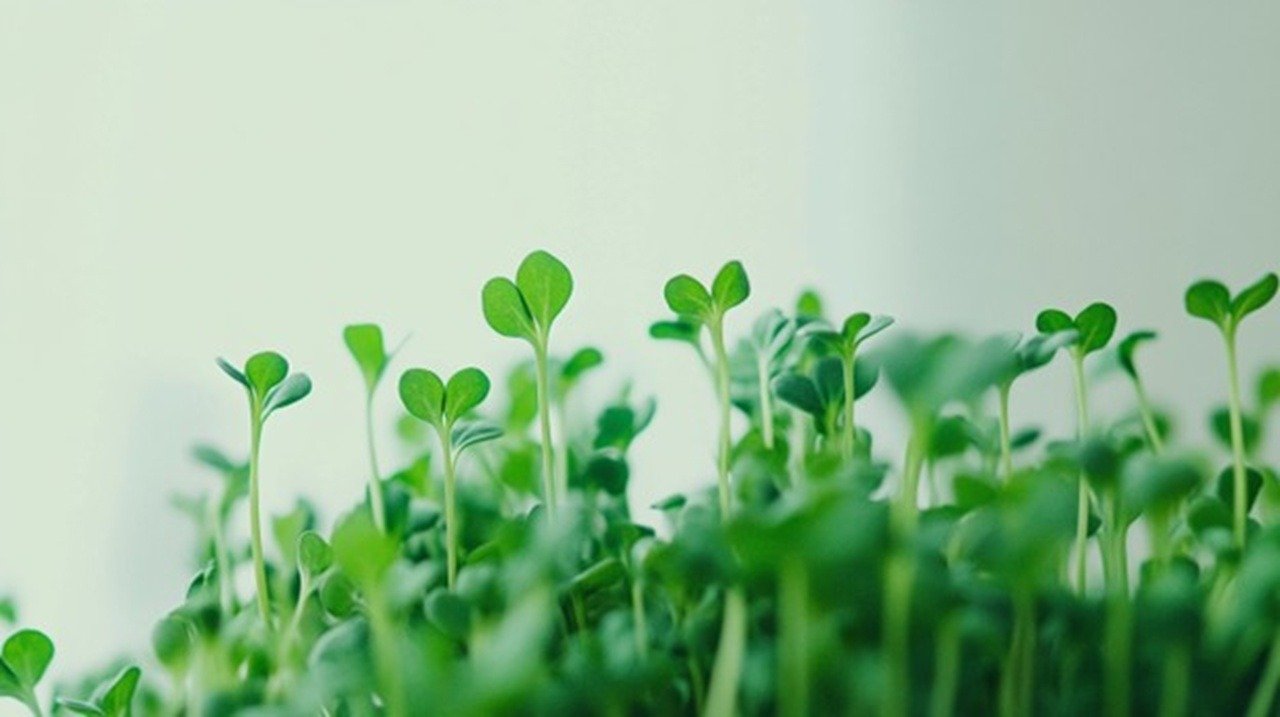
Glucoraphanin and myrosinase sit in separate cellular spaces. Cell disruption permits contact; hydrolysis follows; sulforaphane forms within minutes. Excessive heat deactivates myrosinase. Hence, raw or lightly heated preparations yield more active compound than long cooking.
Levers that alter yield:
• Growth stage: microgreens harvested around days 10–14 often show higher myrosinase activity than mature leaves.
• Genetics: some broccoli cultivars carry elevated glucoraphanin baselines.
• Light and mild stress: targeted light spectra and controlled stress can nudge precursor levels upward.
• pH: neutral to slightly acidic conditions favor enzyme performance.
• Moisture and storage: hydration supports enzyme–substrate contact; cold storage slows decay of activity.
“Chop and wait”: chop finely, pause one to two minutes. That pause allows conversion to proceed before any heat or acid shifts the environment. keep exposure brief (about thirty to sixty seconds). Texture softens; enzyme activity largely persists.
For stored greens, plant myrosinase may lose activity. A small amount of mustard powder, radish, or wasabi can supply working myrosinase, restoring conversion. This pairing helps when convenience requires pre‑washed boxes.
The physiology side: sulforaphane upregulates Nrf2‑regulated genes that govern glutathione synthesis and other protective enzymes, while tamping down excess NF‑κB signaling. Summed together, the body maintains better redox balance and cleaner handling of electrophiles. Practical effect: more resilient day‑to‑day defense.
Protocol‑depth details—time‑temperature curves, cultivar short‑list, and pH tweaks—live in the companion guide. Download it if you want the numbers, not just the outline.
Cellular separation explains the conversion trigger. In intact tissue, glucoraphanin resides in vacuoles while myrosinase localizes to myrosin cells; disruption brings them together. Epithiospecifier proteins and nitrile‑specifier proteins can divert the reaction toward nitriles under certain conditions; mild heat or pH shifts influence those side pathways. Kitchen implication: favor gentle handling and timing that lets the preferred product form first.
Moisture matters. Wilted tissue converts poorly because diffusion slows; crisp leaves behave differently. That observation supports tight cold‑chain handling from harvest to plate. A brief rinse, spin‑dry, and cool holding box preserves both texture and activity for several days.
Home growers can test a simple proxy: aroma after chopping. A sharp, mustard‑like aroma suggests active conversion. While aroma is not a lab assay, it acts as a quick confidence check before serving.
Evidence clusters around domains:
Researchers are studying sulforaphane across several areas. The most established is cellular defense: it activates the Nrf2 pathway, which prompts cells to produce their own phase-2 protective enzymes. Beyond that, studies are examining its effects on inflammatory signaling, on metabolic markers like blood-sugar handling, and on the brain (it crosses the blood-brain barrier, which is unusual). Most of this work is early, often in cell or animal models, with small, short human trials, so treat these as research directions, not promises.
Dose response varies. Food‑first patterns appear safe for long‑term use; supplement trials test higher exposures and require professional oversight. Food matrices like microgreens deliver modest, repeated exposures that map well to daily life. Steady cadence beats occasional spikes.
Why microgreens help compliance: small portions can be tucked into routine meals without adding cooking time. A smoothie, a handful of eggs, a base layer under warm grains. Low friction equals higher adherence. Lifters often choose salad‑plus‑protein; microgreens fit cleanly.
Caution notes: medication interactions remain an active research area; readers under oncology, endocrine, or rheumatology care should coordinate with clinicians. Individuals who experience reflux with raw brassicas can try steam‑brief or pair with ginger and lemon to improve tolerance.
Download The Science Behind Sulforaphane Formation in Microgreen for serving ranges, sample menus, and a one‑page “mix‑ins” chart that pairs microgreens with fats, acids, and spices to support absorption and comfort.
If you want to go deeper, The Microgreens Method covers the research and the daily practice in one place.

Readers often ask about timelines. Habitual intake for several weeks aligns with changes in common biomarkers used in studies. Comfort improves as preparation becomes routine. People sensitive to raw brassicas can start with small portions and shift texture with brief steam.
Another frequent question concerns kids and older adults. Food‑first approaches scale well across ages when portions stay modest and textures fit chewing comfort. Clinicians should guide any case with complex conditions or medications.
Microgreens also support culinary flexibility. Neutral taste sits behind herbs and sauces; the leaves carry dressings without wilting fast, and smoothies mask flavor entirely for picky eaters. Adherence rises when meals look and taste normal.
How do you get the most sulforaphane from broccoli microgreens?
Steps that raise sulforaphane yield from nutrient-dense greens :
1) Prep: chop finely, wait a minute, then eat.
2) Heat: if heating, steam very briefly; avoid boiling and long microwaving.
3) Pairings: add mustard powder or grated radish when using pre‑washed, older boxes.
4) Acids: a splash of lemon or mild vinegar keeps pH friendly for enzyme activity.
5) Fats: olive oil, avocado, or tahini help meal integration and mouthfeel.
6) Frequency: steady daily portions outperform sporadic large loads.
7) Storage: cold, slightly humid conditions preserve texture and activity.
8) Hydration: adequate fluids aid distribution and metabolism.
9) Microbiome: varied fibers and fermented foods support backup conversion when enzyme activity drops.
10) Sourcing: pick growers who harvest young, keep cold chain tight, and disclose cultivar when possible.
Store microgreens in a clean container lined with slightly damp paper towels
Smoothie: pre‑chop the broccoli microgreens, wait one minute, then blend with berries, yogurt or kefir, and oats. Warm dishes: steam‑brief, then fold into cooked grains off heat. Salads: pile microgreens as the base and dress lightly to avoid drowning the leaves.
Home growers benefit from tight cycles: sow weekly, harvest at peak enzyme activity, and store in breathable clamshells with a dry liner. Commercial buyers can request harvest date and cultivar.

Serving guides by context:
• Office days: 40–60 grams at lunch as a base under warm grain bowls or proteins.
• Training days: split servings—half in a morning smoothie, half with dinner.
• Travel days: clamshell container with pre‑chopped greens; add mustard packet at point of eating.
If you buy from markets, ask vendors for harvest day and storage advice. If you grow at home, keep notes on sow date, harvest date, and taste. Small logs help you repeat wins. For those who prefer exactness, a kitchen scale and a simple timer remove guesswork from prep and steam‑brief steps.
If bitterness appears, switch cultivar or shorten steam time. If texture feels limp, your storage may be too humid. If you notice poor aroma after chopping, add an external myrosinase source and increase the wait time before eating.
What does new research say about broccoli microgreens and sulforaphane?
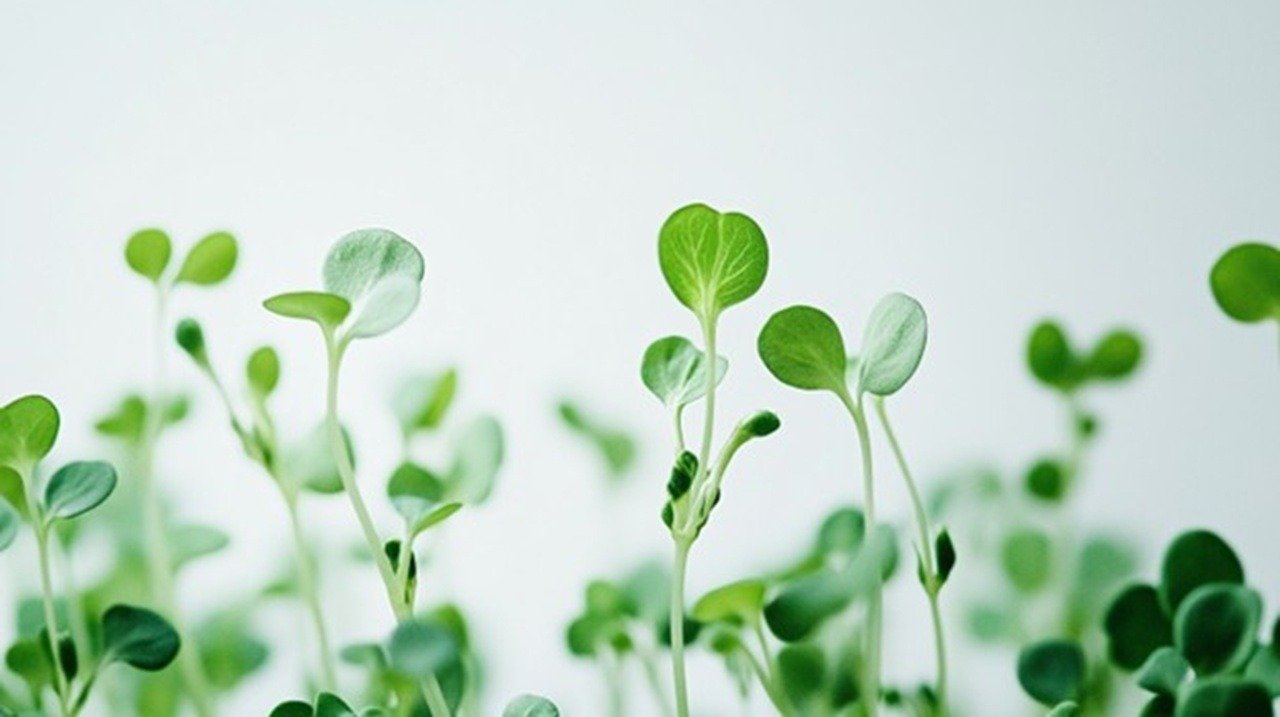
Single servings shift biomarkers; consistent intake matters more. Bioavailability studies show sulforaphane and downstream metabolites in blood and urine after typical servings. Hydroponic production with tuned light spectra often raises glucoraphanin per gram; soil systems perform well with correct timing and cool storage.
Cultivar selection continues to matter. Some lines carry higher precursor content and robust enzyme expression; growers increasingly share seed lots with verified lab data. Post‑harvest handling also shows strong influence—cool, dry, low‑ethylene storage preserves activity longer.
Scientists have documented significant variations in glucoraphanin content and myrosinase activity between growth stages, with microgreens showing unique advantages in certain cultivation conditions.
Early signals suggest additive benefits in oxidative stress and select inflammatory markers. Large, long‑duration trials remain limited; research groups are building standardized dosing and sampling frameworks so results compare across centers.
Microgreens might present advantages worth considering, especially given emerging evidence about their unique impact on digestive health and biological activity.

The guide, The Science Behind Sulforaphane Formation in Microgreen, compiles a short reading list and a plain‑language summary of methods common in bioavailability trials, plus a quick glossary of terms used in papers.
Bioavailability work now uses stable‑isotope techniques and targeted mass spectrometry to follow metabolites. Those tools confirm that realistic portions deliver measurable exposure. Trials also test matrix effects: fat content, fiber, and acidity each shift absorption or comfort.
Growing systems continue to evolve and irrigation schedules can improve sulforaphane levels. LED arrays with blue‑red mixes, short dark periods before harvest, and cooler nights have all been explored for precursor optimization. Producers balancing flavor, texture, and lab‑verified content will likely set the next quality standard for retail packs.
What are the current limitations in sulforaphane research?
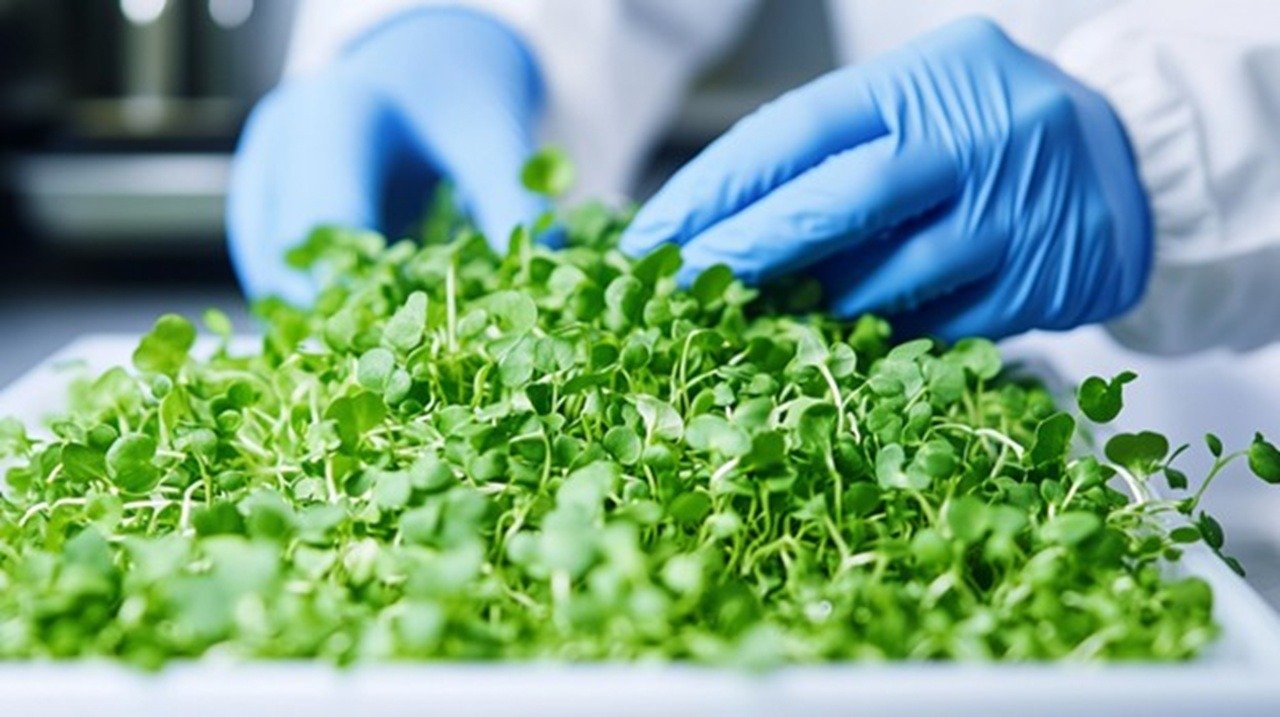
Recent research on sulforaphane from broccoli microgreens, while promising, faces several key challenges that require further investigation.
People vary in conversion efficiency. Gut bacteria profiles differ; genetic variants alter detox enzyme behavior; diet context shifts outcomes. That reality argues for steady, food‑based intake over time rather than chasing heroic single‑day totals.
Standardization remains a hurdle. Content swings with cultivar, day of harvest, and post‑harvest handling. Buyers can close the gap by asking for harvest dates and favoring consistent suppliers. Home production narrows uncertainty but asks for basic sanitation and temperature control.
If you’re under medical care or taking medication, it’s worth a conversation with your clinician before making microgreens a daily fixture. Research into how dietary sulforaphane interacts with other treatments is still developing.
Automation, cool‑chain discipline, and simple, clear date labeling all help consumers hit their targets more reliably.
Education remains uneven. Many readers learn about sulforaphane from social posts with imprecise preparation advice. Clear, repeatable steps reduce confusion and support consistent results. Retailers and growers who print simple prep guidance on clamshells help everyone.
Data transparency will help adoption. Even occasional lab checks for representative lots give buyers confidence. Shared methods—how samples were kept cold, how quickly they were analyzed—matter as much as the numbers.
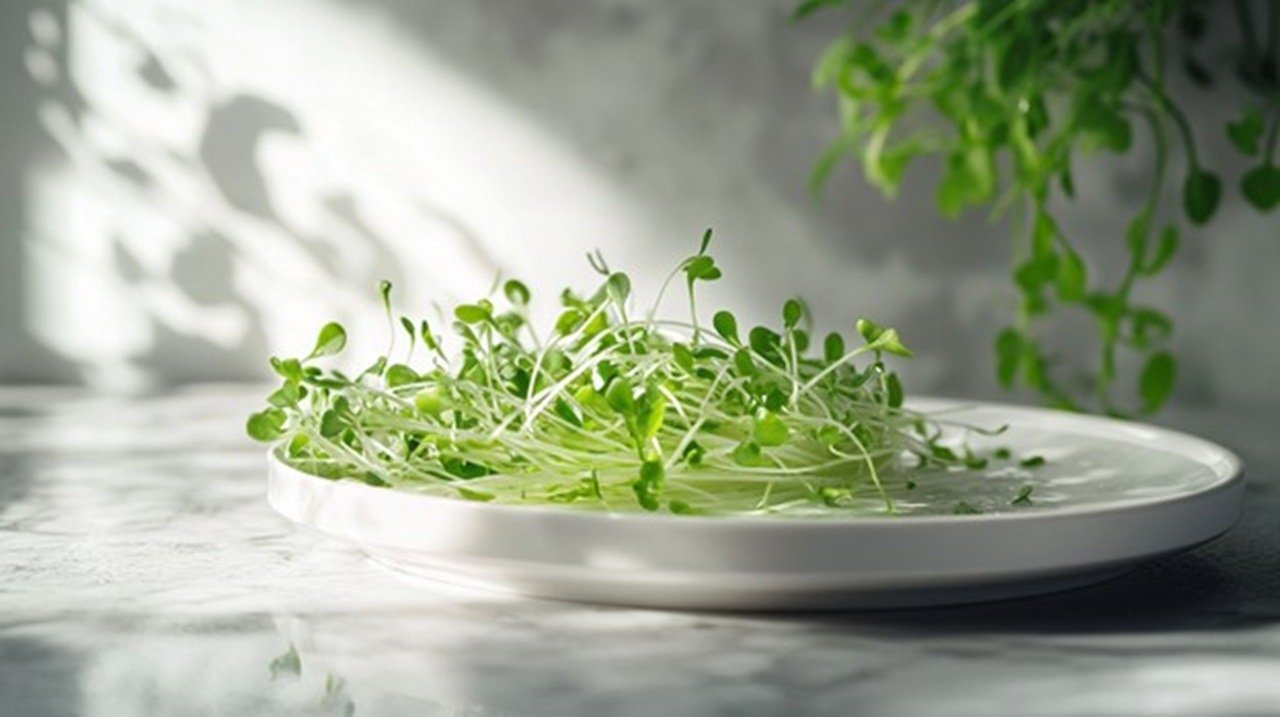
Broccoli microgreens offer a compact, practical path to regular sulforaphane intake. Treat preparation steps as levers: chop‑and‑wait, gentle heat, smart pairings, daily rhythm. Keep expectations grounded; think months of steady intake rather than quick fixes.
Final step: get the The Science Behind Sulforaphane Formation in Microgreen. You’ll receive the weekly digest as well. That download consolidates methods, serving ranges, storage targets, and troubleshooting on single pages you can use in any kitchen.
Keep routine simple and consistent. Place microgreens where you already eat—on eggs, in bowls, in wraps, or blended. Small steps, repeated, carry more weight than rare, high‑effort pushes.
The download includes a printable quick‑start kit and a short FAQ on children, medications, and texture tweaks. Join once; receive weekly updates with new studies and field tips from growers and clinicians.
Most People Lose Half Their Sulforaphane Before They Eat It
Sulforaphane isn’t sitting in the leaf waiting for you. Your broccoli microgreens make it the moment you cut them. A few simple habits decide how much reaches your plate. The guide shows you how sulforaphane forms. It walks through the prep, timing, storage, and pairing steps that keep you from losing it.
The Science Behind Sulforaphane in Broccoli Microgreens
Get Instant AccessCan sulforaphane supplements replace fresh broccoli microgreens entirely?
Supplements provide concentrated sulforaphane but miss the myrosinase enzyme that makes conversion efficient in the body. Fresh broccoli microgreens deliver sulforaphane precursors alongside myrosinase in the same bite, which research shows improves bioavailability over isolated supplements. They also carry vitamin C, vitamin K, and carotenoids that supplements do not. For most people, fresh microgreens are the more complete option.
Does cooking destroy sulforaphane in broccoli microgreens?
Yes. Heat deactivates myrosinase, the enzyme that converts glucoraphanin into sulforaphane when you chew raw microgreens. Without active myrosinase, the conversion rate drops significantly. Raw consumption preserves the full conversion pathway. Light steaming under 70°C causes less damage than boiling or sautéing, but raw is the most reliable approach if sulforaphane is your goal.
How long can harvested broccoli microgreens retain their sulforaphane-producing potential?
Properly stored broccoli microgreens maintain sulforaphane-producing potential for 5–7 days after harvest. Refrigerate at 4°C in an airtight container with a dry paper towel to absorb excess moisture. Wet storage accelerates cellular breakdown and reduces myrosinase activity. Harvest only what you plan to eat within that window for best results.
How much sulforaphane do broccoli microgreens contain compared to mature broccoli?
Fahey et al. (1997) at Johns Hopkins found that 3-day-old broccoli sprouts contained 10–100 times more glucoraphanin than mature broccoli heads, gram for gram. Glucoraphanin is the precursor that converts to sulforaphane. The exact concentration varies by seed variety, growing conditions, and harvest timing, but the concentration advantage at the cotyledon stage is consistent across studies.
Are there any risks or side effects from eating broccoli microgreens for sulforaphane?
For most healthy adults, broccoli microgreens are safe in normal dietary amounts. Raw brassicas contain goitrogens, which research suggests may affect iodine use at very high intakes, and they are a source of vitamin K. If you have a thyroid condition, take blood thinners, or are on any medication, check with your doctor before making them a daily habit.
Which microgreens have the highest sulforaphane content?
Broccoli microgreens consistently rank highest for sulforaphane precursor concentration among commonly grown varieties. Radish microgreens contain sulforaphane-related isothiocyanates but from different glucosinolate precursors. Mustard, kale, and cabbage microgreens are all brassicas with glucosinolate content, though at lower concentrations than broccoli. If sulforaphane specifically is the goal, broccoli is the variety to grow.
Ahmed, A. A. J., Richard, F. M., Amy, V. G., Shaw, P. N., Richard, J. M., Catharine, A. O., & David, A. B. (2006). Quantitative measurement of sulforaphane, iberin, and their mercapturic acid pathway metabolites in human plasma and urine using liquid chromatography-tandem electrospray ionisation mass spectrometry. Journal of Chromatography B, 844(2), 223–234. https://doi.org/10.1016/j.jchromb.2006.07.007
Fahey, J. W., Holtzclaw, W. D., Wehage, S. L., Wade, K. L., Stephenson, K. K., & Talalay, P. (2015). Sulforaphane bioavailability from myrosinase. PLoS One, 10(11), e0140963. https://doi.org/10.1371/journal.pone.0140963
Fahey, J. W., Zhang, Y., & Talalay, P. (1997). Broccoli sprouts: an exceptionally rich source of inducers of enzymes that protect against chemical carcinogens. Proceedings of the National Academy of Sciences, 94(19), 10367–10372. https://doi.org/10.1073/pnas.94.19.10367
Talalay, P., & Kensler, T. W. (2019). Dose-Response Effects of Sulforaphane in Animal Models and Human Clinical Trials. Molecules, 24(19), 3593. https://doi.org/10.3390/molecules24193593
Wang, C. P., Beeler, W., Hord, T. J., Chen, R., Korus, J., Thompson, V., … & Stevens, J. F. (2023). Effects of Broccoli Microgreen Consumption on Human Gut Microbiota Composition and the Metabolome: A Pilot Study. Foods, 12(20), 3784. https://doi.org/10.3390/foods12203784
Zhang, Y., Talalay, P., Cho, C. G., & Posner, G. H. (1992). A major inducer of anticarcinogenic protective enzymes from broccoli: isolation and elucidation of structure. Proceedings of the National Academy of Sciences, 89(6), 2399–2403. https://doi.org/10.1073/pnas.89.6.2399