My friend Stephen put a slice of veggie pizza in front of me, topped with what looked like skinny sprouts. I am not a sprout person. After a few minutes of convincing, I took a bite. Two hours later, I was reading about sulforaphane.
Broccoli microgreens contain sulforaphane precursors at concentrations 10 to 100 times higher than mature broccoli. That finding comes from foundational research by Fahey et al. (1997) on broccoli sprouts, with microgreen-specific data supporting similarly elevated levels. Sulforaphane is one of the most studied plant compounds in nutritional science. Research connects it to anti-cancer activity and cardiovascular protection. Some studies point to benefits for autism symptom management, too.
Red cabbage tells its own story. Xiao et al. (2012) tested 25 microgreen varieties and found red cabbage microgreens had 40 times more vitamin E than mature red cabbage. That number applies to red cabbage specifically. Across all 25 varieties tested, microgreens consistently outperformed their mature counterparts on vitamins C, E, K, and beta-carotene. The margins vary by species, but the direction does not.
Microgreens are seedlings harvested after germination but before the plant diverts energy into structural growth. During that brief developmental window, the plant concentrates the compounds it uses for protection and stress response. A seedling can’t run from threats. It defends itself chemically. That’s where the nutritional density comes from. Not a farming trick. Basic plant biology. Research links regular consumption to lower cardiovascular risk and reduced inflammation. Mineral intake improves, too.
Stephen was right. I pooh-poohed the idea at first.
Key Takeaways
Broccoli microgreens contain sulforaphane precursors at 10 to 100 times the concentration found in mature broccoli (Fahey et al., 1997). Red cabbage microgreens specifically show up to 40 times more vitamin E than mature red cabbage (Xiao et al., 2012). Over 100 varieties exist, most ready to harvest in 7 to 14 days. Many grow well on a kitchen windowsill.
MICROGREENS WEEKLY DIGEST
Unearth nature’s nutrient powerhouses.
Join 12,000+ growers getting weekly microgreens tips, recipes, and science
Sign up now. Let’s grow together.
- What Are Microgreens, Exactly?
- Which Microgreens Varieties Can You Actually Grow?
- How Much More Nutritious Are Microgreens Than Regular Vegetables?
- What Does the Research Say About Microgreens and Disease Prevention?
- How Do You Use Microgreens in Everyday Cooking?
- Can You Grow Microgreens at Home Without a Garden?
- I Love My Microgreens
- Microgreens Nutrition: Frequently Asked Questions
- Research
Microgreens are an emerging superfood, poised to disrupt how we eat vegetables. Many plants can be grown as microgreens. Microgreens nutrition, broccoli, kale, and red cabbage, show very high concentrations of sulforaphane, scientifically shown to have anti-cancer and anti-inflammatory effects.
One study (Xiao et al., 2012) found that microgreens contain up to 40 times more nutrients compared to their mature counterparts. Some of these nutrients include vitamins C, E, and K.
Urban legend has it that Chef Craig Hartman, a fellow named Mike, and Luca Pachina coined the phrase microgreens in the 1980s while working in the restaurants of the California wine valley. Since then, microgreens have moved from their culinary roots, gained popularity, and emerged as a new nutritional trend.
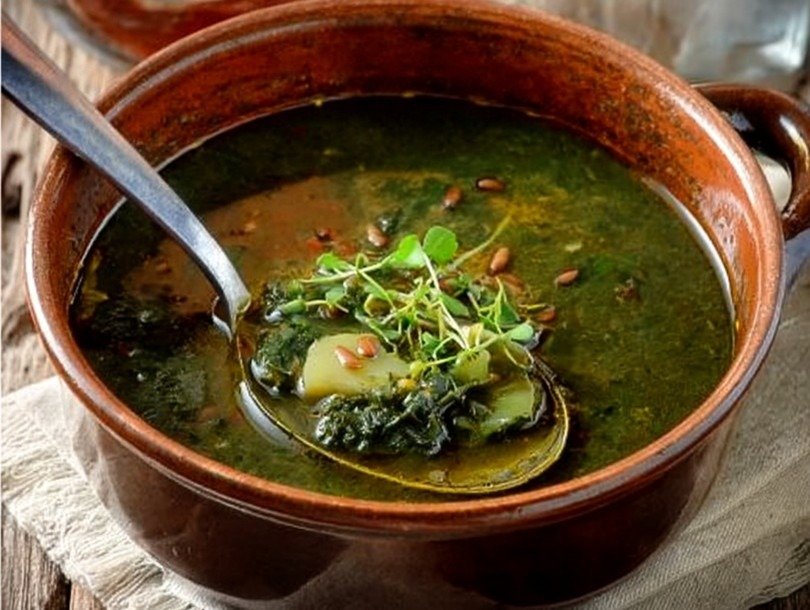
Many upscale restaurants serve them as an edible garnish or as a salad ingredient. You can also add them to soups and sandwiches. You can buy microgreens whole and cut them, keeping them alive in the fridge until you are ready to eat them.
And if you want to test “your green thumb,” you can grow them all year round in your garden, greenhouse, and even on your windowsill. You can harvest the stem and the attached embryonic seed leaves at 7−14 days after germination, depending on the species.
Which Microgreens Varieties Can You Actually Grow?

There are hundreds of vegetables and herbs that can make good microgreens.
You can grow microgreens from almost any kind of edible vegetable or herb seed. I have even read that some grains and grasses, like wheatgrass, can make incredible microgreens.
When I tasted my first microgreens, there were so many flavors. Some were bland, others spicy or bitter. I haven’t had sour-tasting microgreens yet, but Stephen is working on it.
Farmers categorize microgreens based on the plant family they belong to. The grouping gives us a broad idea of what kind of taste they’ll have, their preferred growing conditions, and nutrient content.
| Plant Family | Genera / Type |
| Amaranthaceae | Amaranth, beets, Swiss chard, quinoa, and spinach |
| Amaryllidaceae | Chives, garlic, leeks, and onions |
| Apiaceae | Carrot, celery, dill, and fennel. |
| Asteraceae | Chicory, endive, lettuce, and radicchio |
| Brassicaceae | Arugula, broccoli, cabbage, cauliflower, radish, and watercress. |
| Cucurbitaceae | Cucumbers, melons, and squashes. |
| Lamiaceae | Most common herbs like mint, basil, rosemary, sage, and oregano. |
| Poaceae | Grasses and cereals like barley, corn, rice, oats, and wheatgrass. Legumes including beans, chickpeas, and lentils. |


When you taste carrot microgreens, for example, your taste buds get an unbelievably concentrated flavor. You think you’re eating carrots.
How Much More Nutritious Are Microgreens Than Regular Vegetables?

In a seminal research study of microgreen nutrition (Xiao et al., 2012), red cabbage, cilantro, garnet amaranth, and green daikon radish had the highest concentrations of Vitamin C, Vitamin A, Vitamin K, and Vitamin E, respectively.
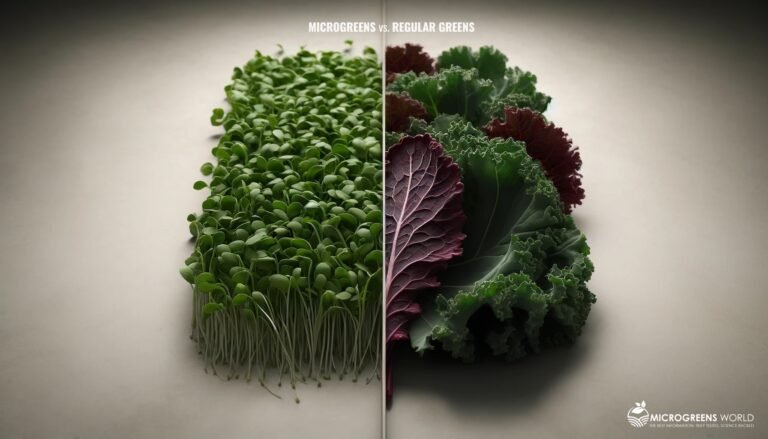
Microgreens contain greater amounts of nutrients and health-promoting micronutrients than their mature counterparts. Because they are rich in nutrients, smaller amounts may provide similar nutritional effects compared to larger quantities of mature vegetables.
Microgreens have 4 to 20 times more nutrients than mature plants (Pinto, et al., 2016). One ounce of broccoli, kale, and cabbage microgreen mix contains the amount of sulforaphane found in 1.5 pounds of raw broccoli. Sulforaphane has also been proven to ease symptoms associated with autism spectrum disorder.
Minerals are essential nutrients for humans. Recent studies suggest that microgreens are excellent sources of minerals. Compost-grown broccoli microgreens had between 1.15 and 2.32 times more minerals, including phosphorus, potassium, magnesium, manganese, zinc, iron, calcium, sodium, and copper, than their mature counterpart.
Microgreens are also a great source of beneficial plant compounds like antioxidants.
| Vitamins | Minerals |
|---|---|
| Vitamin A | Iron |
| Vitamin C | Calcium |
| Vitamin K | Potassium |
| Vitamin E | Magnesium |
| Vitamin B1 (Thiamine) | Zinc |
| Vitamin B2 (Riboflavin) | Phosphorus |
| Vitamin B3 (Niacin) | Manganese |
| Vitamin B5 (Pantothenic acid) | Copper |
| Vitamin B6 (Pyridoxine) | Selenium |
| Vitamin B9 (Folate) | Chromium |
| Vitamin B12 (Cobalamin) |
| Phytonutrients | Phytosterols & Other Bioactive Compounds |
|---|---|
| Beta-carotene | Beta-sitosterol |
| Lutein | Campesterol |
| Zeaxanthin | Stigmasterol |
| Chlorophyll | Brassicasterol |
| Flavonoids | Avenasterol |
| Anthocyanins | |
| Glucosinolates | Quercetin |
| Phenolic compounds | Kaempferol |
| Carotenoids | Apigenin |
| Sulforaphane | Polyphenols |

These compounds have been shown to have various health benefits, including antioxidant, anti-inflammatory, and anti-cancer properties. Eating a variety of microgreens can help increase your intake of these beneficial compounds.
What Does the Research Say About Microgreens and Disease Prevention?
There have been tens of studies conducted in the past five years showing that eating more vegetables and their microgreens precursors is linked to a lower risk of many treatable diseases. These studies show that microgreens have higher amounts of vitamins, minerals, and other beneficial plant compounds than mature greens.
Microgreens have the potential to reduce the risk of many treatable diseases, including:
- Cardiovascular Disease: Heart disease is the #1 cause of death in the US, and high cholesterol is a major risk factor. Among published findings (Huang, Haiqiu, et al., 2016), red cabbage microgreen supplementation lowered circulating LDL levels in animals fed a high-fat diet, and reduced liver cholesterol, triacylglycerol levels, and reduced high-fat diet-induced weight gain.
- Chronic Kidney Disease: Chronic kidney disease is considered a ‘lifestyle-related disease’ and represents a global problem. Doctors usually recommend a restriction of high-potassium foods to patients suffering from the disease. In another study (Renna et al., 2018) chicory and lettuce microgreens were grown using a nutrient solution without potassium and with low potassium concentrations. It was possible to obtain a useful reduction of potassium in the microgreens, without negatively affecting the quality.
- Mineral Deficiencies: Mineral malnutrition, including iron and zinc, impacts over two-thirds of the World’s population. One study (Weber, 2017) suggests that broccoli microgreens have the potential to be a rich source of minerals that individuals can produce, even in urban home settings. Regardless of how they were grown, the broccoli microgreens had twice as many quantities of Mg, Mn, Cu, and Zn than its mature vegetable.
This is promising research, and more studies need to be done on the impact microgreens could have on our everyday health.
How Do You Use Microgreens in Everyday Cooking?

I doubt you’ll find packaged, ready-to-eat microgreens in your local supermarkets.
Microgreens are more expensive, and because they have a shorter shelf life, you are more likely to find them in your health food store, specialty market, upscale restaurants, and catering establishments.
The US Department of Agriculture generally considers eating microgreens as safe. You are only eating the leaf and stem, not the root and seed. The potential for bacteria growth is much smaller in microgreens than in sprouts.
Nonetheless, avoid GMOs. Ensure the microgreens seeds are not chemically-treated. Look for the Certified Naturally Grown or certified organic label on the produce.
Incredible microgreens will add beautiful color, great flavor, and tastes to salads, sandwiches, and soups. They are a nice garnish for meats and other dishes. Here are just a few ideas:
- Top your favorite homemade pizza with microgreens. Yum!
- A handful of spring onion and radish microgreens to top a salmon burger.
- Toss some incredible microgreens on your first salad course at dinner.
- A Sunday morning egg white omelet with avocado, goat cheese, and microgreens.
- Skip the slaw or shredded lettuce and top your tacos with microgreens.
- Try a rainbow-colored, charred rainbow beet and pistachio salad.
- Layer any sandwich with a handful of microgreens.
If you enjoy juicing, then you should try blending microgreens into smoothies or juices. Wheatgrass juice is a popular example of a juiced microgreen.

Once you taste those incredible microgreens and start feeling the difference in your energy, your imagination is the only thing that will stop you.
MICROGREENS WEEKLY DIGEST
Unearth nature’s nutrient powerhouses.
Join 12,000+ growers getting weekly microgreens tips, recipes, and science
Sign up now. Let’s grow together.
Can You Grow Microgreens at Home Without a Garden?
I spent many summers on my Nanna’s farm planting lots of greens and vegetables. But today I’m an urbanite at heart. Love me some concrete!

So, when Stephen told me I should try growing my own microgreens, well, let’s just say I pooh-poohed the idea at first. But after a few weeks, and much egging, I caved in.
So, like any novice, I didn’t know what I didn’t know. But I knew I needed to answer at least four questions before I went off to Home Depot …
- What types of microgreens should I grow?
- Should I use soil or hydroponics? That’s a big word, isn’t it? So, here’s the Wikipedia definition:
Hydroponics is a method of growing plants without soil by using mineral nutrient solutions in a water solvent.
- Should I use artificial or natural sunlight?
- How and when do I harvest them?
I called up my sister Christina first. She’s an agriculturist. She said, “Andrew, you forgot two important things: storage temperature and atmospheric composition.” My reply was, “Sis, I just want to grow them on the windowsill in my kitchen.”
She gave me the good news that microgreens are convenient to grow, as I don’t need a lot of equipment. And I could grow them on my windowsill.
So, go here if you want my little sister’s complete guide on How to Grow Microgreens on Your Windowsill. Here’s the notebook version:
Like any good recipe, here are your ingredients:
- Choose one variety. I’d say radish or broccoli microgreens. They germinate in one to two days and grow quickly.
- Get some good-quality seeds, preferably GMO-free, organic ones.
- Get a container. I got a glass jar.
- Get some good organic soil.
- Get a spray bottle for watering.
- Fortunately, my kitchen faces north, and I get about 6 hours of sun a day. If you’re not so lucky, go get an ultraviolet lamp from the hardware store.
Directions:
- Get your glass jar and fill it with soil.
- Make sure you pack the soil loosely.
- Water lightly.
- Sprinkle your microgreens seeds as evenly as you can. You don’t need to presoak radish, so skip that.
- Mist your seeds and soil with a spray bottle.
- Cover the jar with a plastic lid. In early germination, they don’t need any light.
- Check on the jar daily. Mist as needed, to keep the seeds moist.
- Once your microgreens seeds sprout (about 1-2 days), put the jar on your windowsill (or turn on the disco light).
- They’ll need 4-8 hours of light a day.
- Leave them uncovered. They wilt easily in humidity as I quickly learned.
- Water once a day and watch them grow and change color.
- After 7–10 days, your microgreens should be ready to harvest.
Using plain old scissors, cut the stems above the roots, serve and eat.
If you are interested, check out my post on growing outside, “Beyond the Windowsill: Growing Microgreens on Your Balcony or Patio.“
If growing is not for you, you can find ready-to-eat microgreens at your local upscale supermarket or farmer’s market.
I Love My Microgreens
Microgreens have been around for almost 40 years. They have found their way into our everyday diets, quietly and easily, with flavorful and aromatic varieties.

They are highly nutritious and with more research, could have the potential to reduce our risk of some common diseases.
With two-to-forty times more nutrient content than mature vegetables, your incredible microgreens are a cheaper way to get your vitamins and minerals. And since you can grow some varieties at home easily and faster, you don’t have to buy large quantities of vegetables.
On soups, salads, sandwiches, or just eating by themselves, these incredible microgreens are a great supplement to your diet—forget those pills!
Later today, I will give some radish microgreens a try. Stephen told me they were spicy, tender, and crisp. They should be great on my salmon salad.
MICROGREENS WEEKLY DIGEST
Unearth nature’s nutrient powerhouses.
Join 12,000+ growers getting weekly microgreens tips, recipes, and science
Sign up now. Let’s grow together.
Research
Xiao, Zhenlei, et al. “Assessment of Vitamin and Carotenoid Concentrations of Emerging Food Products: Edible Microgreens.” Journal of Agricultural and Food Chemistry, vol. 60, no. 31, July 2012, pp. 7644–51, https://doi.org/10.1021/jf300459b.
Pinto, Edgar, et al. “Comparison between the Mineral Profile and Nitrate Content of Microgreens and Mature Lettuces.” Journal of Food Composition and Analysis, vol. 37, Feb. 2015, pp. 38–43, https://doi.org/10.1016/j.jfca.2014.06.018.
Huang, Haiqiu, et al. “Red Cabbage Microgreens Lower Circulating Low-Density Lipoprotein (LDL), Liver Cholesterol, and Inflammatory Cytokines in Mice Fed a High-Fat Diet.” Journal of Agricultural and Food Chemistry, vol. 64, no. 48, Nov. 2016, pp. 9161–71, https://doi.org/10.1021/acs.jafc.6b03805.
Renna, Massimiliano, et al. “Microgreens Production with Low Potassium Content for Patients with Impaired Kidney Function.” Nutrients, vol. 10, no. 6, May 2018, p. 675, https://doi.org/10.3390/nu10060675. Accessed 14 Oct. 2021.
Weber, Carolyn F. “Broccoli Microgreens: A Mineral-Rich Crop That Can Diversify Food Systems.” Frontiers in Nutrition, vol. 4, Mar. 2017, https://doi.org/10.3389/fnut.2017.00007.