In 2017, Steven and I started jPure Farms out of his basement with one goal. We wanted to grow the most profitable microgreens we could find. That first year taught us something the seed catalogs never mention. The variety that earns the most is rarely the one with the highest price tag.
Back then, radish ran 3 grow cycles a month on a 7-day harvest. Sunflower ran 2 cycles on the same setup, same trays, same space. Radish out-earned it every month, not because it sold for more per tray, but because it turned faster. That one fact, how fast a tray clears and resets, drove more of our income than any price we set.
So which microgreens are the most profitable? Radish, sunflower, and pea shoots lead most markets. Profit is never just the price on the invoice. It is yield, grow time, and how fast a tray turns, set against what your buyers will actually take each week.
This post ranks the varieties that earn the most and shows the real per-tray and per-square-foot numbers behind them. It also covers the one factor that can reorder the whole list for your market. You will not have to take our word for the math either. There is a free calculator that lets you run your own crops and prices.
Key Takeaways
Radish, sunflower, and pea shoots are the most profitable microgreens for most growers, because profit comes from yield, grow time, selling price, and market demand working together, not price alone. A grower analysis of two dozen varieties from Piedmont Microgreens found that fast-cycling, well-priced crops like radish and tendril pea rank highest once grow time and gross margin are weighed together (Microgreen Manager, 2025). Radish stands out because its short cycle lets a single tray earn more times per month. The most profitable variety, though, is still the one your buyers have already committed to ordering.
Below you will find which varieties earn the most, what actually drives the difference, the real per-tray and per-square-foot numbers, and how local demand reshapes the rankings for your area.
CHOOSING YOUR MICROGREENS VARIETIES FOR MAXIMUM PROFITABILITY
Radish, sunflower, pea shoots, cilantro, and basil are the most profitable microgreens for most growers, but the order shifts depending on what you measure. That is the part most “top 10” lists skip. There is no single ranking, because profit has two levers that do not always point at the same crop.
The first lever is velocity. How fast a tray clears and resets. Radish wins here. It runs a short 7-day cycle, so the same tray earns more times per month than a slower crop. At jPure Farms in 2017, that speed is what made radish out-earn sunflower, even though both sold in the same range. More turns, more income, same space.
The second lever is margin per tray. How much profit you keep on each tray after costs. By this measure the ranking changes. A grower analysis of two dozen varieties from Piedmont Microgreens put cilantro, radish, and tendril pea near the top once grow time and gross margin were weighed together, with crops like dill earning a premium on modest yield while arugula lagged because it yields little and cannot command a high price (Microgreen Manager, 2025).
So which is the most profitable? It depends on your setup. If your space is the bottleneck, optimize for velocity and lean on fast crops like radish. If your demand is steady and your prices are strong, optimize for margin and a slower premium crop can out-earn a fast cheap one. Most growers land on a small mix that covers both.
Here is how the most common sellers stack up on the traits that drive each lever.
| Variety | Grow speed | What drives its profit |
|---|---|---|
| Radish | Fast (about 7 days) | Velocity. Quick cycles mean more tray turns per month. |
| Sunflower | Medium | Strong gross dollars per tray, popular and filling. |
| Pea shoots | Medium | Premium pricing power in restaurants and at market. |
| Cilantro | Slower | High margin once dialed in, strong culinary demand. |
| Basil | Slower | Premium price, steady restaurant pull. |
| Broccoli | Fast (7 to 10 days) | Quick turns plus a health-driven retail draw. |
Current market ranges put common varieties at roughly $2 to $4 per ounce retail, or about $25 to $40 per 10 by 20 tray wholesale to restaurants, with tracked gross margins of 70 to 80 percent before labor (industry pricing data, 2025). Your real figure depends on your local prices and yields, which is the whole point of running your own numbers rather than trusting a national average.
What the research says
What buyers pay more for: what the studies found
No study has ranked microgreens by profit. What researchers have tested is what makes buyers pay more, and that's where your margin comes from.
- Green beats purple. 821 shoppers valued green microgreens over purple ones, and liked local. Rihn 2024
- Light-boosted nutrition earns $0.47 to $0.79 more. Fertilizer-boosted greens looked riskier to the same shoppers. Rihn 2024
- Bad news costs more than good news helps. Negative talk about LED-grown greens cut what people would pay. Positive talk barely moved it. Ricks 2023
See all six findings and the sources
- Green sells better than purple. In a survey of 821 shoppers in Tennessee, people valued green microgreens more than light or dark purple ones. Grown in their own state and plant height mattered too. Rihn 2024
- Nutrition boosted with light earns a premium. The same shoppers would pay $0.47 to $0.79 more for microgreens grown under light set up to raise nutrients. When fertilizer did the boosting, they saw it as riskier. Rihn 2024
- Bad news costs more than good news helps. Negative information about LED-grown greens lowered what people would pay. Positive information barely moved it. Ricks 2023 How you answer a skeptical customer matters.
- More seed means more weight, but fewer nutrients. In one trial, twelve seeds per cell gave the most yield for radish, cabbage and arugula. Four seeds per cell gave more vitamin C and glucosinolates. Ntsoane 2023
- What other growers pick: radish (29%), sunflower (28%) and peas (27%) were the most common crops in a national survey of US growers. Misra 2021
- The market is growing. A 2024 review cites forecasts of $1.7 billion in 2022 rising to $2.61 billion by 2029. Singh 2024 In a 2026 survey of 188 people in the UAE, 74.7 percent said they'd accept a higher price. That's what people said, not what they bought. Nair 2026
More: the buyer and taste papers in the research database and what to tell customers, crop by crop
Sources (6)
- Rihn, Walters, & Bumgarner (2024). The influence of risk perceptions on consumers' willingness to pay for nutrient-enhanced microgreens. HortScience. doi.org/10.21273/hortsci17888-24
- Ricks, Secor, & Campbell (2023). Consumer preference for microgreens in the presence of LED lights and information treatments. HortScience. doi.org/10.21273/hortsci16948-22
- Ntsoane, Manhivi, Shoko, et al. (2023). The phytonutrient content and yield of Brassica microgreens grown in soilless media with different seed densities. Horticulturae. doi.org/10.3390/horticulturae9111218
- Misra & Gibson (2021). Characterization of microgreen growing operations and associated food safety practices. Food Protection Trends. doi.org/10.4315/1541-9576-41.1.56
- Singh, Singh, Kaur, et al. (2024). Emergence of microgreens as a valuable food, current understanding of their market and consumer perception: a review. Food Chemistry: X. doi.org/10.1016/j.fochx.2024.101527
- Nair, Alsudain, Kadher, et al. (2026). Consumer adoption of microgreens in a sustainable urban food system: awareness, willingness to pay, and barriers in the UAE. Frontiers in Sustainable Food Systems. doi.org/10.3389/fsufs.2026.1878642
What Makes One Microgreen More Profitable Than Another?
Profitability comes down to four things working together: yield per tray, grow time, selling price, and steady demand. A crop wins when it stacks up well across all four, not just one. That is why the highest-priced variety is not automatically the most profitable, and why a cheap, fast crop can quietly out-earn a premium one.
Here is how each factor pulls on your bottom line.
Yield per tray. How much sellable product a single tray produces, usually 4 to 6 ounces of fresh greens for common varieties, though high-yielders run more (industry yield data, 2025). More usable yield spreads your fixed costs (seed, soil, labor, light) across more product, which lifts margin. Waste matters here too. A crop that looks high-yield but bruises or wilts fast loses money between harvest and sale.
Grow time. How long a tray ties up your space before it clears. This is the velocity lever from the last section. A 7-day radish cycle lets the same rack earn three times in a month. A 21-day crop earns once. Short cycles are like faster table turns in a restaurant, the same seats serving more customers.
Selling price. What your market will actually pay, not what a chart says it should. Common varieties run about $2 to $4 per ounce retail, or roughly $25 to $40 per 10 by 20 tray wholesale to restaurants (industry pricing data, 2025). Pricing power varies by crop and by buyer. A premium herb can command more per ounce, but only if a buyer genuinely wants it at that price.
Demand. The factor that decides whether the other three matter at all. A crop can cost almost nothing to grow and yield beautifully, but if no one is buying it, the margin on paper is fiction. This is the lever that reorders every ranking, and it gets its own section next.
Grow time deserves a closer look, because it is the one growers most often underweight. Fast crops free up space and cash quickly, but they demand tighter management. Slower crops are more forgiving but lock up a tray for weeks. Knowing which of your varieties sit on each side helps you balance cash flow against labor. For the full cultivar breakdown, see which microgreens grow the fastest.
| Fast-growing (about 5 to 10 days) | Slower-growing (2 weeks or more) |
|---|---|
| Radish, broccoli, kale, kohlrabi, cabbage, cress, mizuna, pac choi, mustards (except Red Giant), tatsoi | Basil, cilantro, dill, fennel, parsley, beet, chard, carrot, amaranth, arugula, shiso, scallion |
The takeaway is simple. Run all four factors together before you commit space to a crop. A variety that scores well on yield, turns fast, prices strongly, and has buyers waiting is a keeper. One that wins on a single factor and loses on the rest is a trap that looks good only on a spreadsheet.
How Much Can You Earn Per Tray and Per Square Foot?
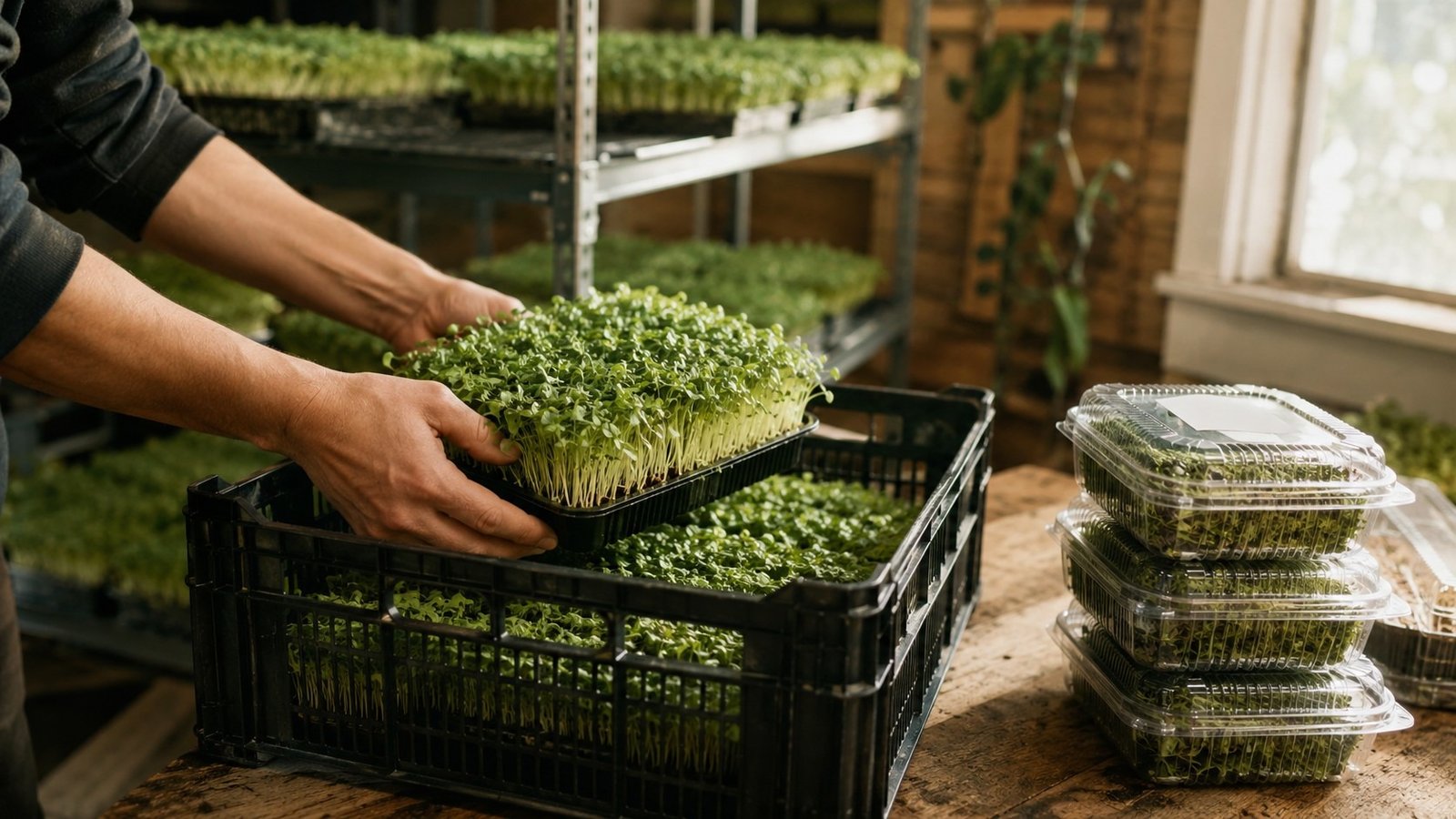
A single tray of microgreens earns somewhere between $25 and $50 at current market rates, depending on the variety, your channel, and your region (industry pricing data, 2025). But the per-tray number alone hides the real story, which is how much that tray earns per square foot of space and per month of time. Those are the figures that tell you whether your operation actually pays.
Start with a real example, then look at where the market sits now.
What jPure earned in 2017. When Steven and I were running jPure Farms, radish sold for $32.53 per tray against about $23 in production cost, on a 7-day cycle. Run three cycles a month across 25 trays and that came to roughly $715 net per month from radish alone. Sunflower, on a slower two-cycle month with the same 25 trays, netted about $486. Same space, same trays, and radish pulled in around $229 more a month purely on cycle speed. Those are 2017 numbers from our operation, not today’s prices, but the lesson holds: velocity moved the money more than the price tag did.
Where the market sits now. Today, common varieties like radish, sunflower, and pea shoots sell for about $2 to $4 per ounce retail, or roughly $25 to $40 per 10 by 20 tray wholesale to restaurants (industry pricing data, 2025). A typical tray yields 4 to 6 ounces of sellable greens. Tracked gross margins commonly land in the 70 to 80 percent range before labor, with net margins after labor, packaging, delivery, and overhead more realistically in the 15 to 25 percent range (grower margin data, 2025). The spread between gross and net is where a lot of growers fool themselves, the gross looks great until labor and waste are counted.
Per square foot is the number that exposes weak crops. Because microgreens grow on stacked shelves, the honest measure is contribution margin per square foot over a full grow cycle, not just per tray.
| Crop (30-day cycle) | Relative contribution margin per sq ft |
|---|---|
| Spicy mix | Highest |
| Broccoli | High |
| Pea shoots | Solid |
| Arugula | Lowest |
Those are relative positions from published grower analysis, not fixed dollar promises (grower analysis, 2025). Arugula sitting at the bottom is the recurring surprise. It is popular, but it yields little and cannot command a premium, so it earns less per square foot than crops people assume are less “trendy.” That is the per-square-foot lens catching what the popularity lists miss.
None of these are your numbers, though. They are starting points. Your rent, your seed cost, your local prices, and your yields will move every figure here. That is exactly why running your own crops through a calculator beats trusting any published average, including these.
Per tray, after every cost. In a University of Missouri budget, profit ran from $5.84 for radish to $19.45 for cabbage. See the full per-tray numbers.
How Does Local Demand Change Which Varieties Pay?
Demand is the lever that reorders every ranking on this page. A crop can yield well, turn fast, and carry a strong margin, but if your local buyers are not asking for it, none of that matters. The most profitable variety in the abstract loses to the variety your market has already committed to buying.
This is the lesson jPure taught us early. We did not pick radish because a chart said it was profitable. We picked it because the restaurants around us were already ordering it, weekly, consistently, cut clean. The demand was there before we planted a tray. The numbers worked because the buyers came first, not because we guessed right on a spreadsheet.
So the same variety can be a winner in one market and a slow mover in the next. A few patterns show up again and again:
- Restaurant-driven markets reward consistency over novelty. Chefs want the same clean radish or pea shoot every week, on time. Reliability beats exotic. A grower who nails steady supply of three crops a restaurant actually uses will out-earn one offering twelve the kitchen did not ask for.
- Farmers market and direct-to-consumer rewards color, variety, and story. Here a vivid mix or an unusual flavor can command attention and a premium that the same crop would not get wholesale.
- Regional cuisine shapes what sells. Spicy greens like mustard and radish move well where the local food leans bold. Herbs like basil and cilantro track the cuisines that lean on them. The point is not a fixed regional ranking, it is that you read your own market rather than a national list.
The practical move is to validate demand before you commit space. That does not require a market study. It requires conversations:
- Ask local chefs and grocers what microgreens they currently buy and from whom.
- Visit farmers markets and watch what actually sells, not what is merely displayed.
- Talk to other growers in your area about their steadiest sellers.
- Note seasonal and event-driven spikes that can lift a crop temporarily.
A grower with five confirmed buyers and no equipment is in a stronger position than one with a full setup and no orders. Build the crop list from the buyer list, and the profitability math you ran in the last sections finally has real numbers to work with. Build it from research alone, and you are still guessing, just with better-looking spreadsheets.
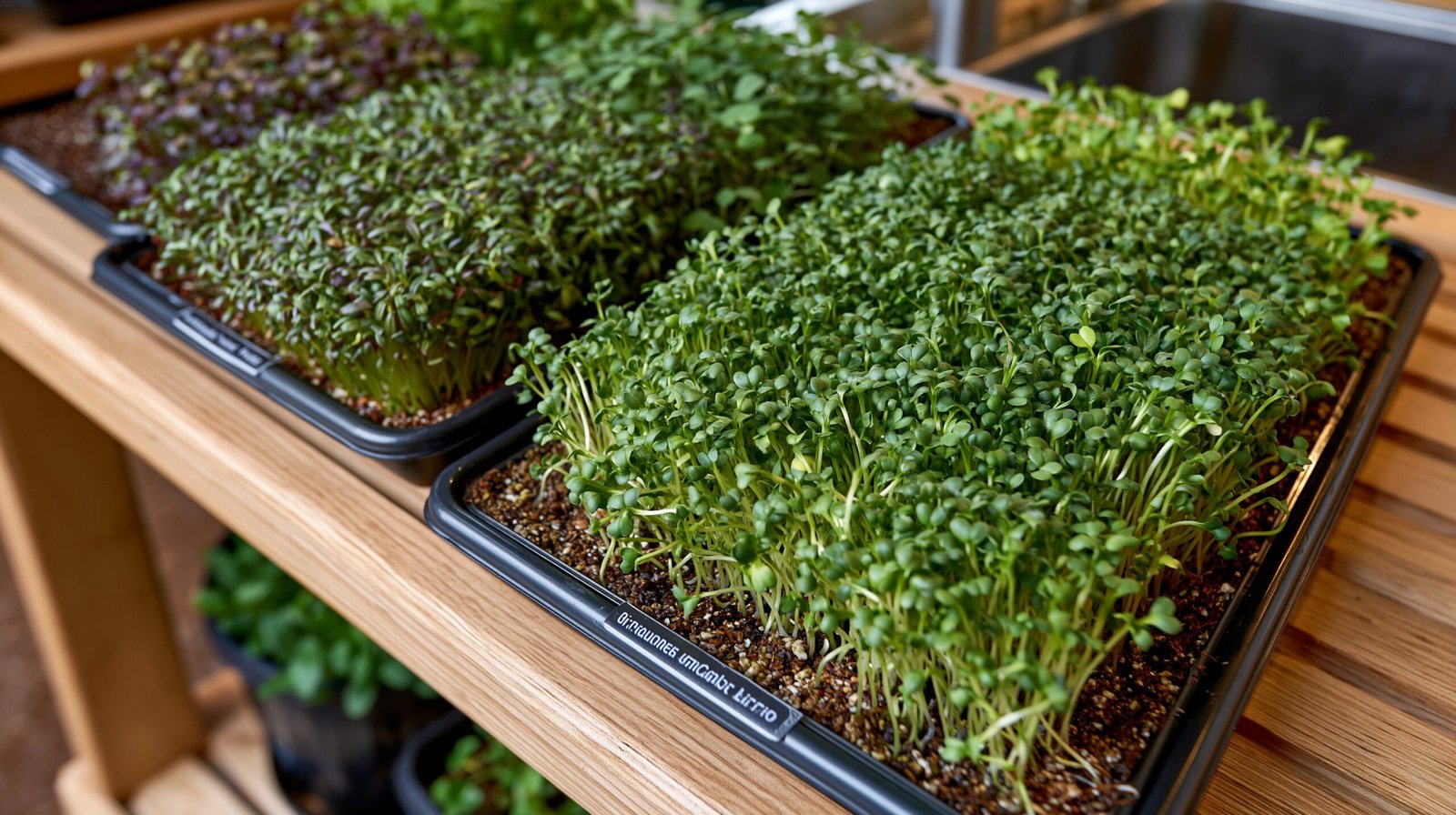
How Do You Start With the Most Profitable Varieties Without Overcommitting?
Start with two or three proven varieties, master them, and let real sales tell you when to add more. The most common mistake new growers make is launching with a dozen crops at once, which multiplies cost, complexity, and waste before a single buyer is confirmed. A focused lineup reaches profitability faster than a broad one.
Pick your starting two or three on the factors from the earlier sections: fast turns, solid margin, and confirmed local demand. For most growers that core looks something like radish for velocity, sunflower or pea shoots for volume and price, and one crop your local buyers have specifically asked for. Three crops you can grow consistently and sell reliably beat ten you grow occasionally and pitch hopefully.
From there, expand on evidence, not enthusiasm:
- Add new varieties in small test batches, a tray or two, before committing rack space. Track the real yield, grow time, and waste against what you expected.
- Keep simple records. Variety, seed density, cycle length, harvest weight, and what actually sold. This is the data that turns guesswork into decisions, and it is the same data a profitability calculator needs.
- Let a variety earn its place. If a test crop sells through cleanly and the margin holds, scale it. If it lingers or wilts before it sells, drop it without sentiment.
- Protect your core. As you add crops, do not starve the two or three varieties carrying most of your revenue. New is exciting; reliable pays the bills.
The thread running through all of it is measurement. You cannot tell which varieties are most profitable for your operation until you track your own yields, your own costs, and your own sale prices across a few real cycles. National averages and other growers’ numbers, including every figure in this post, are starting points, not answers. Your trays, your market, and your costs decide the final ranking.
That is the work the rest of this comes down to: start focused, measure honestly, and let your own numbers tell you what to grow more of.
Wrap-up: Most Profitable Microgreens to Grow and Sell
The most profitable microgreens are not a fixed list. Radish, sunflower, pea shoots, cilantro, and basil show up near the top for most growers, but the real ranking depends on which lever you pull. Optimize for velocity and a fast crop like radish wins on monthly income. Optimize for margin and a premium crop can earn more per tray. Either way, local demand reorders the whole thing, because the variety your buyers already want is the one that actually pays.
That is the shift worth holding onto. Stop asking “which microgreen is most profitable” as if there is one answer, and start asking “which is most profitable in my space, at my prices, for my buyers.” Start with two or three proven crops, track your real numbers, and let your own results tell you what to grow more of.
For the bigger picture on building a microgreens operation that lasts, from pricing and licensing to finding steady buyers, our microgreens business hub pulls the whole roadmap together in one place.
Most Profitable Microgreens: Frequently Asked Questions
Where do you sell microgreens for the best return?
Restaurants, farmers’ markets, and CSA boxes are the three main channels, and each rewards a different strength. Restaurants pay steady wholesale rates for a reliable weekly supply, while farmers’ markets and direct-to-consumer sales often fetch higher per-unit prices for color and variety. Most profitable growers run a mix, anchoring on one steady wholesale account and topping up margin through direct sales.
What are the easiest microgreens to grow for beginners?
Radish, pea shoots, and sunflowers are the easiest starting crops because they germinate fast, grow forgivingly, and resist most beginner mistakes. They also happen to be strong sellers, so a new grower can build skill and revenue on the same few trays. Trickier crops like cilantro and basil are better added once your process is dialed in.
How long does it take for a microgreens business to turn a profit?
Growers who line up buyers before scaling often cover startup costs within a few months, while those who grow first and sell second tend to spend that time discounting unsold product. The timeline is usually a market-validation question more than a growing one. Confirmed orders shorten the path to profit far more than perfect grow technique does.
How much does it cost to start growing microgreens for sale?
A small commercial setup can start in the low hundreds of dollars for trays, seed, soil, and basic lighting on a shelf, and scale up from there as orders grow. Starting lean with two or three crops keeps that initial outlay low and your risk contained. The bigger early cost is usually time spent finding buyers, not equipment.
Do you need a license to sell microgreens?
In most areas, yes, selling food products requires registration, and the specific permits depend on your state or country and whether you sell wholesale or direct. Rules vary widely, so checking your local cottage-food and agriculture regulations before you sell is essential. Getting the paperwork right early prevents costly interruptions once orders start coming in.
Are the most profitable microgreens also the hardest to grow?
Not usually, which is good news for new growers. Several of the strongest earners, radish, sunflower, and pea shoots, are also among the easiest and fastest to grow. The harder crops like cilantro can command premium prices, but you do not need them to build a profitable lineup from the start.
References
Moraru, Paula Ioana, Teodor Rusu, and Olimpia Smaranda Mintas. “Trial Protocol for Evaluating Platforms for Growing Microgreens in Hydroponic Conditions.” Foods, vol. 11, no. 9, 3 May 2022, p. 1327. https://doi.org/10.3390/foods11091327
Misra, Gina, and Kristen E. Gibson. “Characterization of Microgreen Growing Operations and Associated Food Safety Practices.” Food Protection Trends, vol. 41, no. 1, Jan. 2021, p. 56. https://doi.org/10.4315/1541-9576-41.1.56
Microgreens World. “Stay Legal and Profitable: Understanding Microgreens Sales Licenses and Permits.” https://microgreensworld.com/stay-legal-and-profitable-understanding-microgreens-sales-licenses-and-permits/
Microgreens World. “Microgreens Business Plan: The Ultimate Guide for Profitable Growth.” https://microgreensworld.com/microgreens-business-plan-the-ultimate-guide-for-profitable-growth/
Microgreens World. “What Microgreens Grow The Fastest?” Grow-speed reference by variety. https://microgreensworld.com/knowledgebase/what-microgreens-grow-the-fastest/
Microgreens World. “Microgreen Manager Review: An Honest Look at the Software Built on a Real Commercial Farm.” https://microgreensworld.com/microgreen-manager-review/