Disclosure: We’re reader-supported. When you buy through links on our site, we may earn a commission. Full Disclosure.
My son steamed radishes for dinner one night. I took one thin slice, and the spice stopped me cold.
Radish microgreens carry that same bite. What they do not carry is the nutrition table you usually find for them online. Look up radish microgreens nutrition and you get 14.8 mg of vitamin C, 233 mg of potassium and 25 µg of folate per 100 g. Those numbers match one USDA record to the digit, and that record is the grown radish. The root you slice into a salad.
So I went to the labs instead. Here is what they measured in the seedling, how far apart they landed, and the one test radish lost badly.
Key Takeaway
No USDA record exists for radish microgreens. Measured vitamin C runs from 24.7 to 95.8 mg per 100 g, so a 10 g pinch gives 3 to 11 percent of a day. One seed name, China rose, read 95.8 mg in one harvest and 49.0 mg in another, at the same lab (Xiao et al., 2012, 2019).
Below: what a radish microgreen is, the measured record, what eaters thought of the heat, which radish is which, the calories, and four recipes.
The radish evidence page
Every number on this page, plus the ones that did not survive checking. The measured record and the six answers a stall gets asked, in one place.
What are radish microgreens, and where does the radish come from?

A radish microgreen is Raphanus sativus, the same species as the garden radish, cut as a seedling. You eat the first two seed leaves and the stem under them, and that small cut is all radish microgreens nutrition covers. No root, no swollen bulb. It belongs to the cabbage and mustard family, Brassicaceae.
Growers love it. In the first national survey of US microgreen growers, 29 percent of 143 named radish among their main crops, more than any other variety (Misra & Gibson, 2021).
The radish itself comes from the West. Three genome studies trace it to wild radish on Mediterranean and European coasts, with Europe, South Asia and East Asia each taming it more or less on their own (Li et al., 2021; Zhang et al., 2021). Daikon is a single East Asian line.
You may have read that pyramid builders ate radishes. Herodotus did write that, from memory, quoting an interpreter. His Greek word translates as “purge-plant” in the standard lexicon, and no such inscription survives. The oldest seeds confirmed as radish come from a 6th-century AD storage jar in Egyptian Nubia (O’Donoghue et al., 1996).
What does the research measure in radish microgreens nutrition?
FoodData Central, the USDA database, has no record for radish microgreens. Not leaves, not shoots. The figures in circulation (vitamin C 14.8 mg, potassium 233 mg, folate 25 µg) come from record 169276, “Radishes, raw.” That is the grown root. The closest record that is not the root is sprouted radish seed, which is a sprout.
So the honest radish microgreens nutrition record is what individual labs found, with the spread left in view. Per 100 g of fresh radish microgreens, with a 10 g garnish pinch beside it:
| What | Across the labs | In a 10 g pinch |
|---|---|---|
| Dry matter | 4.1 to 10.3%, 8 datasets | not applicable |
| Vitamin C | 24.7 to 95.8 mg, 10 readings | 2.7 to 10.6% DV |
| Vitamin K | 1.8 to 3.3 µg per g, one laboratory | 18 to 33 µg, 15 to 27.5% DV |
| Vitamin E | 2.0 to 4.1 mg alpha-tocopherol | 1.3 to 2.7% DV |
| Beta-carotene | 4.6 to 8.3 mg | no Daily Value |
| Protein | 1.5 to 2.6 g, 3 labs | under 0.3 g |
Look at vitamin C. Ten readings run from 24.7 to 95.8 mg. In five of six panels that compared crops, radish sat mid-table or lower. The China rose seedling at one lab read 95.8 in 2011, 68.0 a year or two later and 49.0 in 2014, as the grower and the method changed (Xiao et al., 2012; Xiao et al., 2015; Xiao et al., 2019).
Vitamin K is the one row that clears a “good source” bar at a pinch, and every reading comes from a single laboratory. If you take warfarin, the NIH advice is to keep your vitamin K intake about the same from day to day, not to avoid it (NIH Office of Dietary Supplements, 2021).
One trial grew seedlings and roots from the same seed. The seedlings carried more protein and fibre; the roots carried more sugar. Nobody measured a vitamin in it (Kajszczak et al., 2025).
What are the benefits of radish microgreens?

Start with the plain fact. No person and no animal has been fed radish microgreens in a published health study. So any benefit you read about is a guess dressed as a finding. What has been measured is radish microgreens nutrition and taste, and the best of that is the bite.
Eighty consumers scored China rose radish microgreens 67.2 out of 100 for heat. That put radish second of six, tied with peppercress and below Dijon mustard at 86.2 (Xiao et al., 2015). The heat has a source. Chewing breaks the cells, an enzyme meets the glucosinolates stored there, and isothiocyanates form on the spot. In radish those are raphasatin and erucin. Allyl isothiocyanate, the sting in wasabi and mustard, did not show up at all (Zhong et al., 2023; Marchioni et al., 2021). If you want to plan around that bite, our microgreens flavor pairing guide matches it to food, and how chefs pair microgreens with proteins picks up from there. In one lab, broccoli microgreens carried more isothiocyanates than radish, and radish came second of fourteen (Bafumo et al., 2024).
Overall eating quality landed at 53.7, which the panel’s own scale calls “good.” Not “excellent.” Only beet earned that.
And here is the losing row. Fifty tasters in Sri Lanka scored radish 3.72 out of 9, last of ten microgreens and tied with fenugreek. Their comment was “unpleasant odour” (Senevirathne et al., 2019). Heat sells to some people. Not to everyone.
This information is educational and is not a substitute for professional medical advice. Talk with your physician before making significant changes to your diet or before using microgreens to address a health concern.
Which radish microgreens are which: daikon, China rose or purple?
Seed catalogues sell radish microgreens under many names. The ones you will meet most are daikon (green and white), China rose (pink stems), red radish and the purple types sold as Sango or Rambo.
They differ in more than color. In one 2014 harvest of thirty brassica microgreens from a single grower, China rose carried the most glucosinolates of all thirty, 535 µmol per 100 g. Daikon from the same lot carried 44 and sat 23rd (Xiao et al., 2019). Glucosinolates are the parent compounds of the heat. In a second lab, four radish cultivars crushed side by side gave off different amounts of raphasatin, with Hailstone highest and China Rose lowest (Zhong et al., 2023).
So for radish microgreens nutrition and flavor, the name on the seed packet matters. If you want to grow one by name, our seed partner for microgreens is True Leaf Market. And the radish guide’s tasting and pricing sheets put each name side by side.
How many calories are in radish microgreens?

Very few. Two labs measured energy in the seedling. A Polish team found 23 to 29 kcal per 100 g across four cultivars (Kajszczak et al., 2025). A Thai team found 28 kcal (Kowitcharoen et al., 2021). A 10 g pinch on your plate is 2 to 3 kcal.
You will see 16 kcal quoted for radish microgreens nutrition on a lot of sites. That number is the grown radish again, from the same USDA root record as the vitamin C figure.
If you count carbs, our post on whether microgreens fit a keto plan covers the wider picture.
What can you make with radish microgreens?
Raw is where the bite lives, so most of these keep the greens uncooked. The stir-fry adds them in the last minute.
Radish microgreens sandwich

Category: Sandwich
Method: No cook
Serves: 1
Time: 10 min
Ingredients
- 2 slices whole-grain bread
- 1/2 cup radish microgreens
- 2 to 3 slices turkey or chicken breast
- 2 slices Swiss cheese
- 1 tablespoon mayonnaise or mustard
- Sliced tomato and cucumber
Method
Spread mayonnaise or mustard on one side of each slice. Layer the turkey or chicken, cheese, radish microgreens, tomato and cucumber on one slice. Top with the second slice, cut in half and serve.
Radish microgreens salad

Category: Salad
Method: Raw
Diet: Vegan
Serves: 2
Time: 10 min
Ingredients
- 2 cups radish microgreens
- 1 cup mixed salad greens
- 1/2 cup cherry tomatoes, halved
- 1/4 cup cucumber, sliced
- 1/4 cup red onion, thinly sliced
- Your favorite homemade dressing
Method
Put everything in a large bowl. Drizzle with dressing, toss gently and serve right away.
Want fifteen more? My book Eat Now! 15 Savory Microgreen Salad Recipes is on Amazon.
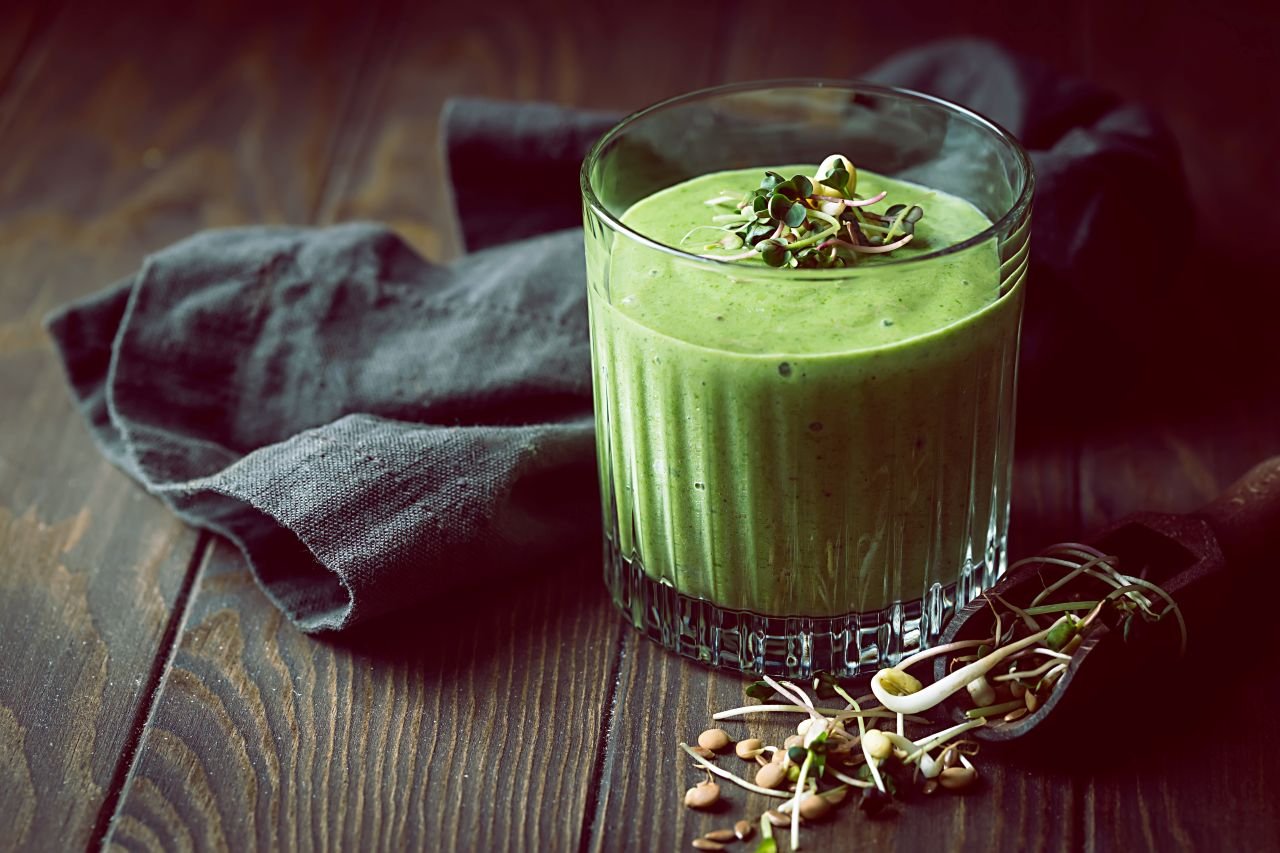
Radish microgreens smoothie
Category: Smoothie
Method: Raw
Diet: Vegetarian; vegan with almond milk and agave
Serves: 1
Time: 10 min
Ingredients
- 1 cup radish microgreens
- 1 banana
- 1/2 cup frozen berries
- 1 cup almond milk or yogurt
- 1 tablespoon honey or agave nectar
Method
Blend everything until smooth and pour into a glass. The banana and berries soften the heat.
For drinks built around microgreens, see my book Eat Now! Microgreen Juices: 25 Savory Pocket Recipes.
Radish microgreens stir-fry
Category: Stir-fry
Method: Cooked
Diet: Vegetarian
Serves: 1
Time: 15 min
Ingredients
- 2 cups radish microgreens
- 1 cup mixed vegetables, such as bell pepper, carrot and broccoli
- 1 tablespoon olive oil
- 2 cloves garlic, minced
- 1 tablespoon soy sauce
- 1 teaspoon sesame oil
Method
Heat the olive oil in a pan over medium heat. Stir-fry the garlic until fragrant, then add the mixed vegetables and cook until tender. Add the radish microgreens for one more minute. Drizzle with soy sauce and sesame oil, toss and serve.
Rather grow your own pinch? A countertop microgreens growing kit from inGarden is one simple way to start.
Wrap-up: radish microgreens nutrition
The radish microgreens nutrition table most people quote belongs to the root. The seedling has its own record, and it is a modest one: vitamin C in the middle of the pack, a vitamin K pinch from one lab, and a few calories. What radish does own is the heat, and you now know where it comes from and why some eaters love it and others push it aside.
Radish is one crop in a bigger set. The Variety Library holds the same evidence check for every crop we have covered, so you can line them up.
The radish evidence page
Every number on this page, plus the ones that did not survive checking. The measured record and the six answers a stall gets asked, in one place.
Radish microgreens nutrition: frequently asked questions
Are radish sprouts the same as radish microgreens?
No. A sprout is the germinated seed, eaten whole with its root after a few days, usually in the dark. In August 2026 a radish sprout mix from Everything Sprouts was recalled for possible E. coli and Salmonella (FDA, 2026). On deliberately contaminated daikon seed, the bacteria still reached the 7-day shoots, at far lower levels than in 5-day sprouts. Clean seed is the control point (Xiao et al., 2014b).
Are radish microgreens a cruciferous vegetable?
Yes. Radish sits in Brassicaceae, the family once called crucifers for its cross-shaped flowers. Broccoli, cabbage, kale and mustard microgreens belong to the same family, so radish microgreens nutrition shares their glucosinolate chemistry.
How long do radish microgreens keep in the fridge?
Cold decides it. Daikon microgreens held at 1°C (33.8°F) still looked salable at four weeks. At 5°C (41°F) they were just salable at two weeks, and at 10°C (50°F) they failed by day 10 (Xiao et al., 2014a). A chlorine wash did not help.
How many days do radish microgreens take to grow?
Five to fifteen days, depending on the lab and the light. In one trial radish was the fastest of ten crops to germinate, with 98 percent of seeds up within seven days (Senevirathne et al., 2019).
Are the leaves of a garden radish the same as radish microgreens?
No. Leaves cut from a grown radish are older tissue from a plant that has spent weeks building its root. No study we have read measured them beside the seedling, so the radish microgreens nutrition numbers above do not carry over to them.
References
- Bafumo, R. F., Alloggia, F. P., Ramirez, D. A., Maza, M. A., Fontana, A., Moreno, D. A., & Camargo, A. B. (2024). Optimal Brassicaceae family microgreens from a phytochemical and sensory perspective. Food Research International, 193, 114812. https://doi.org/10.1016/j.foodres.2024.114812
- FDA. (2026, August 29). Everything Sprouts LLC expands voluntary recall to include Robust Radish Mix due to potential E. coli and Salmonella. U.S. Food and Drug Administration. https://www.fda.gov/safety/recalls-market-withdrawals-safety-alerts/everything-sprouts-llc-expands-voluntarily-recall-include-robust-radish-mix-due-potential-e-coli-and
- Kajszczak, D., Sosnowska, D., Bonikowski, R., Szymczak, K., Frąszczak, B., Pielech-Przybylska, K., & Podsędek, A. (2025). Comparative nutrient study of Raphanus sativus L. sprouts, microgreens, and roots. Agronomy, 15(5), 1216. https://doi.org/10.3390/agronomy15051216
- Kowitcharoen, L., Phornvillay, S., Lekkham, P., Pongprasert, N., & Srilaong, V. (2021). Bioactive composition and nutritional profile of microgreens cultivated in Thailand. Applied Sciences, 11(17), 7981. https://doi.org/10.3390/app11177981
- Li, X., Wang, J., Qiu, Y., Wang, H., Wang, P., Zhang, X., Li, C., Song, J., Gui, W., Shen, D., Yang, W., Cai, B., Liu, L., & Li, X. (2021). SSR-sequencing reveals the inter- and intraspecific genetic variation and phylogenetic relationships among an extensive collection of radish (Raphanus) germplasm resources. Biology, 10(12), 1250. https://doi.org/10.3390/biology10121250
- Marchioni, I., Martinelli, M., Ascrizzi, R., Gabbrielli, C., Flamini, G., Pistelli, L., & Pistelli, L. (2021). Small functional foods: Comparative phytochemical and nutritional analyses of five microgreens of the Brassicaceae family. Foods, 10(2), 427. https://doi.org/10.3390/foods10020427
- Misra, G., & Gibson, K. E. (2021). Characterization of microgreen growing operations and associated food safety practices. Food Protection Trends, 41(1), 56–69. https://doi.org/10.4315/1541-9576-41.1.56
- NIH Office of Dietary Supplements. (2021). Vitamin K: Fact sheet for health professionals. https://ods.od.nih.gov/factsheets/VitaminK-HealthProfessional/
- O’Donoghue, K., Clapham, A., Evershed, R. P., & Brown, T. A. (1996). Remarkable preservation of biomolecules in ancient radish seeds. Proceedings of the Royal Society B, 263(1370), 541–547. https://doi.org/10.1098/rspb.1996.0082
- Senevirathne, G. I., Gama-Arachchige, N. S., & Karunaratne, A. M. (2019). Germination, harvesting stage, antioxidant activity and consumer acceptance of ten microgreens. Ceylon Journal of Science, 48(1), 91–96. https://doi.org/10.4038/cjs.v48i1.7593
- Xiao, Z., Lester, G. E., Luo, Y., & Wang, Q. (2012). Assessment of vitamin and carotenoid concentrations of emerging food products: Edible microgreens. Journal of Agricultural and Food Chemistry, 60(31), 7644–7651. https://doi.org/10.1021/jf300459b
- Xiao, Z., Luo, Y., Lester, G. E., Kou, L., Yang, T., & Wang, Q. (2014a). Postharvest quality and shelf life of radish microgreens as impacted by storage temperature, packaging film, and chlorine wash treatment. LWT – Food Science and Technology, 55(2), 551–558. https://doi.org/10.1016/j.lwt.2013.09.009
- Xiao, Z., Nou, X., Luo, Y., & Wang, Q. (2014b). Comparison of the growth of Escherichia coli O157:H7 and O104:H4 during sprouting and microgreen production from contaminated radish seeds. Food Microbiology, 44, 60–65. https://doi.org/10.1016/j.fm.2014.05.015
- Xiao, Z., Lester, G. E., Park, E., Saftner, R. A., Luo, Y., & Wang, Q. (2015). Evaluation and correlation of sensory attributes and chemical compositions of emerging fresh produce: Microgreens. Postharvest Biology and Technology, 110, 140–148. https://doi.org/10.1016/j.postharvbio.2015.07.021
- Xiao, Z., Rausch, S., Luo, Y., Sun, J., Yu, L., Wang, Q., Chen, P., Yu, L., & Stommel, J. R. (2019). Microgreens of Brassicaceae: Genetic diversity of phytochemical concentrations and antioxidant capacity. LWT – Food Science and Technology, 101, 731–737. https://doi.org/10.1016/j.lwt.2018.10.076
- Zhang, X., Liu, T., Wang, J., Wang, P., Qiu, Y., Zhao, W., Pang, S., Li, X., Wang, H., Song, J., Zhang, W., Yang, W., Sun, Y., & Li, X. (2021). Pan-genome of Raphanus highlights genetic variation and introgression among domesticated, wild, and weedy radishes. Molecular Plant, 14(12), 2032–2055. https://doi.org/10.1016/j.molp.2021.08.005
- Zhong, Y., Jia, Z., Zhou, H., Zhang, D., Li, G., & Yu, J. (2023). Comparative analysis of volatile compounds from four radish microgreen cultivars based on ultrasonic cell disruption and HS-SPME/GC–MS. International Journal of Molecular Sciences, 24(19), 14988. https://doi.org/10.3390/ijms241914988