
Category BUSINESS
Microgreens Galore – Testing Your Microgreens
Get Your Microgreens on Health Food Store Shelves
As a microgreens devotee who started selling vibrant wheatgrass shoots and arugula micros at local farmer’s markets years ago, I’ve witnessed firsthand the sparks that microgreens can ignite regarding consumer passion, palate intrigue, and grocery profit potential.
How to Package and Deliver Your Microgreens (Episode 11)

How to package and deliver your microgreens involves selecting sustainable materials that meet specific strength, size, and quantity requirements. Special techniques such as compostable packaging, insulated boxes, and temperature-controlled delivery systems are essential. Understanding sales channel requirements and considering factors…
How to Price Your Microgreens (Episode 10)

Pricing microgreens must cover production costs, yields, market demand, competitive landscape, varietal differences, distribution channels, and seasonal fluctuations and provide an adequate profit margin that generates a healthy cash flow. Key activities include detailed cost analysis, market research, and strategic…
Choosing Your Microgreens Varieties for Maximum Profitability
Choosing the right microgreens involves analyzing regional demand, growing conditions, and profit margins. Key activities include researching local preferences, starting with manageable varieties, and planning crop rotations. Often overlooked are testing yield and shelf life and aligning choices with the…
Cultivating a Growth Mindset – The Key to Microgreens Business Success (Episode 8)

Starting a microgreens business brings immense mental challenges; cultivating resilience, persistence, and a growth mindset that embraces innovation enables entrepreneurs to achieve sustainability. Aligning to purpose, setting goals, building strategic relationships, and maintaining positive cash flow are vital activities that…
Funding Your Microgreens Business: Exploring Options

Funding a microgreens business involves exploring diverse options such as microgreen grants, USDA microloan rates, and urban agriculture grants. The most important activities include creating a detailed microgreens business plan, understanding the microgreens setup cost, and seeking specific grants like…
Optimizing Cash Flow: The Make-or-Break Priority for Microgreens Business
To optimize microgreens business cash flow, analyze cash cycles, forecast diligently, accelerate collections, strategically manage payables, explore financing, implement creative billing models, utilize financial technologies, get lean operationally, and mitigate risks. Common oversights include not analyzing cycles, forecasting, accelerating collections,…
The Complete Guide to Financing a Microgreens Business from Scratch
To finance a microgreens farm, thoroughly assess personal and business finances, build conservative revenue projections, determine break-even volumes, secure financing through grants, loans, and creative strategies, tightly control costs and cash flow, mitigate risks and leverage experienced advisors. Critical oversights…
Evaluation: Is Your Microgreens Business on the Right Track?
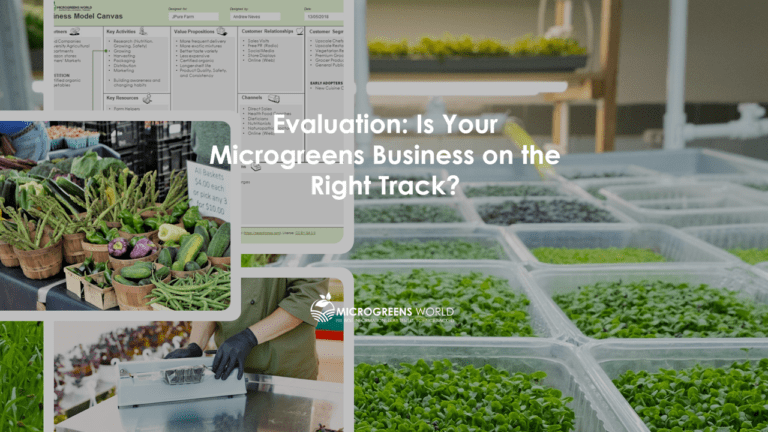
Evaluating a microgreens business using the business model canvas involves assessing the nine key areas: customer segments, value proposition, distribution channels, customer relationships, revenue streams, key resources, key activities, partner network, and cost structure. It’s crucial to regularly review and…
Designing a Successful Business Model for Your Microgreens Business

Creating a microgreens business model canvas involves defining nine key components: customer segments, value proposition, distribution channels, customer relationships, revenue streams, key resources, key activities, partner network, and cost structure. It is vital to regularly update the canvas to reflect…
Decoding Your Microgreens Market: Understanding Customer Needs

To find your customers for a microgreens business, conduct comprehensive market research to understand local and global consumption trends. Identify the health and culinary benefits driving demand. Analyze local buying trends and competitor offerings. Segment your target customers based on…
Identifying Your Market: The Demand for Microgreens

Creating a microgreens marketing plan involves identifying your target market in your locale, understanding the demand for microgreens, conducting competitive analysis, and developing a unique selling proposition. Considering the pricing strategy, distribution channels, and promotional activities is crucial. Pay close…
Stay Legal and Profitable: Understanding Microgreens Sales Licenses and Permits
In most jurisdictions, you need a license to operate a food business like microgreens. Several factors determine your microgreens business license and permit needs, including your location, sales volume, trade name, intended use, if you’re a food handler or servicer,…
The Complete Guide to Organic Microgreens Farming: For Home Gardeners and Entrepreneurs

Organic microgreen farming uses certified organically pathogen-free seeds, no synthetic chemicals or pesticides, follows good agricultural practices (GAP), and the resulting microgreens have increased nutrient content, reduced risk of contamination, and better taste. Some examples of microgreens that can be…
13 Solutions to Mastering the Challenges of Your Microgreens Business Journey

Starting a microgreens business presents challenges such as ensuring optimal growing conditions, managing pests and diseases, handling the delicate harvest process, and navigating market demands. However, these hurdles can be overcome with proper planning, education, and persistence, leading to a…
Harnessing Technology for a Greener Future: A Guide for Microgreens Entrepreneurs

Technology plays a crucial role in microgreens businesses by enhancing sustainability and efficiency. It aids in optimizing growth conditions, reducing resource waste, and improving yield, thus contributing to a more sustainable and profitable business model.
Driving Sustainability: The Role of Quality Control in Your Microgreens Business
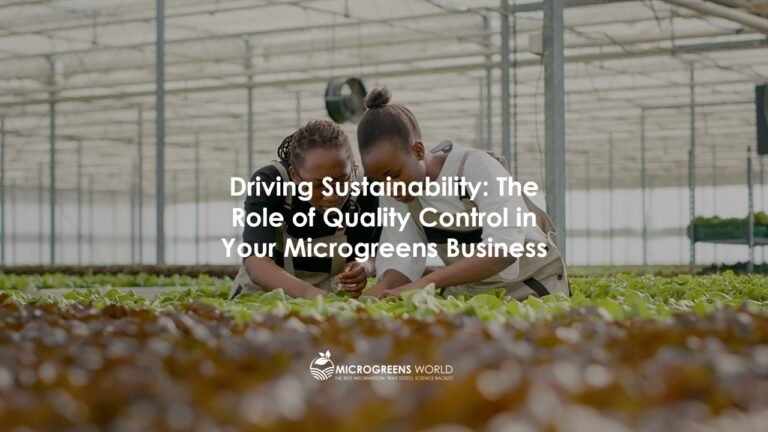
Quality control in your microgreens business ensures the production of healthy, nutrient-rich crops. It enhances sustainability by minimizing waste, ensuring consistent yield, and maintaining high product quality standards.
