One of my clients called me after a restaurant buyer sent her two questions in the same email: “Are you GAP certified?” and “Are you FSMA-compliant?” She had never heard of either one. The buyer was waiting for an answer.
GAP certification and FSMA compliance cover a lot of the same ground: water safety, worker hygiene, sanitation, growing media, and recordkeeping. Both are built on the principles of Good Agricultural Practices. But they are different programs administered by different federal agencies with different legal weight and different relationships to your operation.
Getting GAP certified does not make you FSMA-compliant. Being FSMA-exempt does not mean your buyers will stop asking about GAP. Understanding where the two programs overlap and where they split is the part most commercial microgreens growers miss when they try to answer both questions at once.
Key Takeaway
The USDA Harmonized GAP Plus+ audit (version 5.1, effective July 2025) covers the same six technical areas as the FSMA Produce Safety Rule. But passing a GAP audit does not satisfy a FSMA regulatory inspection. GAP certification and FSMA compliance are separate programs with overlapping content and independent requirements (USDA, 2018; FDA, 2015).
Below, I’ll map what each program actually covers, where they diverge in legal weight, and what your buyers need to see regardless of your FSMA status.
Is GAP certification the same thing as FSMA compliance?
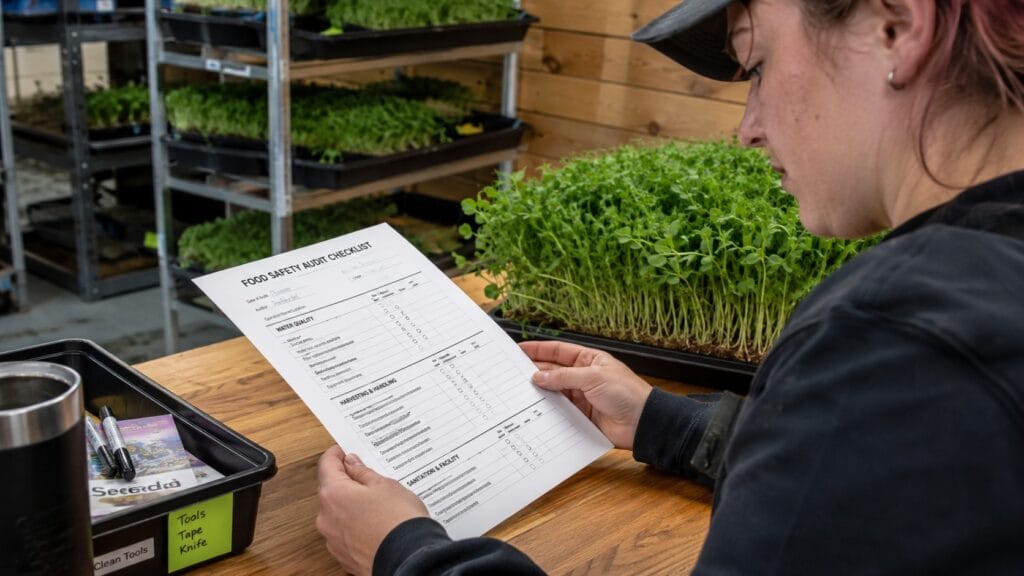
No. They overlap significantly, but they are not the same program.
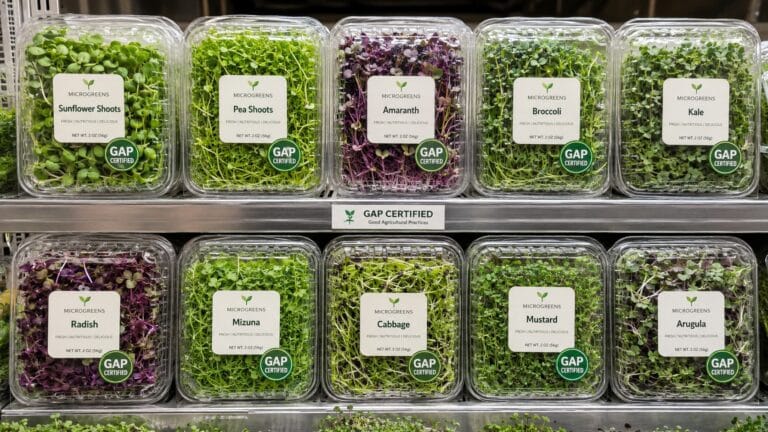
GAP certification is voluntary. Buyers require it as a condition of purchase, but no federal law mandates it. A third-party auditor visits your operation on a scheduled date, checks your practices against a written checklist, and issues a certificate. You pay for the audit. The certificate tells buyers that you passed on that day.
FSMA compliance is federal law. The Produce Safety Rule (21 CFR Part 112), finalized in 2015, sets legally binding practices for growing, harvesting, packing, and holding raw produce intended for human consumption (FDA, 2015). Compliance is enforced through regulatory inspections by the FDA or state partners. Unlike a GAP audit, a FSMA inspection is not something you schedule. Failing a GAP audit costs you a renewal fee. Failing a FSMA inspection can result in a warning letter, an enforcement action, or a recall.
The two programs draw from the same technical source. GAP practices predate FSMA and informed the Produce Safety Rule’s requirements. But the legal weight, the enforcement mechanism, and the relationship to your business are entirely different things.
If you are not sure where your operation falls under FSMA, whether you are fully covered, qualified-exempt, or not covered at all, the FSMA thresholds and what the qualified exemption means for microgreens growers post walks through the exact numbers.
What do GAP and the FSMA produce safety rule actually cover?
More than most growers expect, and the alignment has gotten closer over time.
In June 2018, USDA and FDA jointly announced the alignment of the Harmonized GAP Plus+ audit program with the FSMA Produce Safety Rule (USDA, 2018). The current Harmonized GAP Plus+ standard, version 5.1, took effect July 3, 2025, and covers all six of the PSR’s core technical areas: agricultural water, biological soil amendments, domesticated and wild animals, worker training and health hygiene, equipment and building sanitation, and sprouts (USDA AMS, 2025).
For microgreens growers, the areas that show up most in day-to-day production are water and sanitation. Both programs require documented irrigation water practices. Both address worker hygiene and handwashing protocols. Both cover how you clean and maintain your growing surfaces and equipment. Both require training records for anyone handling your crop.
The practical effect of the alignment: if you build a documented food safety plan to prepare for a Harmonized GAP audit. The documentation you create covers the same categories a FSMA Produce Safety Rule inspection checks. The subject matter overlaps substantially. What does not overlap is the legal standing of the programs.
Where does GAP certification end and FSMA compliance begin?
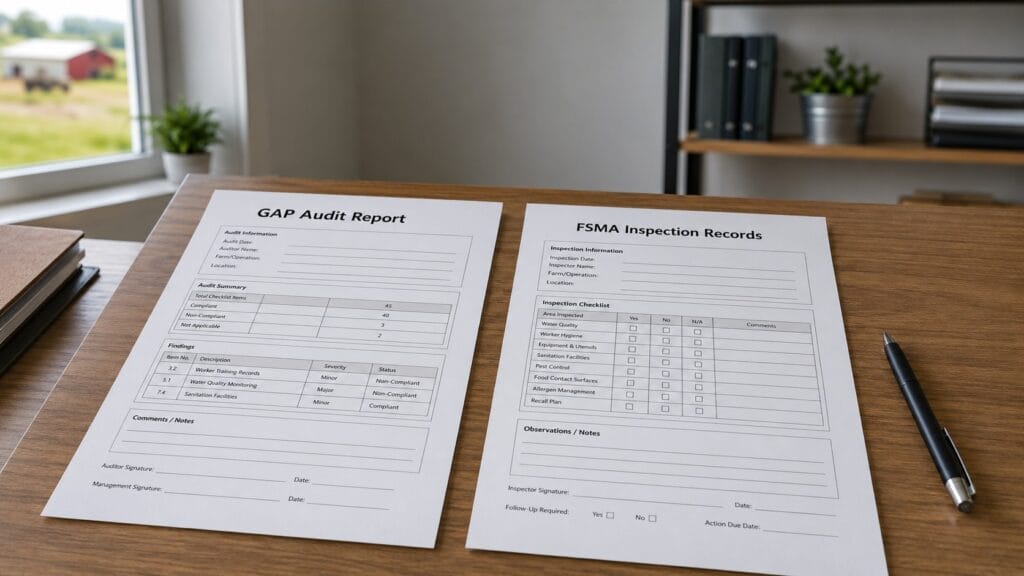
The most practical difference is this: a GAP audit is a snapshot. A FSMA inspection is a compliance assessment.
I think about it this way: the auditor calls to confirm the date two weeks out. The FDA inspector does not.
GAP audits are scheduled. You request the auditor, set the date, pay the fee, and prepare. If you pass, you get a certificate. If you fail, you pay again and try again later. The outcome is buyer-facing documentation: evidence that your operation met a third-party standard on a specific date.
FSMA inspections operate on the FDA’s timeline. They are regulatory, not commercial. They check whether your operation meets the Produce Safety Rule’s requirements as an ongoing practice. Under 21 CFR Part 112, you may be required to produce records within 24 hours of a formal FDA request during a food safety investigation (FDA, 2015).
NC State Extension’s comparison puts it plainly: a GAP audit does not replace a FSMA inspection (Rogers, 2026). If your operation is covered by the Produce Safety Rule, you need both. The programs are aligned in content. They are not interchangeable in function.
Can getting GAP certified help you prepare for FSMA?
Yes. And this is where the overlap works in your favor.
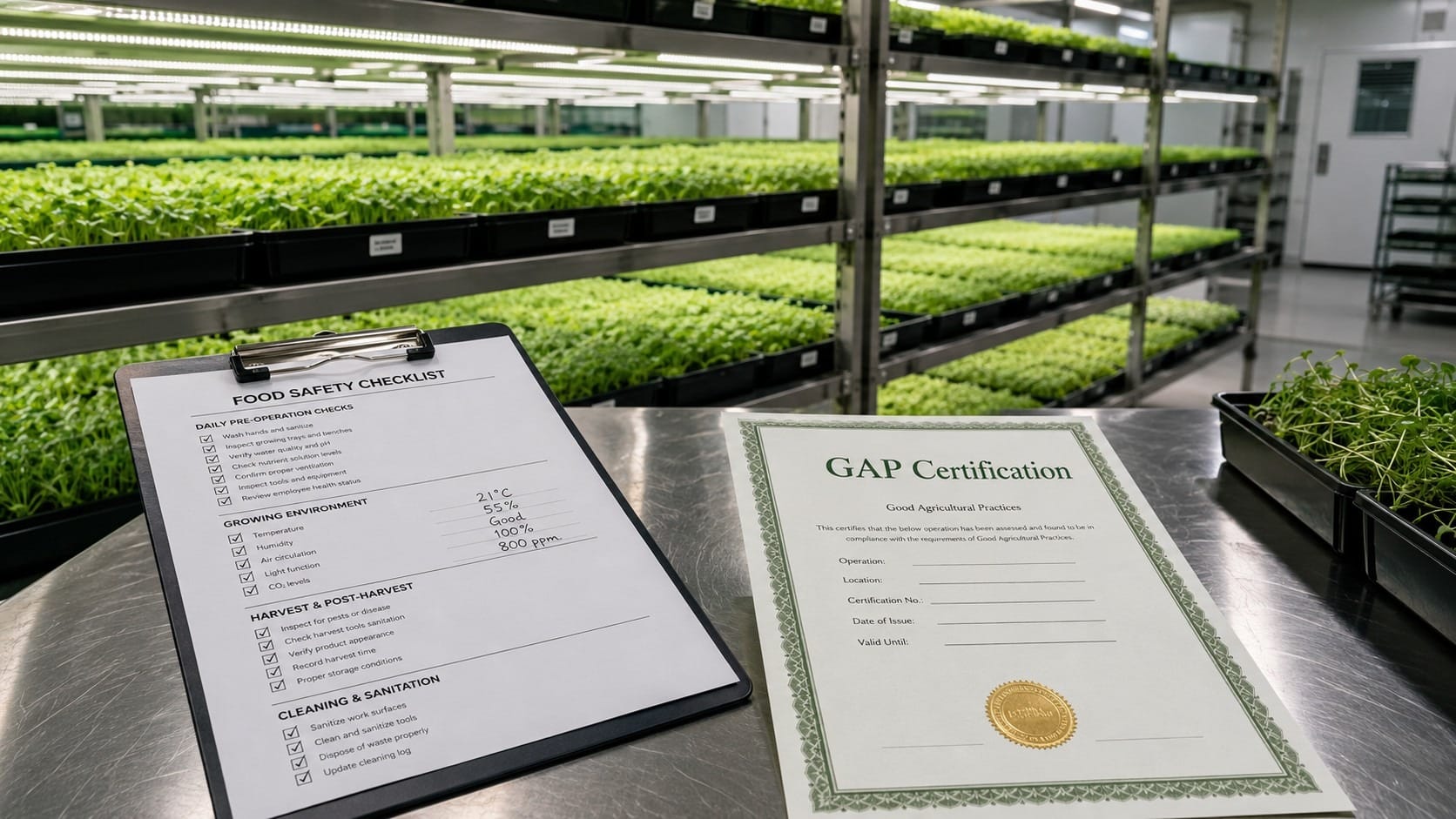
Preparing for a Harmonized GAP Plus+ audit means building a documented food safety plan. You will document your water source and testing protocols. You will create written worker training and hygiene records. You will establish a sanitation schedule for your trays, surfaces, and equipment. You will build traceback procedures for your seed lots and growing inputs.
All of that documentation is exactly what a FSMA Produce Safety Rule inspection looks for. The GAP audit does not build the documentation for you, but it gives you a framework and a deadline. The Harmonized GAP Plus+ standard, version 5.1, was designed specifically so that preparing for one program advances your readiness for the other (USDA AMS, 2025).
What I noticed when I first mapped these two programs as a Preventive Controls Qualified Individual (PCQI, a federally recognized food safety role under FSMA): it is essentially the same paperwork. Build the GAP food safety plan seriously, and you have built your FSMA documentation at the same time. The compliance work is not doubled. It is shared.
If your farm is FSMA-exempt, do buyers still require GAP?
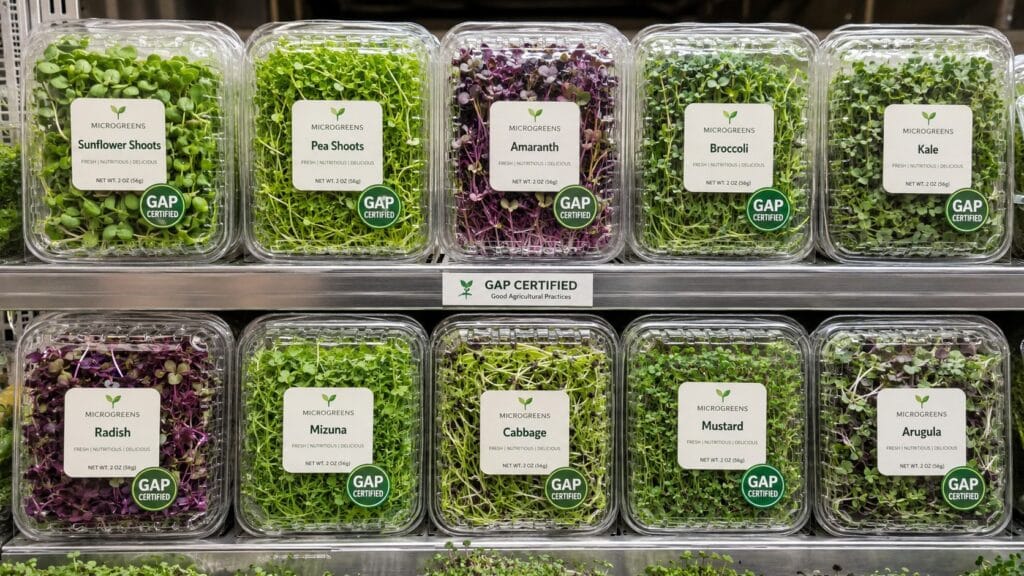
Often, yes. This is the part that catches most microgreens growers off guard.
Your FSMA exemption status is a regulatory determination between your operation and the FDA. It says nothing about what a restaurant buyer, food hub, or grocery chain requires to put your product on their menu or their shelf. Buyers set their own purchasing standards. Most wholesale buyers of fresh produce have required third-party GAP audits for over a decade, long before FSMA existed (Rogers, 2026).
Being FSMA-exempt does not make you GAP certified. And the absence of GAP certification is the reason many small commercial microgreens operations get cut from wholesale accounts or never make it past the first buyer conversation.
Your FSMA status is your regulatory standing. GAP certification is your market credential. You need clear answers to both because buyers ask both questions. If you are not sure where your operation falls under FSMA, the FSMA compliance guide for microgreens growers walks through the exact thresholds.
Digital guide · PDF
Comprehensive Food Safety for Microgreens
Written for the grower whose greens leave their own kitchen. It covers what GAP and FSMA each require, the records an inspector opens first, and what to send a buyer who asks.
$97
Wrap-up: Does GAP certification cover FSMA compliance for microgreens growers?
The short answer is no. GAP certification and FSMA compliance are separate programs that share most of the same technical content. Pursuing GAP moves you forward on FSMA documentation. Passing a GAP audit does not satisfy a FSMA inspection. Being FSMA-exempt does not satisfy a buyer requiring GAP.
What the overlap means practically: build your food safety plan to pass a Harmonized GAP audit, and you are building the same documentation that a FSMA Produce Safety Rule inspection looks for. That positions your operation for both programs and for the buyer conversations that ask about both.
GAP certification and FSMA compliance are two pieces of the food safety picture for commercial microgreens growers. If you want to see where they fit into building a full commercial operation, the microgreens business hub is where that work continues.
Every food safety article in one place: food safety for microgreen growers, grouped by seed, growing, harvest, records, rules and recalls.
GAP certification FSMA compliance: frequently asked questions
How long does it take to get GAP certified as a microgreens grower?
Most operations need four to six months of preparation before scheduling an audit. That time goes into writing a documented food safety plan, establishing water testing protocols, training employees, and building the sanitation and traceability records that an auditor will check. The audit itself typically takes one day. Annual recertification requires maintaining those records year-round.
Does FSMA apply to microgreens grown indoors?
Yes. The FSMA Produce Safety Rule covers raw agricultural commodities based on sales thresholds and distribution channels, not production environment. If your operation meets or exceeds the compliance thresholds, indoor production does not exempt you. Microgreens are ready-to-eat produce with no cooking step, which makes contamination control at the growing stage especially important under both FSMA and GAP standards.
Is GAP certification required by law for microgreens sellers?
No. GAP certification is voluntary. No federal law requires it. But “voluntary” only applies to the regulatory relationship with the government. Wholesale buyers, food hubs, institutions, and grocery chains routinely require GAP certification as a purchase condition. In practice, GAP certification is a market access requirement for any microgreens operation selling outside direct-to-consumer channels.
What happens if you fail a GAP audit?
You do not receive the certificate for that audit cycle. You can schedule a re-audit after correcting the deficiencies noted in the auditor’s report. You pay the full audit fee again. Preparation costs also repeat. Buyers expecting your certification before a purchase may pause the relationship until you pass. Some buyers have waiting periods before they will accept a re-audit result.
What records do you need to maintain for a USDA GAP audit?
The Harmonized GAP Plus+ checklist requires documented records across six areas: irrigation water source and test results, soil amendment sourcing and application logs, worker training and health screening records, equipment cleaning and sanitation schedules, trace-back procedures linking seed lots to harvest and sale, and any corrective actions taken. The same six areas are what a FSMA inspection looks for.
What is GroupGAP, and can small microgreens operations use it?
GroupGAP is a USDA program that allows multiple small growers to share audit costs under a single certification umbrella, managed through a central handler, co-op, or food hub. It reduces the per-operation cost of certification and is available to any size of operation. For small microgreens growers who sell through food hubs or grower co-ops, GroupGAP can make certification financially accessible.
References
FDA (2015). Standards for the growing, harvesting, packing, and holding of produce for human consumption. 21 CFR Part 112. U.S. Food and Drug Administration. https://www.ecfr.gov/current/title-21/chapter-I/subchapter-B/part-112
Rogers, E. (2018, updated June 2026). How do GAP certifications compare to FSMA’s Produce Safety Rule? NC State Extension, NC Fresh Produce Safety. https://ncfreshproducesafety.ces.ncsu.edu/how-do-gap-certifications-compare-to-fsmas-produce-safety-rule/
United States Department of Agriculture. (2018, June 5). USDA and FDA announce key step to advance collaborative efforts to streamline produce safety requirements for farmers [Press release]. https://www.usda.gov/about-usda/news/press-releases/2018/06/05/usda-and-fda-announce-key-step-advance-collaborative-efforts-streamline-produce-safety-requirements
United States Department of Agriculture, Agricultural Marketing Service. (2025). Harmonized GAP Plus+ audit standard and checklist, version 5.1 (effective July 3, 2025). https://www.ams.usda.gov/services/auditing/gap-ghp/harmonized