
Zero-Waste Microgreens: The Complete Guide to Biodegradable Growing Systems
Inside this zero-waste microgreens guide, discover how biodegradable grow mats and smart composting revolutionize sustainable urban farming.
Updated 24 August 2026
Read time 6 minutes
In Growing 7 entries
Knowledgebase 27 entries
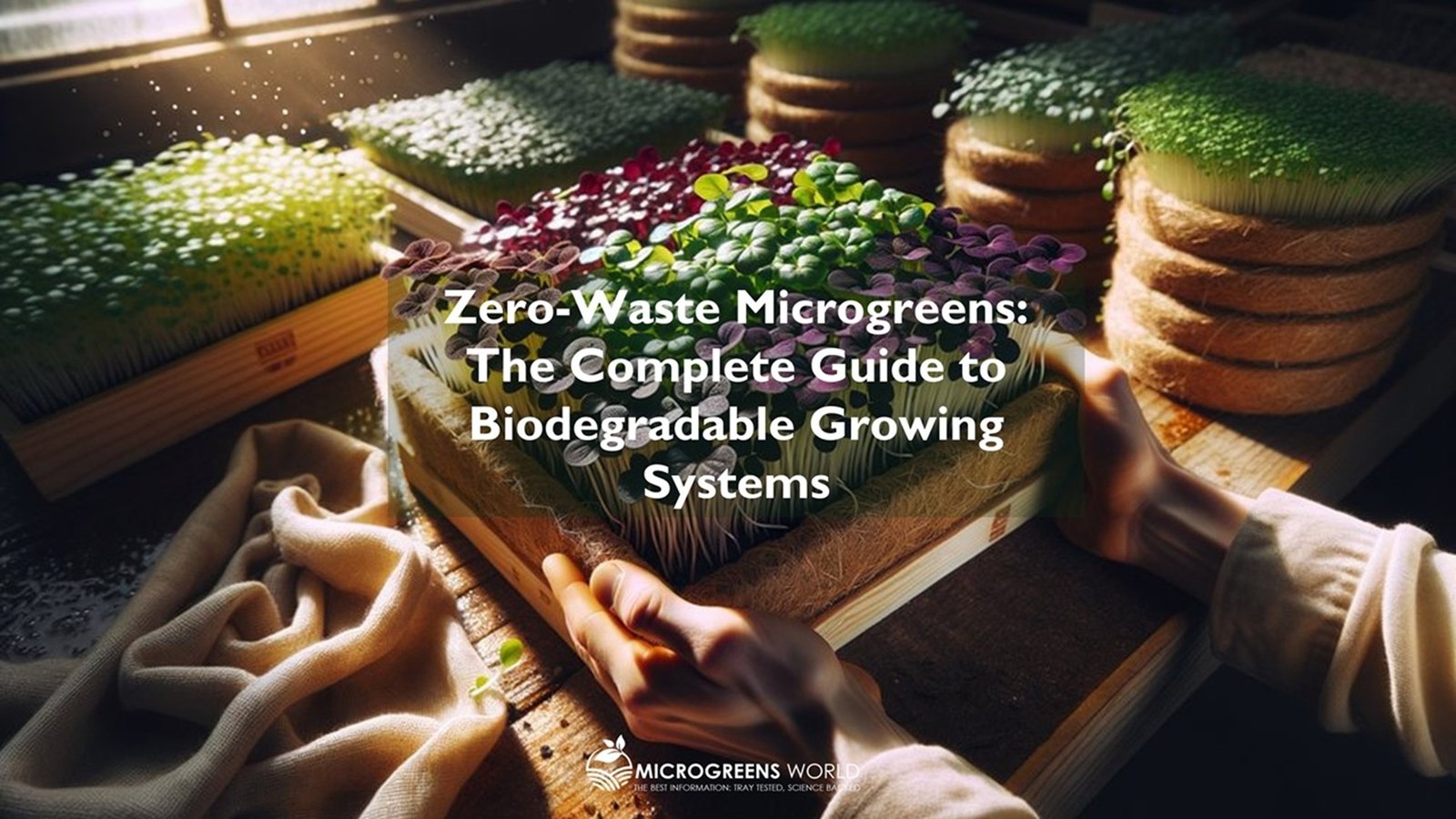
Growing microgreens sustainably means choosing biodegradable grow mats made from hemp, coconut, or jute fibers that decompose within 2-6 months.
You’ll want to maintain temperatures between 65-75°F and humidity at 50-65% while using bottom-watering techniques for optimal growth. Set up a space-efficient stacking system, seed at 10-15 seeds per square inch, and harvest at 7-10 cm tall.
After harvest, compost your spent materials to create a genuinely zero-waste growing cycle that’ll transform your urban farming operation.
Biodegradable Material in Growing Microgreens
In microgreens cultivation, biodegradable materials are becoming increasingly important as the industry moves toward sustainability.
Growing trays, planting media, and packaging made from biodegradable materials help reduce environmental impact without compromising product quality.
The decomposition process after use can actually benefit composting systems, creating a closed-loop cycle.
Many growers are switching to coconut coir, hemp mats, or other biodegradable growing mediums that break down naturally after use.
This shift not only helps the environment but can also improve soil health when the used materials are composted.
Sustainable Growing Media Options for Microgreens
When sustainable growing practices meet modern microgreens cultivation, biodegradable grow mats emerge as a game-changing solution for eco-conscious farmers.
These mats, crafted from natural fibers like hemp and coconut, break down within 2-6 months while supporting healthy root development and maximizing yields.
In your urban farming setup, you can stack growing trays efficiently – these eco-friendly mats allow for 90% space utilization.
What’s even better? They’ll reduce your resource consumption by 30% compared to traditional methods.
Once you’ve harvested your microgreens, simply compost the spent mats to create a genuinely circular growing system that enriches soil fertility.
Setting Up Your Zero-Waste Growing System
As you commence creating your zero-waste microgreens setup, choosing the right biodegradable materials will establish the foundation for a sustainable growing system.
Select grow mats made from jute, hemp, or coconut fiber that decompose within months after utilization.
Natural fiber grow mats provide an earth-friendly foundation for microgreens, returning to the soil as nutrients within a single growing season.
You’ll want to maintain optimal conditions by keeping temperatures between 65-75°F and humidity levels at 50-65%.
Implement a space-efficient stacking system with bottom-watering reservoirs – perfect for urban farming environments where every inch counts.
After harvest, don’t toss those spent mats; add them to your composting bin.
This eco-friendly approach creates a closed-loop system to benefit your microgreens and the environment.
Essential Growing Techniques for Biodegradable Methods
Successful microgreen cultivation using biodegradable methods requires expertise in specific techniques to improve growth and sustainability. You must maintain consistent moisture levels through bottom-watering while monitoring seeding density for optimal results when using biodegradable grow mats.
| Factor | Optimal Range | Impact |
| Temperature | 65-75°F | Germination success |
| Humidity | 50-65% | Healthy development |
| Seeding | 10-15/sq inch | Even growth |
Maximize your zero-waste operation by implementing stacking techniques for your growing trays. You’ll achieve better space utilization while ensuring different microgreen varieties receive optimal growing conditions for healthy, sustainable production.
Harvesting and Storage With Minimal Environmental Impact
The proper harvesting and storage techniques are key to maintaining your zero-waste microgreens operation.
When your plants reach 7-10 cm tall, harvest them using clean, sharp tools for the cleanest cuts — you’ll want to keep your microgreens pristine for maximum shelf life.
Store microgreens in an airtight container and refrigerate them immediately, using breathable materials to reduce moisture buildup.
Once you’ve harvested, don’t toss those biodegradable grow mats! Include them in your compost heap to enhance the nutrients in your garden soil.
For packaging microgreens, skip the plastic and opt for eco-friendly disposal solutions like compostable containers that support your zero-waste mission.
Composting and Recycling Your Growing Materials
When your microgreens reach the end of their growing cycle, implementing an effective composting system transforms what could’ve been waste into garden gold. Natural fiber grows mats, spent soil, and plant debris can enrich your garden while reducing landfill impact.
| Material | Decomposition Time | Benefits |
| Hemp Mats | 2-3 months | High moisture retention |
| Coconut Coir | 4-6 months | Excellent soil structure |
| Bamboo Mats | 3-4 months | Rich in nutrients |
| Plant Debris | 1-2 months | Adds organic matter |
| Growing Medium | 2-4 months | Improves soil health |
While you’re waiting for biodegradable materials to break down, extend the life of your plastic containers through proper cleaning and recycling. You’ll create a sustainable growing system that keeps giving back to your garden.
Related Questions
What Can I Use Instead of Soil for Microgreens?
You can grow microgreens using biodegradable mats made from hemp, coconut, or bamboo fibers. Coconut coir, jute mats, and hydroponic systems are excellent alternatives that yield outstanding results without soil.
What Is the Secret to Growing Microgreens?
You’ll succeed with microgreens by maintaining proper temperature (65-75°F), humidity (50-65%), and seeding density. Don’t forget consistent bottom-watering and harvest timing between 7-21 days when plants reach optimal height.
What is the Best Container in which to Grow Microgreens?
You’ll get the best results using shallow trays 1-2 inches deep with drainage holes. Look for standard 10 “x20” sizes, and consider biodegradable options like coconut coir trays for sustainable growing.
Biodegradable Microgreens Growing Systems: What it all boils down to
You’re now equipped to transform your microgreens operation into a zero-waste powerhouse.
You’ll minimize environmental impact by implementing biodegradable growing media, sustainable packaging, and closed-loop composting systems while maintaining top-quality production.
Remember, every small change — from switching to coconut coir to adopting hemp-growing mats — contributes to a more sustainable future.
Start with one element and gradually expand your eco-friendly practices as you perfect your system.
Research
Coreys Cave. (2019, February 26). Grow Medium for Microgreens. YouTube. https://www.youtube.com/watch?v=fhiuGlAj_z8
Di Gioia, F., De Bellis, P., Mininni, C., Santamaria, P., & Serio, F. (2016). Physicochemical, agronomical, and microbiological evaluation of alternative growing media for producing rapini (Brassica rapaL.) microgreens. Journal of the Science of Food and Agriculture, 97(4), 1212–1219. https://doi.org/10.1002/jsfa.7852
GAREGNANI, M. (2023). Microgreens production and biodegradation system to support future human space exploration. Polimi.it. https://hdl.handle.net/10589/208562
Hrițcu Maftei, Adriana, Munteanu, N., Stoleru, V., Teliban, G.-C., & Galea Deleanu, Florina-Maria. (2018). Stage of knowledge on cultivation of microgreens plants. Iuls.ro. https://repository.iuls.ro/xmlui/handle/20.500.12811/418
Kou, L., Yang, T., Liu, X., & Luo, Y. (2015). Effects of Pre- and Postharvest Calcium Treatments on Shelf Life and Postharvest Quality of Broccoli Microgreens. HortScience, 50(12), 1801–1808. https://doi.org/10.21273/hortsci.50.12.1801
Neves, A. (2023, July 15). The Complete Guide to Organic Microgreens Farming: For Home Gardeners and Entrepreneurs. Microgreens World. https://microgreensworld.com/organic-microgreens-farming/
Neves, Andrew. “Biodegradable Grow Mats for Microgreens: A Complete Guide to Sustainable Indoor Growing.” Microgreens World, 30 Dec. 2024, https://microgreensworld.com/biodegradable-grow-mats-for-microgreens/.
Polash, Mohammed Arif Sadik, et al. “Post-Harvest Biodegradation of Bioactive Substances and Antioxidant Activity in Microgreens.” Journal of the Bangladesh Agricultural University, vol. 16, no. 2, 23 Aug. 2018, pp. 250–253, https://doi.org/10.3329/jbau.v16i2.37975.
Samar Min Allah, Dimita, R., Negro, C., Luvisi, A., Gadaleta, A., Mininni, C., & Luigi De Bellis. (2023). Quality Evaluation of Mustard Microgreens Grown on Peat and Jute Substrate. 9(5), 598–598. https://doi.org/10.3390/horticulturae9050598
“US11304391B1 – Microgreens Grower – Google Patents.” Google.com, 4 June 2021, https://patents.google.com/patent/US11304391B1/en.
More on Growing
- Best Microgreens for Beginners to Grow For beginner growers, it can be both exciting and difficult to get started with growing microgreens. This concise guide will
- Microgreens Canopy Management Discover how precise canopy management prevents 60% of fungal failures in microgreens, but most growers overlook these critical spacing techniques.
- The Practice of Aeration in Microgreens Cultivation Kicking off with a captivating exploration of aeration practice in microgreens cultivation, discover how this technique holds the key to
- What Microgreens Can You Grow? Home growers and urban gardeners can cultivate a variety of microgreens, such as arugula, radishes, micro cilantro, and basil, which
