When my co-founder Steven and I started jPure Farms, we did not know we were entering a market that nine research firms now project will reach $5 to $6 billion by 2032. We just knew Atlanta chefs were paying for microgreens, and nobody was delivering them reliably. That gap was enough to start.
What most new growers miss is that a $5 to $6 billion market projection tells you almost nothing about whether your local zip code has enough buyers to sustain a real business. The macro numbers are real. The growth trajectory is real. But a national forecast does not tell you who is buying microgreens on the north side of your city this week.
That gap is what Dr. Booker T. Whatley called the Critical Mass of Customers problem. Before you size up your operation to chase a market forecast, you need enough repeat buyers to justify the trays you are already running. Market share projections do not fix a CMC problem. Local demand data does.
Read on for what the major research firms are projecting through 2032, which segments and regions are growing fastest, and what the real-world operator data says about small-scale viability. The growth story is real. So is the failure rate. Both deserve honest coverage.
Key Takeaways
The global microgreens market is projected to reach $5 to $6 billion by the early 2030s at a CAGR of 10 to 12%, up from an estimated $2.5 to $3.5 billion in 2025 (Mordor Intelligence, 2026; The Business Research Company, 2026). North America leads with 36 to 42% of the global share. Broccoli leads by revenue at 22 to 27%. Approximately half of new microgreens businesses fail within their first year.
Most Growers Are Losing Revenue
From Channels They Have Not Scored Yet.
The market is growing at 10 to 12% annually. Most of that growth is flowing through five channels. This scorecard tells you exactly which ones you are positioned to capture and which ones are leaving money on the table right now.
- Score yourself across all 5 revenue channels
- Identify your weakest channel in under 5 minutes
- Based on 2026 market data from 12 research firms
- Know exactly where to focus before you scale
Takes 30 seconds.
2026 Microgreens Growth Channel Scorecard
5 channels. 30 points. One clear priority.
across 5 channels
Nine major research firms published projections between 2025 and 2026. Their estimates for the current market size range from $1.02 billion to $4.10 billion for essentially the same year. That spread is not a sign of uncertainty about the market. It reflects genuinely different definitions of what counts.
Some firms include sprouts, baby greens, seed kits, and cosmetic applications of microgreen extracts. Others restrict their count to microgreens harvested between the cotyledon and first true-leaf stage. Some measure at the farm-gate value. Others measure at retail end-consumer price, which runs at 2 to 3 times the farm-gate figure. Microgreens retail at $25 to $50 per pound, so the markup amplification alone accounts for much of the variation.
The most methodologically transparent source currently available is Mordor Intelligence, which is also the only firm that explicitly states its scope exclusions, describes its data anchoring (USDA Census of Agriculture, NASS price sheets, Eurostat, FAO monthly files, D&B Hoovers company financials), and refreshes its data annually. Their January 2026 report places the 2025 global market at approximately $3.0 billion, growing to $5.71 billion by 2031 at a CAGR of 11.32% (Mordor Intelligence, 2026).
The Business Research Company puts 2025 at $2.4 billion, growing to $4.4 billion by 2030 at 13.1% (The Business Research Company, 2026). Market Research Future projects $4.60 billion by 2035 at 14.68% (Market Research Future, 2026). Grand View Research, one of the more widely cited firms, projects $6.12 billion by 2030 at 11.9% CAGR, though Grand View has faced credible criticism for inflated projections and a reported tendency to include broader category definitions than its methodology discloses (Grand View Research, n.d.; IPVM, 2023).
The honest summary: plan your business around a market estimated at $2.5 to $3.5 billion today, growing to roughly $5 to $6 billion by the early 2030s. Use any single projection as directional evidence, not as a business plan input.
Which regions are growing fastest in the microgreens market?
North America leads, not dominates
The claim that North America controls more than 60% of the global microgreens market was incorrect when first published and remains incorrect now. The weight of evidence from ten or more research firms places North America’s global share at 36 to 42%.
Mordor Intelligence, the most frequently updated source, assigns North America 42.4% of the global market share in 2025 (Mordor Intelligence, 2026). IMARC Group gives North America 36.5% in 2024 (IMARC Group, 2025). Straits Research, Polaris, SkyQuest, InsightAce Analytic, The Business Research Company, and Global Growth Insights all independently confirm North America as the leading region, with figures in the 36 to 45% range.
The 60%+ figure appears to have originated from a single older report and circulated without verification. It has been removed from this post.
Europe is a serious competitor
Coherent Market Insights places Europe at 40.3% global share in 2025, ahead of North America (Coherent Market Insights, 2025). Grand View Research placed Europe at 36.5% in 2022 (Grand View Research, n.d.). The Netherlands, Denmark, the UK, Germany, and Switzerland are the dominant vertical farming markets in Europe. Government sustainability incentives for controlled environment agriculture in those countries have accelerated commercial production in ways that do not have equivalents in North America.
MarketGenics Research describes Europe as having a premium food culture and a sustainability-focused consumer base that supports higher price points for locally grown microgreens (MarketGenics Research, 2025). The European market is highly fragmented with local farms and specialty producers rather than large commercial operators, which mirrors the structure of a healthy local microgreens business.
Asia Pacific is the fastest-growing region
China and India are consistently cited as the highest-growth markets by volume. Rising health awareness, expanding urban middle class, and increasing disposable income in both markets are driving adoption. India’s urban farming startup activity is particularly notable, with several venture-backed operations entering the microgreens segment since 2023.
Australia’s market reached $21.3 million in 2024 and is projected to reach $47.8 million by 2033 at an 8.6% CAGR (IMARC Group, 2025). That market also produced one of the more interesting operator data points: a $100,000/year microgreens business run from a standard double garage supplying 40+ restaurants (Vertical Farm Daily, 2025).
What are the biggest challenges for microgreens growers in this market?

Three challenges show up in every serious market report. They have not changed much since 2020, but the severity of each has shifted.
Perishability and quality consistency
Microgreens have a shelf life of 5 to 14 days, depending on variety and handling. That window creates distribution constraints that larger produce categories do not face. Any supply chain disruption between farm and buyer is a product loss event. Post-harvest quality management remains the most common operational bottleneck cited by small commercial producers.
Competition from other specialty crops
Sprouts, baby greens, and edible flowers compete for the same buyer budget and the same plate real estate. Microgreens carry higher per-unit costs due to labor-intensive production, which makes pricing conversations harder with buyers who see the alternatives at lower price points. The commercial viability argument rests on flavor, nutritional density, and visual appeal rather than commodity pricing.
Regulatory compliance
Food safety regulations vary significantly by state and country. In the US, the FDA’s Produce Safety Rule under FSMA applies to most commercial microgreens operations above certain revenue thresholds. Compliance requirements cover water quality testing, worker training, and recordkeeping in ways that add cost and complexity for small operators. Riggio et al. (2019) provide the most thorough review of food safety considerations for microgreens along the full farm-to-fork chain, and that paper remains the reference document for anyone building a compliance program.
The failure rate nobody publishes in market reports
Commercial market research reports describe growth opportunities. They do not describe the approximately 50% first-year failure rate that industry education sources consistently cite for new microgreens businesses. Fresh Forage, one of Manitoba’s largest microgreens farms with nearly a decade of operation and products in multiple grocery stores, closed in January 2026. Owner Joel Weber described microgreens as “a niche market with tough margins” (Vertical Farm Daily, 2026). A Virginia microgreens producer faced shutdown in February 2026 from cash flow problems despite active operations (WSET, 2026).
The growth is real. So is the difficulty of capturing a share of it.
Why does North America lead the microgreens market?
Which companies lead the North American microgreens market?
Most significant commercial players are based in North America, particularly in the US and Canada. The concentration reflects access to capital, mature foodservice distribution infrastructure, and proximity to large urban consumer markets with a high willingness to pay for premium fresh produce.
80 Acres Farms expanded microgreens to 17,000+ retail locations across Albertson’s, H-E-B, Meijer, Safeway, and Walmart in January 2026, and simultaneously through US Foods for foodservice distribution (PR Newswire, 2026). That kind of scale requires cold-chain logistics and retail partnerships that are not accessible to small operators, but it validates mainstream consumer demand in ways that benefit the entire category.
Sunswell Greens expanded to 300+ retail stores plus foodservice distributors across the southeastern US between February and March 2026 (Produce Business, 2026). Gotham Greens operates greenhouses across multiple states. Fresh Origins, based in California, is the most established specialty microgreens supplier to high-end restaurants and hotels in North America.
Which emerging markets are entering the microgreens space?
South Korea, India, Russia, and South Africa have each begun developing commercial microgreens operations. India’s market is particularly notable given the urban farming infrastructure investment taking place in cities like Bangalore and Mumbai. Challenges in these markets center on cold-chain logistics, consumer price sensitivity relative to local produce alternatives, and inconsistent access to quality seeds and growing media.
Why is microgreens production unevenly distributed globally?
Regional economic development patterns explain most of the concentration. Markets with high urbanization, high health food spending, and mature specialty food retail infrastructure produce most of the commercial microgreens volume. That concentration is expected to persist through the early 2030s, with Asia Pacific gradually closing the gap through urban farming investment and shifting consumer preferences.
Who controls the microgreens market share right now?
What does current microgreens market share data show?
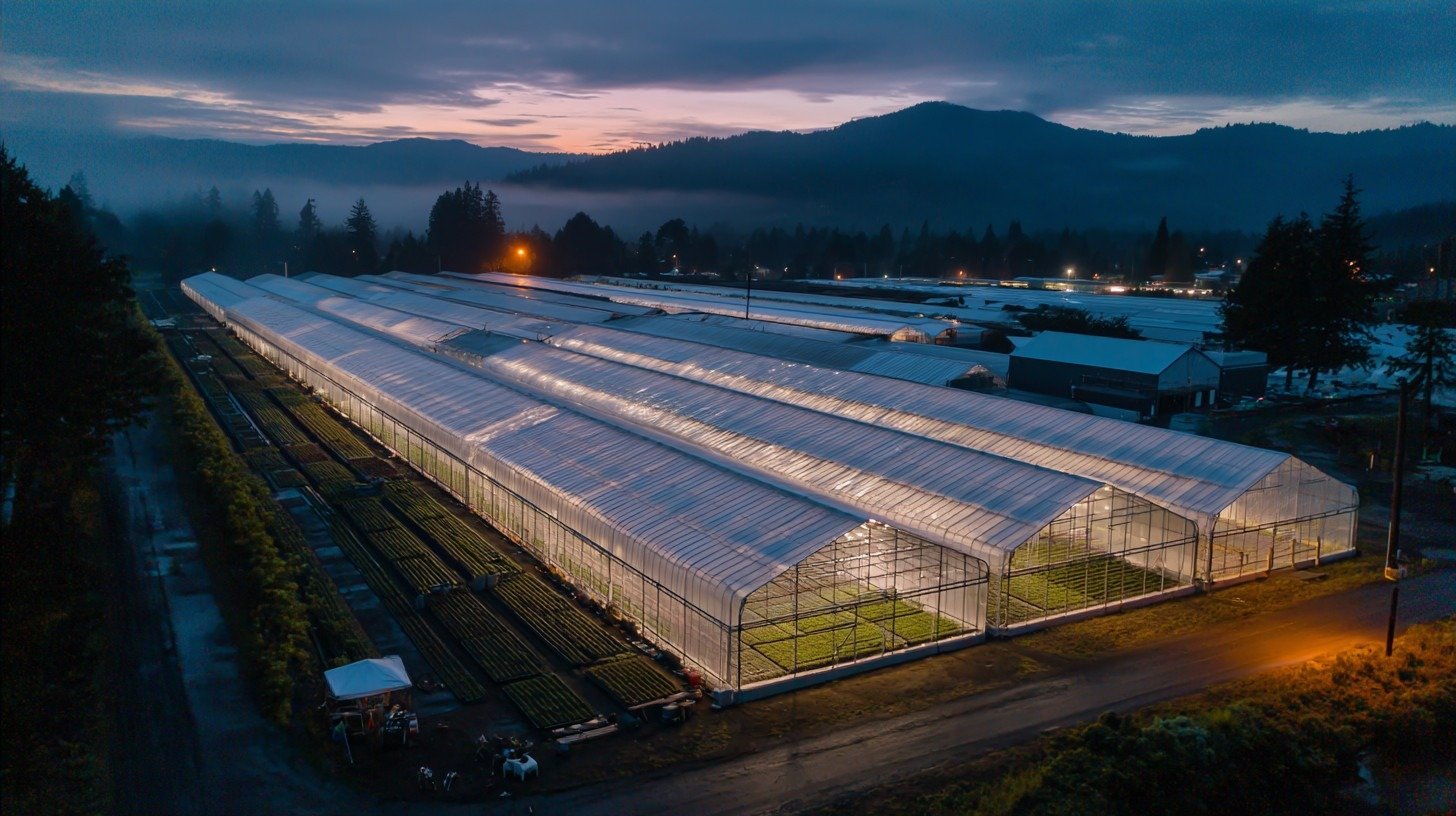
No single company controls anything close to a dominant share of the global microgreens market. The market is highly fragmented, with thousands of small local operators, regional producers, and a handful of larger commercial greenhouse and vertical farming operations. Research firm estimates place the top ten commercial players at less than 20% combined global market share.
The most reliable channel data from Mordor Intelligence’s US report shows foodservice accounting for approximately 46% of revenue, supermarkets and hypermarkets at 38%, and direct-to-consumer and other channels accounting for the remaining 16% (Mordor Intelligence, 2026). Online and DTC channels are growing at 17.6% CAGR, making them the fastest-growing distribution category despite their smaller current share.
Who are the key competitors in the microgreens industry?
The commercial landscape has changed significantly since 2022. A note on several players listed in the original version of this post:
Plenty Unlimited, formerly listed as a key player, filed for Chapter 7 bankruptcy in 2024 after raising $940 million in venture capital. Bowery Farming filed for bankruptcy in 2023 after raising $700 million. Edenworks ceased operations. AeroFarms filed Chapter 11 in 2023, emerged, announced closure in December 2025, reversed that closure within 72 hours with emergency funding, and was working toward a potential sale as of March 2026 (Cardinal News, 2026). Their situation illustrates the operational fragility of capital-intensive vertical farming at scale.
The companies with the most stable operating track records in 2026 include:
Gotham Greens, Brooklyn-based with greenhouse operations across multiple states, focuses on year-round leafy greens and herbs for retail. BrightFarms, hydroponically growing salad greens and herbs in greenhouses near major cities for retail distribution. Fresh Origins, based in California, is the leading specialty microgreens supplier to high-end foodservice. Koppert Cress, based in the Netherlands, is the dominant European specialty cress and microgreens supplier to chefs globally. 80 Acres Farms, the company Mike Zelkind called “the only vertical farming company left” following the 2024 to 2025 shakeout, now distributes microgreens through 17,000+ retail locations (PR Newswire, 2026).
What factors determine microgreens market share?
For commercial operators, market share correlates with distribution channel access, product consistency, and price point strategy. For small operators, the relevant metric is not market share but Critical Mass of Customers: the minimum number of reliable repeat buyers needed to sustain monthly revenue targets.
A grower targeting $5,000 per month needs approximately 25 active accounts at a $200 average monthly spend. A grower targeting $10,000 needs 40 to 50. Those numbers are achievable in any metropolitan area with an active restaurant scene and a functioning farmers’ market. No competitor in the market can take those accounts from a local grower who delivers quality on a reliable schedule. That is Whatley’s market-first principle applied at the street level.
Not sure how many customers you need to hit your income goal? The Microgreens Growth Path Tool calculates your customer target and maps your first move using local market data for your zip code.
What market share trends are shaping the microgreens industry?
Sustainability focus has moved from positioning language to operational requirements. Buyers at scale are requesting verified growing practices, reduced packaging, and sourcing transparency. Small local producers have a structural advantage here: a chef who visits your farm knows more about your growing practices than a procurement manager sourcing from a warehouse in another state.
Indoor farming technology continues to consolidate. The 14 CEA bankruptcies in 2025 eliminated poorly capitalized competitors and clarified the economics: large-scale vertical farming requires volumes that justify automation capital. Small operators with low overhead and direct buyer relationships operate in a different segment and face different economics.
What affects the competitive position of a microgreens business?
Production cost is the primary operational lever. Labor is typically 40 to 60% of total production cost for small operators. Any technology that reduces labor without increasing capital cost improves competitive position. Optimized LED spectrum selection reduces energy cost by up to 38% and increases yields by 20% or more without adding labor (Vrkic et al., 2024).
Consumer preference drives product mix decisions. Broccoli, radish, and sunflower account for 65 to 70% of total US microgreens production by volume (Verified Market Research, 2025). Specialty varieties, including shiso, purple amaranth, popcorn shoots, and sorrel, command premium pricing with less competition in most local markets.
Regulatory compliance cost falls disproportionately on smaller operations. The FSMA Produce Safety Rule creates fixed compliance overhead that represents a higher percentage of revenue for a $50,000/year operation than for a $500,000/year one.
Why do broccoli microgreens and vertical farming lead the market?
Why are broccoli microgreens so dominant commercially?
Broccoli microgreens lead the global market by revenue with approximately 22 to 27% share, depending on the research firm (Mordor Intelligence, 2026; Coherent Market Insights, 2025; IMARC Group, 2025). That leadership reflects price premium more than production volume.
Radish, pea shoots, and sunflower are actually the most commonly grown varieties by number of producers. A peer-reviewed USDA-funded survey of 176 US commercial farms found radish grown by 29% of farms, sunflower by 28%, and peas by 27% (Misra & Gibson, 2021). Broccoli commands higher revenue per unit because of its sulforaphane content and superfood positioning, not because more farms grow it.
Sulforaphane is the bioactive compound driving broccoli’s premium. It activates phase II detoxification enzymes and has been linked to anti-inflammatory effects and cancer-prevention activity in research going back to Fahey et al. (1997) at Johns Hopkins. A 2023 Ohio State University study confirmed that a single 16-gram serving of broccoli microgreens produces measurable sulforaphane metabolites in urine, matching the bioavailability profile of broccoli sprouts (Fahey et al., 2023).
In addition to the nutritional profile, broccoli microgreens have a slightly spicy flavor with hints of sweetness that makes them a flexible culinary ingredient. That combination of documented health claims and culinary versatility explains both the consumer demand and the retail price premium.
What advantages does indoor vertical farming have over traditional growing?
Year-round production in a controlled environment is the core structural advantage. Indoor farms eliminate weather dependency, allow precise control of temperature, humidity, light spectrum and intensity, CO2 concentration, and nutrient delivery. That control translates to consistency, which is the attribute commercial buyers value most after quality.
Pesticide-free production is achievable consistently in indoor environments. Closed growing systems largely eliminate the pest pressure that creates pesticide risk in outdoor or greenhouse settings. That clean production profile supports organic and clean-label positioning without the certification cost.
Water use is significantly lower than field agriculture. Hydroponic and aeroponic systems recirculate water, reducing consumption by 70 to 90% compared to field production. That efficiency metric resonates with sustainability-focused buyers in ways that are increasingly tied to procurement decisions.
The operational challenge for indoor vertical farming is capital intensity and energy cost. The 2025 shakeout proved that even well-capitalized operations cannot always generate returns that justify the upfront infrastructure investment. Mike Zelkind at 80 Acres Farms was explicit: the companies that failed were “tech bros who spent ahead of revenue” rather than operators who understood farming economics (Food Navigator, 2026).
For small operators, the relevant takeaway is not to replicate large-scale vertical farming economics. Home-based and small commercial operations with low overhead and direct buyer relationships face fundamentally different economics, and those economics can work.
What does the future look like for indoor microgreens production?
The consolidation trend that defined 2024 to 2025 is likely to continue through 2027. The companies that survived did so by maintaining direct buyer relationships, controlling costs, and avoiding the growth-at-any-cost model that destroyed well-funded competitors.
Technology will continue to reduce operating costs. AI-powered monitoring systems are entering the consumer market. Luya Tech Inc. unveiled what it describes as the world’s first AI-powered household microgreens nutrition system at CES 2026, with three proprietary systems for flavor optimization, nutrient optimization, and shared learning across devices (Perishable News, 2026). The company claims 30 to 50% increases in nutrient density compared to conventional home growing, though those figures are company-stated and not independently verified.
Peer-reviewed LED research continues to identify practical yield and quality improvements. A 2026 systematic review in Plant Growth Regulation confirmed that small spectral changes disproportionately alter biomass and phytochemical accumulation in microgreens (Springer, 2026). These are research-to-practice pathways that benefit operators at every scale.
How is the microgreens market segmented?
What are the key segments in the microgreens industry?
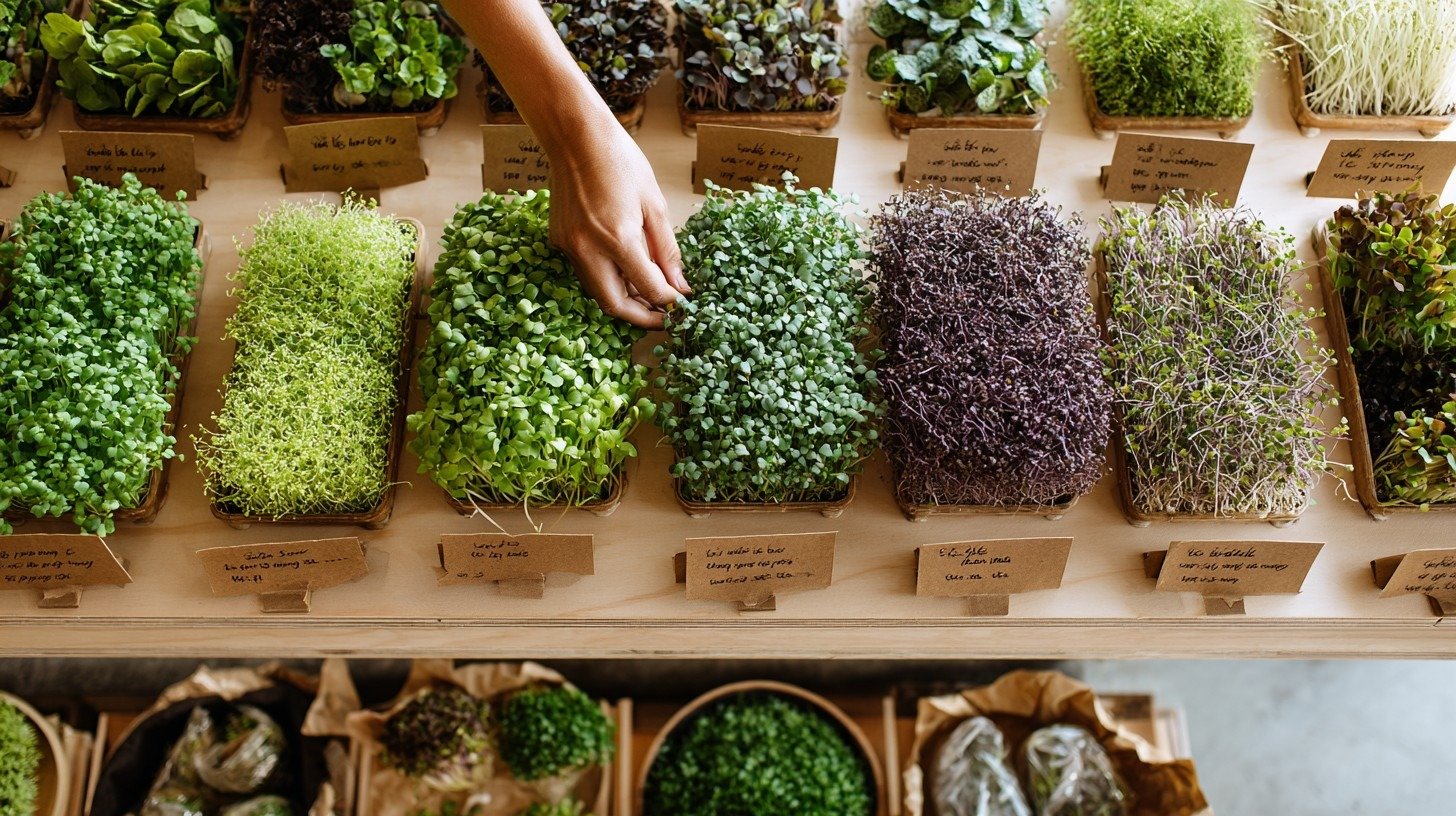
Market reports segment the microgreens industry across four dimensions: variety type, farming method, distribution channel, and application.
By variety, brassicas dominate: broccoli, cabbage, kale, arugula, and radish collectively account for more than half of commercial production volume. Herbs including basil, cilantro, and dill form a smaller but higher-margin segment. Specialty varieties like microgreens from the Amaranthaceae family (amaranth, beets) and Fabaceae family (peas, lentils) are growing faster than the brassica segment from a smaller base.
By farming method, commercial greenhouses accounted for 44.1% of revenue share in 2022 (Grand View Research, n.d.). Indoor vertical farming holds approximately 20.9% in 2025 (Coherent Market Insights, 2025). Soil-based home and small commercial production make up the balance. A commercial greenhouse is not vertical farming and should not be conflated: greenhouses use natural light with supplemental LED, while vertical farms use entirely artificial light in stacked systems.
By distribution, retail stores led globally at roughly 32 to 40% of revenue share in 2025. Foodservice accounts for approximately 46% in the US and may exceed 50% globally (Mordor Intelligence, 2026; Global Growth Insights, 2025). Direct-to-consumer, including online subscriptions and farmers markets, represents approximately 9 to 15% of US sales and is growing at 17 to 18% annually, faster than any other channel.
By application, food and beverages are the primary segment. Nutraceuticals and dietary supplements are growing: at least seven companies now market microgreen capsules or powders targeting specific health outcomes. Cosmetics and personal care are an emerging application, driven by sulforaphane’s documented skin detoxification properties. Mibelle Biochemistry’s Detoxophane, a broccoli sprout extract used in premium skincare, is the most commercially advanced example (Mibelle Biochemistry, n.d.).
Where are the opportunities and challenges in each market segment?
For local commercial growers, the highest-opportunity segment is foodservice. Restaurant buyers pay premium prices, order consistently, and often prefer local sourcing over commercial distributors when quality and reliability are comparable. A grower with 10 to 15 active restaurant accounts in a mid-size city has a more stable business than one relying primarily on retail.
The challenge in retail is pricing compression. Supermarkets negotiate aggressively and require consistent volume that strains small operations. Online DTC requires marketing investment and cold-chain packaging that adds cost. Farmers’ markets have low barriers to entry but also low barriers to competition from other local growers.
The supplement and cosmetics segment requires processing infrastructure and regulatory compliance that puts it out of reach for most small operators. It is worth tracking as a long-term market signal even if it is not an immediate revenue opportunity.
Where is future growth coming from in the global microgreens market?
How is consumer demand for fresh food shaping the microgreens market?
Consumer demand for nutrient-dense, locally grown food continues to grow across all major markets. Health consciousness post-2020 has structural staying power: the pandemic accelerated awareness of immune function, anti-inflammatory nutrition, and gut health in ways that have not reversed as the immediate health crisis has passed.
Microgreens benefit from being demonstrably nutrient-dense. The most cited figure, that microgreens contain up to 40 times more nutrients than mature vegetables, is real but requires context. It applies to specific nutrient-variety pairings: red cabbage microgreens showed 40 times more vitamin E than mature red cabbage in Xiao et al. (2012). The figure is not a universal claim across all microgreens and all nutrients, but it holds up for the pairings that research has confirmed.
How does growing health awareness drive microgreens demand?
Awareness of specific bioactive compounds is now a consumer marketing tool. Sulforaphane (broccoli), anthocyanins (radish, red cabbage), rosmarinic acid (basil), and nitrate content (beets) are all searchable health topics with documented consumer interest. Operators who understand the nutritional research behind their varieties can have more credible conversations with health-focused buyers than operators selling generic “nutrient-dense greens.”
Antioxidant content is a broad claim that consumers have become somewhat skeptical of. Specific compound claims with research backing carry more weight. That trend favors operators who engage with the science behind their products.
How are hydroponic and aeroponic methods affecting market growth?
Soilless growing methods remove the most variable input from microgreens production: soil quality and composition. Hydroponic systems using coco coir, jute, or water-only methods allow precise nutrient delivery and eliminate soil-borne pathogen risk.
Research comparing soil versus hydroponic microgreens production shows mixed results on yield and comparable or better results on nutrient density for several varieties (Christofi et al., 2023; Fabek Uher et al., 2023). The practical advantage for small operators is consistency: hydroponic production is more repeatable and easier to optimize than soil.
Aeroponic systems, which deliver nutrients through a fine mist to suspended root systems, produce the highest yields but require significant infrastructure investment. For microgreens specifically, the short harvest window limits the marginal benefit of aeroponic optimization. Most small commercial operators use coco coir or jute mat hydroponics rather than full aeroponic systems.
How are changing diets affecting microgreens market growth?
Plant-based diet adoption is the broadest positive trend for microgreens. Flexitarian eating patterns, which describe consumers who reduce rather than eliminate meat consumption, represent the largest growing dietary segment globally. Microgreens benefit from that trend without being categorized as a specialty health food that requires ideological commitment from buyers.
The versatility of microgreens across dietary contexts is a genuine commercial advantage. They appear in meat dishes as a garnish, in salads as a primary ingredient, in smoothies as a nutrient addition, and in fast casual restaurant plates as a visual differentiator. That cross-category utility means demand follows general restaurant traffic rather than a single dietary trend.
What growth opportunities exist for microgreens businesses right now?
The clearest near-term opportunity is the gap between large commercial supply and local buyer demand. 80 Acres Farms supplying 17,000 Walmart locations does not compete with a grower supplying 20 Atlanta restaurants with same-day delivery. Those are different products serving different buyer priorities.
Variety differentiation creates pricing leverage. A local grower who can supply shiso, popcorn shoots, or sorrel has no direct competition in most markets. Chefs who can only source those varieties from one local supplier pay what that supplier asks.
Cosmetics and nutraceuticals represent a longer-term revenue stream as processing infrastructure becomes more accessible. Companies like FarmHouse Fresh have built entire skincare lines around on-site hydroponic microgreen extraction, distributing through Four Seasons, Ritz-Carlton, and Disney spa properties (PR Newswire, 2023). That model requires scale, but it illustrates the direction the premium end of the market is moving.
What health benefits are driving microgreens as a food trend?
Why are microgreens nutritionally significant?
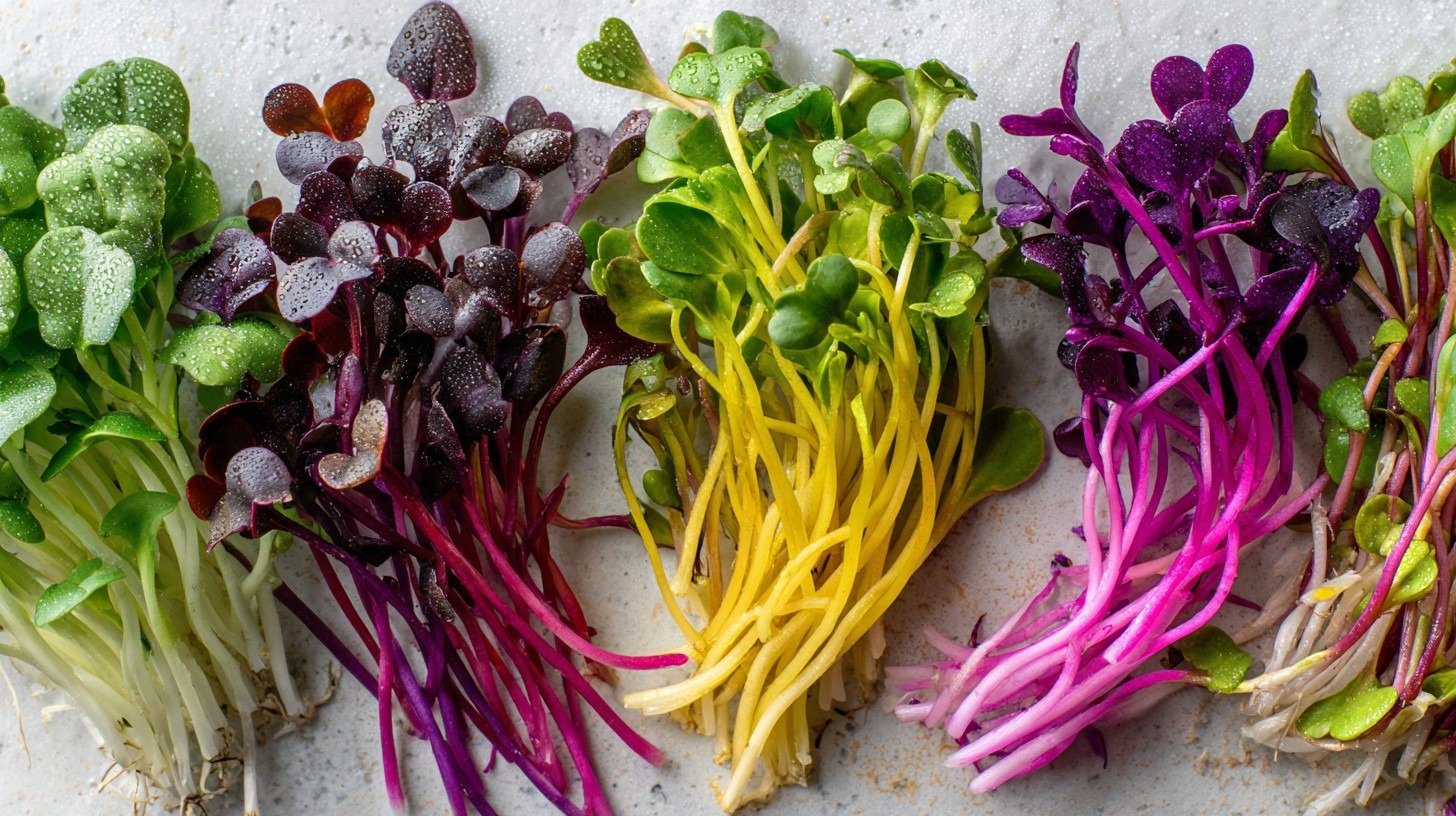
Microgreens are harvested between the cotyledon and first true-leaf stage, typically 7 to 14 days after germination. At that stage, the plant is metabolically active and contains concentrated reserves of vitamins, minerals, and phytochemicals that support the seedling’s early development.
Research consistently confirms that microgreens contain higher concentrations of most nutrients than their mature counterparts, with the degree varying by variety and nutrient. Xiao et al. (2012) found red cabbage microgreens contained 40 times more vitamin E than mature red cabbage. The same study found radish microgreens contained nearly 7 times more vitamin C than mature radish. Pea shoots, by comparison, exceeded mature peas by only 1.5 times for most nutrients, confirming that the ratio varies substantially by variety.
Which nutrients do microgreens deliver?
Microgreens contain meaningful concentrations of vitamins A, C, E, and K, along with iron, calcium, magnesium, potassium, and zinc. The specific profile depends on variety.
Broccoli microgreens are the most nutritionally documented variety, with peer-reviewed research confirming sulforaphane bioavailability in human subjects (Fahey et al., 2023). Sulforaphane is an isothiocyanate formed when glucoraphanin reacts with myrosinase during chewing or processing. That reaction is disrupted by heat, which is why the nutritional benefit is tied to fresh or lightly processed consumption rather than cooked applications.
Radish microgreens are high in anthocyanins, the same pigment compounds that give red cabbage and blueberries their color and documented anti-inflammatory properties. Pea shoots are dense in fiber and protein, contributing satiety in a way that most microgreens do not. Sunflower microgreens provide vitamin E, relevant for photoprotection and skin health.
Which microgreen varieties have the strongest nutritional profiles?
Broccoli is the primary variety for sulforaphane content. Red cabbage leads for vitamin E and anthocyanin concentration. Basil microgreens are the primary source of rosmarinic acid, which has documented anti-inflammatory and antioxidant activity. Beet microgreens provide betaine and dietary nitrates linked to cardiovascular function. Fenugreek microgreens have documented blood sugar-modulating properties.
No single variety provides the full nutritional range. Dietary diversity across varieties delivers broader micronutrient coverage than relying on any single type.
Why have microgreens become so popular with chefs and consumers?
The culinary appeal is straightforward: flavor concentration, visual variety, and textural contrast. Microgreens deliver adult flavor profiles in a visually distinctive format that photographs well and elevates plate presentation across casual and fine dining contexts.
Chefs adopted microgreens as garnish first and ingredients second. The commercial transition happened when chefs recognized that microgreens could replace larger volumes of mature greens with better flavor impact per serving. A gram of radish microgreens delivers more peppery heat than 10 grams of mature radish in most dishes.
Food service accounts for approximately 46% of US microgreens revenue for precisely this reason (Mordor Intelligence, 2026). Restaurant buyers are the most reliable repeat customers a local grower can have.
Which microgreens are the most nutrient-dense?
Broccoli and red cabbage are consistently at the top of documented nutrient density rankings, with sulforaphane and vitamin E concentrations that significantly exceed their mature-plant equivalents (Xiao et al., 2012). Radish follows for vitamin C and anthocyanin content. Sunflower and pea shoots rank lower for individual nutrient density but higher for protein and total caloric contribution.
The most practical framework for home growers and health-focused buyers is variety rotation. Eating two or three different microgreens varieties across the week delivers broader nutritional coverage than daily consumption of a single variety, regardless of which one ranks highest on any given nutrient metric.
Where do you find reliable microgreens market research?
The market research industry for specialty crops has a credibility problem that anyone publishing or using these figures should acknowledge honestly.
Which research firms publish microgreens market data?
No government statistical agency produces a standalone microgreens market valuation. The USDA Census of Agriculture tracks broad vegetable categories without separating microgreens. The FAO does the same globally. All published market size figures originate from commercial syndicated research firms.
The firms most frequently cited for microgreens include Mordor Intelligence, The Business Research Company, Grand View Research, Coherent Market Insights, Market Research Future, Polaris Market Research, IMARC Group, Straits Research, and Allied Market Research. Their figures for the same market in the same year range from $1.0 billion to $4.1 billion, which is a 4x spread for what they all describe as the same global microgreens market.
That spread exists because these firms are not measuring the same thing. Different scope definitions, different value chain measurement points, and different data sourcing methodologies produce genuinely different numbers. The firms do not typically disclose their methodology in press release summaries, making it difficult to evaluate which figure is most defensible without purchasing the full report.
Mordor Intelligence is the most methodologically transparent option among the firms surveyed for this post. It is also the only firm that publishes an explicit scope definition and describes its data anchoring methodology in accessible form (Mordor Intelligence, 2026).
What do microgreens industry reports actually cover?
A standard microgreens industry report covers market sizing by segment (variety, farming method, distribution channel, application), regional share analysis, competitive landscape, growth drivers and restraints, and a 7 to 10 year forecast. The full paid reports typically run $3,000 to $5,000 for a single user license.
The press release summaries distributed through openPR.com and EIN Presswire contain headline figures and top-line segment data without the supporting methodology. They are useful for directional research and benchmarking against other sources. They should not be treated as validated research independent of the underlying reports they summarize.
What farming process research is available for microgreens?
Peer-reviewed academic research on microgreens production is published primarily in HortScience, the Journal of Agricultural and Food Chemistry, Plant Growth Regulation, Horticulturae, and Frontiers in Sustainable Food Systems. That research covers LED spectrum optimization, seeding density, growing medium comparisons, nutrient management, and post-harvest quality.
The USDA Agricultural Research Service publishes independently validated research on microgreens composition and food safety. Extension services at land-grant universities, including Penn State (2025) and Oregon State, have published business planning guides for small microgreens operations that are more useful for individual operators than commercial market reports.
The Riggio et al. (2019) food safety review in the International Journal of Food Microbiology remains the most comprehensive academic treatment of microgreens safety from farm to fork and should be on the reading list of any commercial operator.
Which industry reports cover the microgreens market most thoroughly?
For global market sizing, Mordor Intelligence and The Business Research Company provide the most regularly updated and methodologically transparent reports available without a paid subscription.
For trade news and operator-level market intelligence, Produce Business, Produce Grower, and Vertical Farm Daily publish ongoing coverage of commercial microgreens operations, distribution deals, and business outcomes that market research reports do not capture.
For peer-reviewed academic research, the USDA Agricultural Research Service database and Google Scholar with search terms including “microgreens commercial production” and “microgreens market research” provide access to the limited but growing body of validated research.
Most Growers Are Losing Revenue
From Channels They Have Not Scored Yet.
The market is growing at 10 to 12% annually. Most of that growth is flowing through five channels. This scorecard tells you exactly which ones you are positioned to capture and which ones are leaving money on the table right now.
- Score yourself across all 5 revenue channels
- Identify your weakest channel in under 5 minutes
- Based on 2026 market data from 12 research firms
- Know exactly where to focus before you scale
Takes 30 seconds.
2026 Microgreens Growth Channel Scorecard
5 channels. 30 points. One clear priority.
across 5 channels
Wrap-up: microgreens market trends 2026-2032

The market is growing. The trajectory is real and well-documented across multiple research sources. The 10 to 12% CAGR projections are consistent enough across different methodologies to be credible as directional guidance, even if the specific dollar figures vary by firm.
What the market reports do not say is equally worth knowing. Approximately 50% of new microgreens businesses fail in their first year. AeroFarms spent a decade and multiple bankruptcy proceedings before stabilizing. Fresh Forage ran one of Manitoba’s largest operations for a decade and still found the margins too tight to continue. A growing market does not guarantee that any particular operator can capture a sustainable share of it.
Whatley’s framework applies directly here. The growers who succeed consistently are the ones who built their customer base before they built their capacity. They know their buyers, their price points, and their delivery window before they invest in new equipment. They operate within a confirmed local demand that the national growth projections confirm but cannot create.
Broccoli and indoor vertical farming lead the market by revenue and production segment. North America and Europe are roughly co-equal in global share, not the 60/40 split older reports described. DTC and online channels are growing faster than retail. Foodservice remains the largest and most reliable revenue channel for local commercial operators.
The new frontiers are real: AI-powered growing systems, LED optimization, cosmetic and supplement applications, emerging markets in Asia Pacific and Australia. They represent the market’s next five years, not its current structure.
For a local operator, the relevant question is not what the market will be worth in 2032. The question is how many confirmed repeat buyers you can identify in your zip code at your price point today.
Microgreens Market Trends: Frequently Asked Questions
What is the current size of the global microgreens market?
The global microgreens market is estimated at $2.5 to $3.5 billion in 2025, with projections converging around $5 to $6 billion by the early 2030s at a CAGR of approximately 10 to 12% (Mordor Intelligence, 2026; The Business Research Company, 2026). These figures vary across research firms by up to 4 times for the same market in the same year, reflecting different scope definitions and measurement methodologies rather than fundamental disagreement about the market’s direction.
Which microgreen varieties lead the commercial market?
Broccoli leads by revenue share at approximately 22 to 27% globally, driven by premium pricing and sulforaphane’s documented health profile (Mordor Intelligence, 2026; Coherent Market Insights, 2025). By production volume and grower adoption, radish is the most widely grown variety, followed by sunflower and peas, according to the only peer-reviewed survey of US commercial microgreens farms (Misra & Gibson, 2021). The distinction between revenue leadership and production volume matters: broccoli generates more dollars per unit while radish is grown by more producers.
Does North America really dominate the microgreens market?
North America leads with approximately 36 to 42% of global market share, not the 60%+ figure that appeared in older versions of this post and others (Mordor Intelligence, 2026; IMARC Group, 2025). Europe holds roughly 30 to 40%, with Coherent Market Insights placing Europe slightly ahead of North America in 2025 at 40.3%. The 60%+ claim has been corrected across this post. No credible 2025 or 2026 source supports it.
What is the realistic failure rate for new microgreens businesses?
Approximately 50% of new microgreens businesses fail within their first year, according to figures cited consistently in industry education resources. The broader controlled environment agriculture sector experienced 14 major bankruptcies in 2025 alone, including Plenty Unlimited and Bowery Farming (Global AgInvesting, 2026). Success correlates most strongly with securing confirmed repeat buyers before scaling production, keeping overhead low, and operating direct-to-consumer or direct-to-restaurant rather than through commodity wholesale channels.
How many customers does a microgreens grower actually need?
A grower targeting $5,000 per month needs approximately 25 active accounts spending $200 monthly on average. A full-time business targeting $10,000 per month needs 40 to 50 accounts. Those figures are achievable in any metropolitan area with active restaurants and a functioning farmers’ market. Not sure how many customers you need to hit your income goal? The Microgreens Growth Path Tool calculates your customer target and maps your first move using local market data for your zip code.
What is the fastest-growing distribution channel for microgreens?
Direct-to-consumer and online channels are growing at 17 to 18% annually, faster than any other distribution category (Mordor Intelligence, 2026; SNS Insider, 2025). Foodservice accounts for approximately 46% of US microgreens revenue and is the largest single channel in the US. Retail grocery leads globally but is growing more slowly than DTC. Farmers’ markets represent approximately 9% of US sales, making them an important market entry channel for new operators but not a primary scaling vehicle.
References
Christofi, A., et al. (2023). Determining the nutrient content of hydroponically-cultivated microgreens with immersible silicon photonic sensors. Sensors, 23(13), 5937. https://doi.org/10.3390/s23135937
Coherent Market Insights. (2025, December 22). Microgreens market size and share analysis: growth trends and forecasts (2025-2032). https://www.coherentmarketinsights.com/industry-reports/microgreens-market
Fabek Uher, S., et al. (2023). Alfalfa, cabbage, beet and fennel microgreens in floating hydroponics. Plants, 12(11), 2098. https://doi.org/10.3390/plants12112098
Fahey, J. W., Zhang, Y., & Talalay, P. (1997). Broccoli sprouts: An exceptionally rich source of inducers of enzymes that protect against chemical carcinogens. Proceedings of the National Academy of Sciences, 94, 10367-10372.
Fahey, J. W., et al. (2023). Sulforaphane bioavailability in healthy subjects fed a single serving of fresh broccoli microgreens. PubMed Central. https://pmc.ncbi.nlm.nih.gov/articles/PMC10606698/
Global AgInvesting. (2026, January). AgTech and FoodTech: The ugly, the bad, and the good. https://globalaginvesting.com/agtech-and-foodtech-the-ugly-the-bad-and-the-good/
Grand View Research. (n.d.). Microgreens market size, share and analysis report, 2030 (Report No. GVR-4-68040-106-3). https://www.grandviewresearch.com/industry-analysis/microgreens-market-report
IMARC Group. (2025, November 7). Australia microgreens market 2025. openPR. https://www.openpr.com/news/4258936/australia-microgreens-market-2025-worth-usd-47-8-million
Market Research Future. (2026, January 9). Microgreens market to reach USD 4.60 billion by 2035. openPR. https://www.openpr.com/news/4342634/microgreens-market-to-reach-usd-4-60-billion-by-2035-at-cagr
MarketGenics Research. (2025, December 11). Microgreens market in Europe. openPR. https://www.openpr.com/news/4310813/microgreens-market-in-europe-a-high-growth-shift-toward
Mibelle Biochemistry. (n.d.). Detoxophane. https://mibellebiochemistry.com/detoxophane
Misra, G., & Gibson, K. E. (2021). Survey of US commercial microgreens production and food safety practices. Food Protection Trends, 41(1).
Mordor Intelligence. (2026, January). Microgreens market size, analysis, share and growth report 2025-2031. https://www.mordorintelligence.com/industry-reports/microgreens-market
Paraschivu, M., et al. (2022). Microgreens: current status, global market trends, and forward statements.
Perishable News. (2026, January 9). Luya unveils the world’s first AI-powered microgreens nutrition system. PerishableNews.com. https://perishablenews.com/produce/luya-unveils-the-worlds-first-ai-powered-microgreens-nutrition-system/
Penn State Extension. (2025). Business planning for your microgreens operation. https://extension.psu.edu/business-planning-for-your-microgreens-operation
PR Newswire. (2026, January). 80 Acres Farms expands microgreens nationwide. https://www.prnewswire.com/news-releases/80-acres-farms-expands-microgreens-110000170.html
Produce Business. (2026, March 4). Sunswell Greens expands microgreens distribution across the Southeast. https://producebusiness.com/news/sunswell-greens-expands-microgreens-distribution-across-the-southeast/
Riggio, G. M., et al. (2019). Microgreens: A review of food safety considerations along the farm to fork continuum. International Journal of Food Microbiology, 290, 76-85. https://doi.org/10.1016/j.ijfoodmicro.2018.09.027
The Business Research Company. (2026, February 19). Microgreens market analysis. openPR. https://www.openpr.com/news/4396793/microgreens-market-analysis-segmentation-major-trends
Verified Market Research. (2025, October 8). USA microgreens market opportunities, trends, and pricing analysis. openPR. https://www.openpr.com/news/4214360/usa-microgreens-market-opportunities-trends-and-pricing
Vertical Farm Daily. (2025, December 24). Australia: A $100,000/year microgreens business run out of a garage. https://www.verticalfarmdaily.com/article/9797718/australia-a-100-000-year-microgreens-business-run-out-of-a-garage/
Vertical Farm Daily. (2026, January 21). Manitoba microgreens farm to close after a decade. https://www.verticalfarmdaily.com/article/9803430/manitoba-microgreens-farm-to-close-after-a-decade/
Vrkic, R., et al. (2024). Can LED lighting be a sustainable solution for producing nutritionally valuable microgreens? Horticulturae, 10(3), 249. https://doi.org/10.3390/horticulturae10030249
WSET. (2026, February 27). Microgreens maker faces shutdown in Pittsylvania County by Friday if cash runs dry. WSET. https://wset.com/news/local/microgreens-maker-faces-shutdown-in-pittsylvania-county-by-friday-if-cash-runs-dry-february-2026-business-aerofarms
Xiao, Z., et al. (2012). Assessment of vitamin and carotenoid concentrations of emerging food products: Edible microgreens. Journal of Agricultural and Food Chemistry, 60(31), 7644-7651. https://doi.org/10.1021/jf300459b