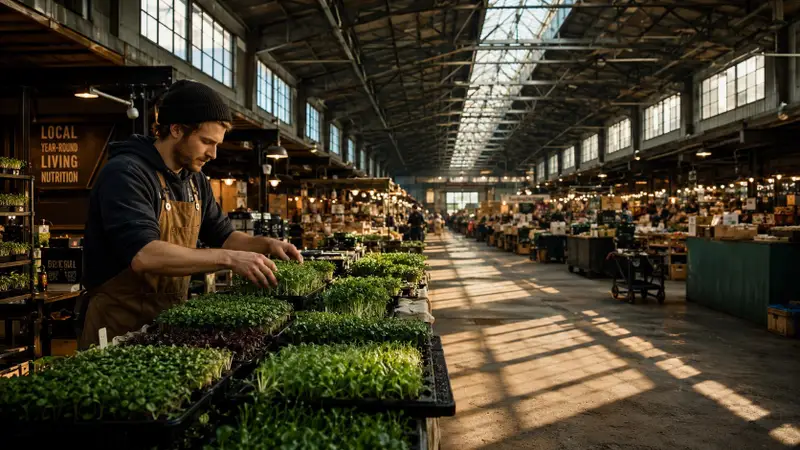
Spring 2017. Stephen and I made our first harvest and celebrated with hot veggie pizza topped with radish microgreens. We ate standing in the kitchen. We were ready to sell, but which farmers market to sell at? Neither of us had an answer.
Stephen’s wife did. “The farmers market,” she said. “Ten miles from here.”
We ran a few Google searches to confirm it, drove over the following Saturday, walked the stalls, and decided to apply.
What we did not have was a framework.
Most vendors pick a farmers market the same way they pick a parking spot. They go with the closest one that looks open.
That strategy works fine for parking. For your microgreens business, it’s a way to spend a season at the wrong market.
Researchers from Colorado State University surveyed 229 farmers market managers across the country in Summer 2025 to understand the US edible flower market. What they found tells us something important about specialty crops in general. Urban markets were more than twice as likely to carry specialty crops as rural ones. Year-round markets outperformed seasonal markets by a wide margin. The region you’re in matters more than most vendors assume (Lee & Miller, 2026).
That data is a market selection tool. Here’s how to read it.
Key Takeaway
A 2025 national survey of 229 US farmers’ market managers found that urban markets (60.8%) and year-round markets (65.2%) had the highest rates of specialty crop sales. Rural markets (25.9%) and southern markets (25%) had the lowest. Western markets (52.1%) outperformed the national average. Source: Lee & Miller (2026), HortTechnology, 36(3), 455–462.
The data breaks down by market type, region, and the two barriers market managers say are holding specialty crop sales back across the country. Each one tells you something specific about which farmers market to sell at, and which ones to skip.
MGW Farmers Market Finder
Year-round and urban markets outsell seasonal ones by a wide margin. Is one near you?
7,842 USDA-verified markets searchable by zip code, city, or state. Filter by market type, season, and SNAP/EBT acceptance before you apply anywhere.
Find markets near meWhat did 229 market managers reveal about which farmers market to sell specialty crops at?
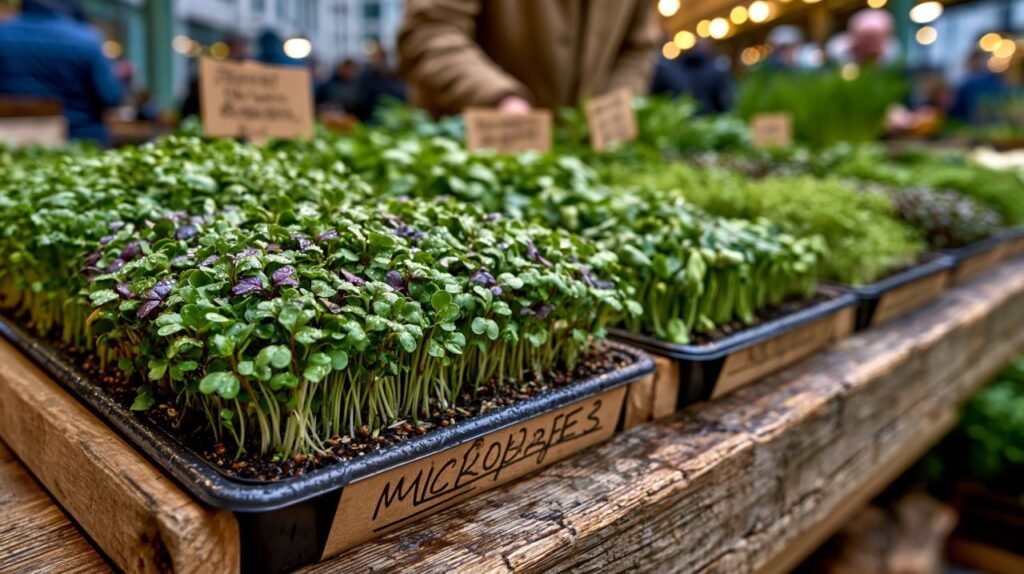
The Colorado State University study wasn’t designed to answer the microgreens question directly. Researchers Makenzie Lee and Chad Miller set out to understand the US edible flower market: who sells it, where, and what gets in the way (Lee & Miller, 2026).
What makes it useful for anyone deciding which farmers market to sell at is the scale. Around 1,000 farmers’ markets were contacted. 229 complete responses came back, covering markets across 39 states. Market managers, not vendors, not customers, answered the questions. They see the full vendor mix every week. They know what sells and what sits.
One number frames everything that follows. Just 39.3% of markets in the survey reported any specialty crop sales at all. The other 60.7% had none. No edible flowers. No specialty greens. No microgreens.
That is not a crowded market. That is an open door.
Microgreens appeared in only five responses across the entire survey, mentioned as a supplemental crop sold alongside edible flowers (Lee & Miller, 2026). Five. Across 229 markets in 39 states.
The survey does not tell you which farmers market to sell at by name. What it does is more useful. It tells you which market type, which region, and which customer profile gives a specialty crop vendor the best chance of finding buyers who already want what you grow. The next sections break that down.
Does market type determine which farmers market to sell at?

Yes, and the gap between market types is large enough to matter before you fill out a single application.
The survey found a statistically significant association between market type and specialty crop sales (Lee & Miller, 2026). Two formats stood well above the rest.
Year-round markets reported the highest rate, with 65.2% carrying specialty crops. Producers-only markets came in second at 57.6%. Both sit substantially above the overall survey average of 39.3%.
The pattern holds up under scrutiny. A year-round market runs 52 weeks. Shoppers who come back every Saturday learn what microgreens are, start requesting them, and eventually expect them. That repeat-buyer dynamic is exactly what Dr. Booker T. Whatley described as the foundation of a viable farm business, a Critical Mass of Customers who buy on a schedule, not a whim (Whatley & DeVault, 1987). Year-round markets build that base faster than any seasonal format can.
Producers-only markets attract a different buyer. Someone who specifically seeks out a producers-only market has already decided they want to buy from the grower. The education step, explaining what microgreens are and why they cost more than supermarket greens, is shorter at these markets. The buyer walked in pre-sold on the idea of knowing where their food comes from.
Hybrid markets were the weakest performers in the data at 23.9%, well below the overall average. Traditional markets landed near the mean. If you are comparing two markets in the same area and one is year-round or producers-only, the data tells you which farmers market to sell at first.
The format of a market is something you can verify before you apply. Check the market website. Call the manager. Ask directly whether the market runs year-round and whether it operates as a producers-only format. Those two questions narrow the decision faster than foot traffic estimates or booth fees.
Does your region change which farmers market to sell at?
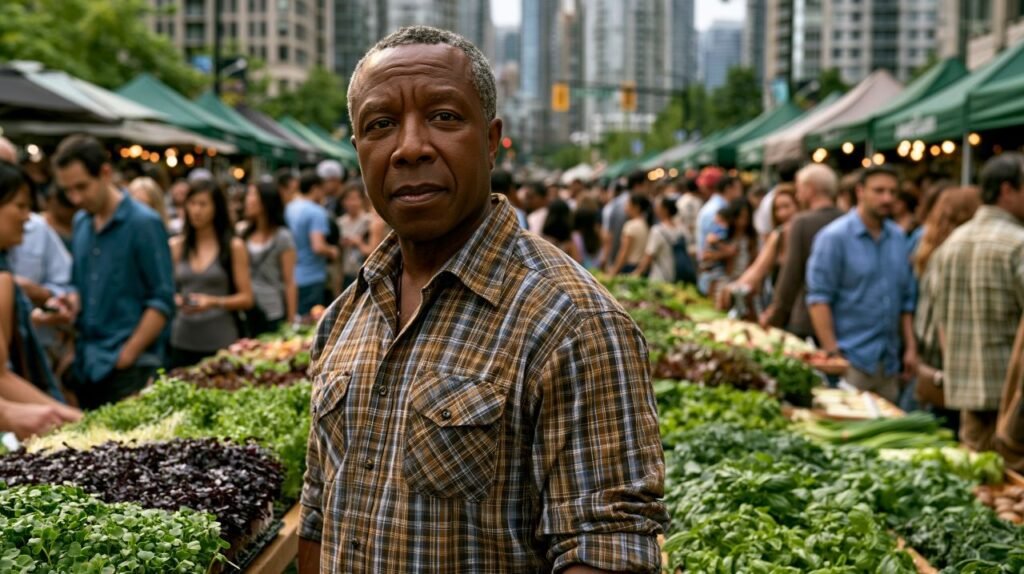
Significantly. The survey found a statistically significant regional association with specialty crop sales, separate from market type entirely (Lee & Miller, 2026).
Western markets led the country at 52.1%. Urban markets across all regions hit 60.8%, the highest of any demographic group in the study. The Northeast came in at 45.7%. Southern markets (25%) and rural markets (25.9%) reported the lowest rates by a wide margin.
The western and urban advantage comes down to customer education. Buyers at dense urban markets and western food-culture markets are more likely to already know what a specialty crop is. They are not asking what microgreens are. They are looking for a reliable source.
That changes how you answer the question of which farmers market to sell at in different regions. In the West and in urban markets, your job at the booth is to be findable. In the South and in rural markets, your job is to educate first. Neither is impossible. They are just different challenges requiring different booth strategies.
The regional data does not rule out any geography. A year-round urban market in Atlanta performs differently from a seasonal rural market two counties over. The data tells you to be selective, not discouraged.
What the biggest barrier tells you about which farmers market to sell at
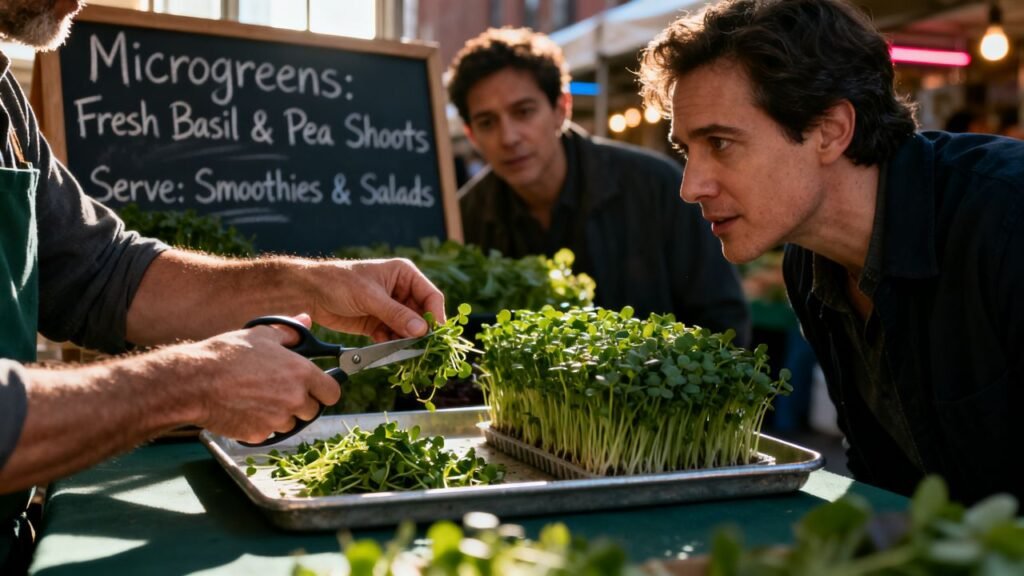
The survey asked market managers to name the barriers holding specialty crop sales back in their area. Two answers dominated.
Public knowledge came first at 72.5% of all markets. Marketability came second at 63.8% (Lee & Miller, 2026).
Read those carefully. Neither the yield, the seed cost, nor the shelf life is a production barrier. The two biggest obstacles between a specialty crop vendor and a paying customer are whether buyers know the product exists and whether vendors know how to sell it.
For anyone deciding which farmers market to sell at, that finding reframes the booth setup conversation entirely. The market you choose matters. What you do when you get there matters just as much.
Southern markets had the highest concentration of managers citing public knowledge as a barrier at 81.7%, compared to 61.6% in the West (Lee & Miller, 2026). If you are setting up in the South, your booth education strategy carries more weight than your growing operation. A tray of scissors, a cutting board, and a sign that names the variety and suggests one way to use it addresses both barriers at once. That is not a marketing trick. It is the direct response to what market managers across the country said is standing between specialty crops and the customer.
The barrier data does not tell you which farmers market to sell at. It tells you what to bring when you get there.
How do you use this data to decide which farmers market to sell at?
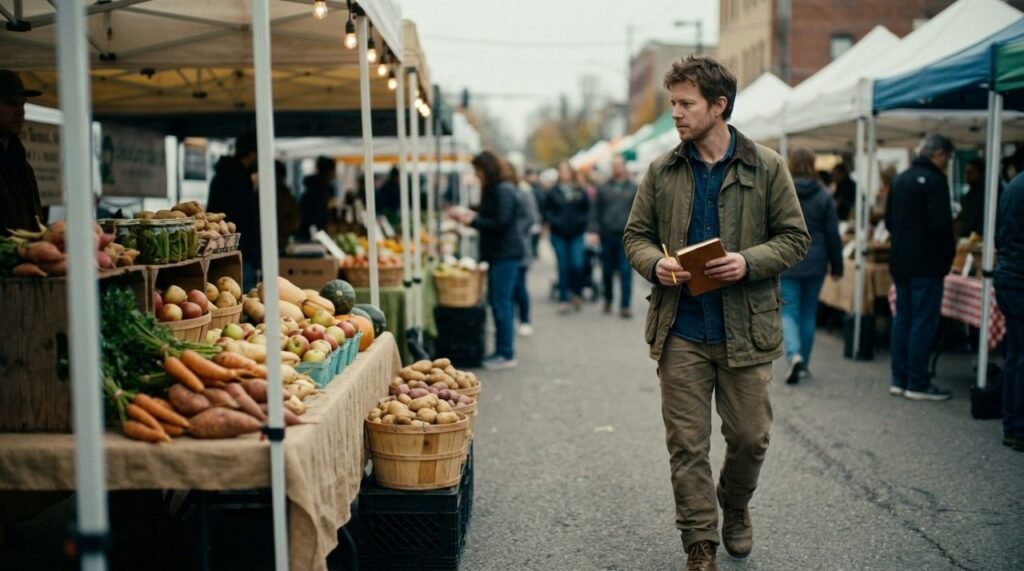
Whatley’s framework for farm business planning starts with one question: who is your customer and where do they already buy? The Lee and Miller survey lets you answer the second part with numbers instead of guesses.
Three filters were applied in order to narrow the decision quickly.
Market format first. Year-round and producers-only markets have the highest specialty crop penetration in the data. If two markets operate near you, the one matching either format gets the application first.
Region and location type second. Urban markets outperform rural ones across every region in the study. If you are in a metro area, target markets closest to the urban core. If you are rural, find the nearest year-round market before defaulting to the most convenient seasonal one.
Vendor mix third. Visit the market before you apply. Walk every row and count the produce vendors. The survey found that 47.7% of specialty crop vendors at markets primarily sell vegetables, with fruit and vegetable vendors following at 32.6% (Lee & Miller, 2026). Microgreens fit directly into that produce vendor profile. What you are looking for is a market with produce buyers and no specialty greens vendor already occupying the category.
None of this replaces the Saturday morning walk. The data tells you which farmers market to sell at in general terms. The visit tells you whether this specific market has a gap you can fill.
How do you find which farmers market to sell at near you?
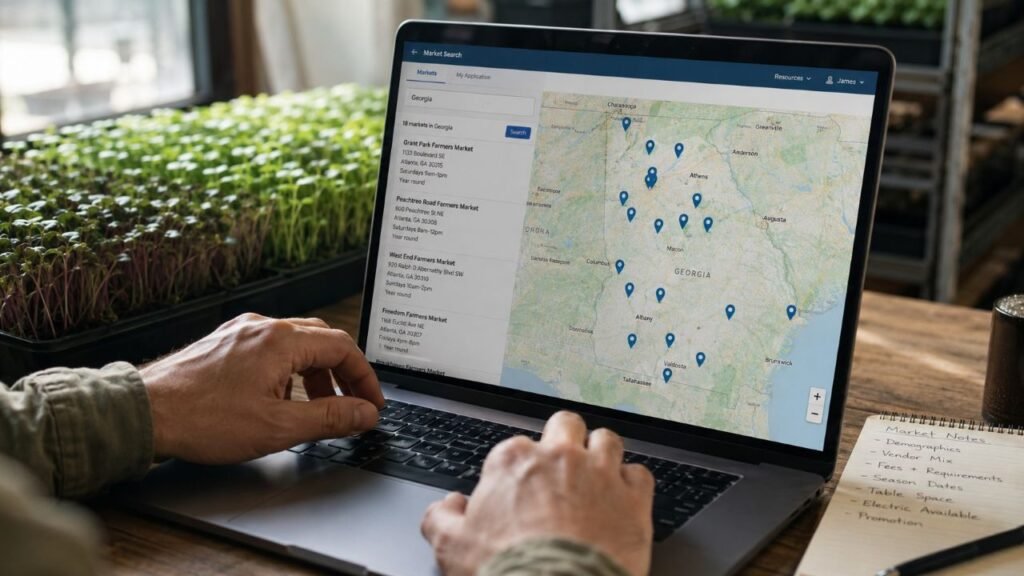
The research tells you what to look for. The MGW Farmers Market Finder shows you where to look.
The tool pulls from 7,842 USDA-verified markets across all 50 states. Search by zip code, city, or state to see what is operating near you, what days and seasons each market runs, and whether SNAP and EBT are accepted. Filter results before you drive anywhere.
Use the data from this post as your filter criteria. Search your area and look for markets with year-round schedules first. Note which ones are listed as producers-only. Cross-reference location type. Urban markets outperformed rural ones in every region in the Lee and Miller survey. Build a shortlist of two or three markets that match the profile before you contact a single manager.
The Finder will not tell you whether a specific market already has a specialty greens vendor. That requires a Saturday morning visit. But it gets you to the right shortlist faster than several afternoons of Google searches, which is exactly where Stephen and I started in 2017.
Find which farmers market to sell at near you at markets.microgreensworld.com.
MGW Farmers Market Finder
Year-round and urban markets outsell seasonal ones by a wide margin. Is one near you?
7,842 USDA-verified markets searchable by zip code, city, or state. Filter by market type, season, and SNAP/EBT acceptance before you apply anywhere.
Find markets near meFrequently Asked Questions
How much does a farmers market booth typically cost?
Booth fees vary widely by market size and location, generally running from $20 to $150 per market day. Some markets charge a flat seasonal fee rather than daily rates. Application fees are usually separate and run $15 to $50. Pike Place Market in Seattle charges $7 to $40 per day depending on the season.
How many markets should I apply to when deciding which farmers market to sell at?
Start with one. A single market gives you a clean read on whether your product, pricing, and booth setup are working before you scale. Once you are consistently selling out and seeing repeat customers, adding a second market makes sense. Splitting inventory and attention too early dilutes both.
When do farmers market vendor applications typically open?
Most markets open applications between September and January for the following spring season. Some larger markets accept applications on a rolling basis with waitlists. Check each market’s website in early fall and set a reminder — late applications are rarely considered regardless of product quality.
Do I need a license or permit to sell microgreens at a farmers market?
Requirements vary by state and county. Most markets require a business license, liability insurance, and proof of production. Fresh microgreens are classified as produce rather than processed food in most jurisdictions, which typically means a lower regulatory burden than cottage food vendors face. Contact your county extension office for the specific rules in your area.
How long does it take to build a repeat customer base at a farmers market?
Most vendors report that a reliable repeat base takes two to three full seasons to develop. The first season is largely about visibility and education. By the second season, regular shoppers begin to seek you out specifically. Year-round markets compress that timeline because the buying cycle never resets.
Can I sell at more than one farmers market at the same time?
Yes, and many established vendors do. The practical constraint is harvest timing. Microgreens have a narrow harvest window, and splitting inventory across multiple same-day markets requires precise growing schedules. Building a repeat customer base at one market first, then adding a second in a different time slot, is the more reliable path.
References
Lee, M. K., & Miller, C. T. (2026). The US edible flower market through the farmers’ market lens. HortTechnology, 36(3), 455–462. https://doi.org/10.21273/HORTTECH05886-26
Whatley, B. T., & DeVault, G. (1987). How to make $100,000 farming 25 acres. Rodale Press. Retrieved from https://archive.org/details/howtomake10000fa00what