
Microgreens Biofortification
Feeding microgreens zinc, iron, selenium or iodine can lift those minerals several times over. See what trials found, and where the dose gets risky.
Updated 11 October 2026
Read time 10 minutes
In Nutrition 6 entries
Knowledgebase 25 entries
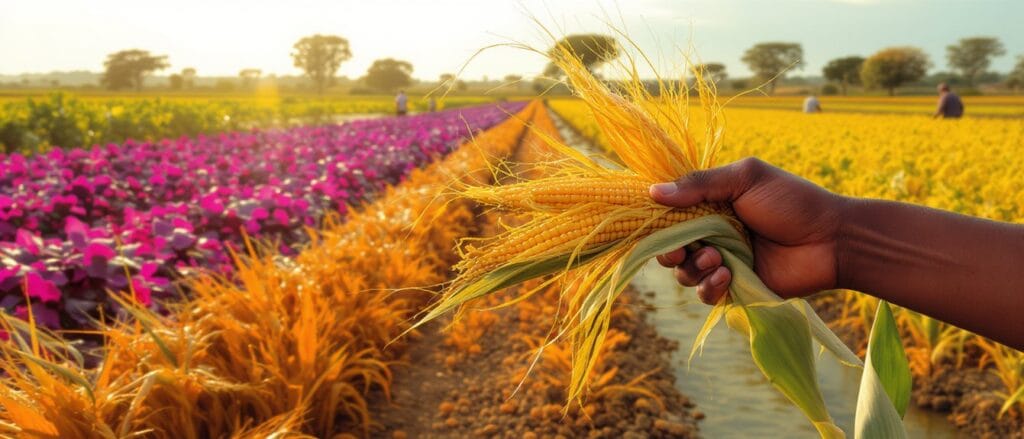
Microgreens drink whatever you feed them, and they do it fast. That makes them one of the easiest crops to load with extra zinc, iron, selenium or iodine. Researchers call it biofortification.
The results are real, but they’re smaller and messier than the big round numbers you’ll see online. Gains run from barely measurable to many times the normal level, crop by crop. And with selenium and iodine, a strong dose can push a single serving past what an adult needs in a day.
Here’s what the trials found, crop by crop and nutrient by nutrient.
What is biofortification in microgreens?
Biofortification means raising the level of a nutrient inside the plant as it grows. With microgreens, growers do it the agronomic way. They add a mineral to the nutrient solution or growing mix, and the seedlings take it up. No breeding and no genetic changes are involved.
Microgreens suit this well. They grow in about one to three weeks, often without soil, so the grower controls almost everything the roots touch. A team testing zinc and iron called brassica microgreens grown in soilless systems “good targets” for exactly that reason (Di Gioia et al., 2019).
The goal behind the research is hidden hunger, a shortage of vitamins and minerals even when people eat enough calories. Zinc deficiency alone affects about 17% of people worldwide, according to one study team (Poudel et al., 2025). For the bigger picture on feeding the world this way, read microgreens or biofortification: the race to feed the world.
Which nutrients can you add to microgreens?
Four minerals and one vitamin have the most research behind them.
Zinc and iron. Arugula, red cabbage and red mustard microgreens were grown with zinc sulfate or iron sulfate in the water. Zinc at 5 to 10 mg per liter raised zinc in the shoots by 75 to 281%. Iron at 10 to 20 mg per liter raised iron by 64% in arugula and up to 278% in red cabbage (Di Gioia et al., 2019).
Selenium. A dose of 2 mg of selenium per liter raised selenium in every species tested, and yield held steady (Mezeyová et al., 2022). Kale and kohlrabi microgreens soaked up far more selenium than wheat microgreens did on the same feed. They held about 130 micrograms per gram of dry weight, against 28 for wheat (Viltres-Portales et al., 2024).
Iodine. Four crops fed 8 micromoles of iodine per liter averaged 227% more iodine than plain-fed trays. Tatsoi held the most (Ciriello et al., 2023). In a commercial greenhouse trial, iodine in the water at 3 mg per liter left microgreens with 14 times the iodine of untreated ones (D’Imperio et al., 2023).
Vitamin C. Plants make their own vitamin C, but you can still raise it. Adding ascorbic acid to the nutrient solution lifted vitamin C in broccoli microgreens by up to 222% (Kathi et al., 2023). In arugula, ascorbic acid paired with zinc raised vitamin C by 135% on average (Kathi et al., 2024).
How much more nutrition do biofortified microgreens really have?
Often less than you’d guess, and it swings a lot. You’ll see big round numbers online, but no study we found backs one number for every crop and nutrient.
Look again at the zinc and iron trial. The same feed gave anywhere from 64 to 281% more, depending on the crop and the mineral. The response followed a curve, too. Past a certain dose, adding more mineral stopped paying off (Di Gioia et al., 2019).
Some crops hardly respond at all. In a vertical farm study, extra zinc raised zinc by 205% in pea microgreens and 217% in kale microgreens. Extra iron was another story. It raised iron only in pea microgreens, by 38%, and did nothing measurable in kale (Bucky et al., 2024).
So there’s no single answer. The gain comes down to the crop and the dose, and a grower can’t know the number without testing the harvest.
How do you add nutrients: water, spray or seed?
Most trials add the nutrient to the water that feeds the roots. It’s simple and it works best.
One kale trial compared two routes for selenium. Through the nutrient solution, kale microgreens built up to 893.3 micrograms of selenium per kilogram of dry matter. A leaf spray gave just 24. Yield stayed the same either way (Tavan et al., 2024).
Seed is a third route. Basil plants grown with selenium produced selenium-rich seed. Microgreens grown from that seed came up selenium-rich too, with no extra feeding (Puccinelli et al., 2019).
Timing matters for vitamin C. In the broccoli trial, ascorbic acid went into the water four to five days after germination. The trays were harvested about 14 days after germination (Kathi et al., 2023).
Does biofortification change yield or other nutrients?
Sometimes, and not always for the better.
Selenium can cost you size. Wheat microgreens fed selenium germinated better but grew shorter and yielded less. At moderate doses, the same trays gained phenolics and vitamin C (Islam et al., 2020).
The side effects vary by crop. In green pea and alfalfa microgreens, selenium didn’t lower phenolics or antioxidant capacity. In red radish, phenolics dropped (García-Tenesaca et al., 2024).
Minerals can work against each other. When buckwheat microgreens got selenium and iodine together, yield rose 50 to 70% over either one alone. Iodine levels fell by half in some of those mixed treatments (Germ et al., 2019).
And growing conditions still lead the way. In pea microgreens fed zinc under four light levels, light intensity changed the plant’s chemistry more than zinc did (Poudel et al., 2025). For more on light and nutrients, see our microgreens lighting guide.
Can biofortified microgreens give you too much of a mineral?
Yes. That’s the part most articles skip.
Selenium and iodine both have an upper limit, the most an adult should take in each day. For selenium, adults need 55 micrograms a day and the upper limit is 400 (Office of Dietary Supplements, n.d.-b). For iodine, adults need 150 micrograms and the upper limit is 1,100 (Office of Dietary Supplements, n.d.-a). Too much of either can cause health problems.
Biofortified microgreens can get close to those numbers fast. In the kale trial, fewer than five grams of selenium-fed microgreens supplied enough selenium for a day (Tavan et al., 2024). One serving of iodine-fed tatsoi covered about 100% of an adult’s daily iodine (Ciriello et al., 2023).
That’s why the buckwheat researchers warned growers to keep iodine doses low, so a serving doesn’t exceed the recommended intake (Germ et al., 2019). If you eat biofortified greens and take a supplement with the same mineral, the amounts add up.
Can home growers biofortify microgreens?
In principle, yes. Every trial above used mineral salts in the water. But those teams measured their doses in milligrams per liter and tested the harvest in a lab.
Without a lab test, you can’t know how much your trays took up. And as the trials show, the same feed can give very different results from one crop to the next. That matters most for selenium and iodine, where the safe range is narrow.
If you sell microgreens, the same rule applies with more weight. A nutrient claim on a label needs a tested number behind it, and labeling rules depend on where you sell.
Wrap-up: is biofortification worth it?
Biofortification works. Microgreens take up zinc, iron, selenium and iodine from the water, and some crops gain several times their normal level. Gains depend on crop and dose, though, and two of those minerals have firm upper limits.
Regular microgreens are already rich in vitamins. A study of 25 commercial microgreens found wide ranges of vitamin C, vitamin E and carotenoids from crop to crop (Xiao et al., 2012). Choosing the right crop may do as much for your plate as adding a mineral. For more on what grows a better tray, start with growing microgreens: what actually controls a tray.
120 studies on biofortifying microgreens
This entry cites 15 of them. The rest are in our research database, where you can search by crop or nutrient. Here are the newest.
- Loading the newest papers…
The list updates on its own each week as new papers come out.
Biofortified microgreens: frequently asked questions
Are biofortified microgreens genetically modified?
No. Agronomic biofortification only changes what the plant is fed. The seed and the plant’s genes stay the same.
Which microgreens take up the most selenium?
Brassicas did best in the trials. Kale and kohlrabi stored roughly four to five times as much selenium as wheat on an identical feed.
Can you biofortify microgreens with vitamins?
Vitamin C is the one with research behind it. Ascorbic acid added to the water raised it in broccoli and arugula microgreens. Other vitamins have little or no microgreen data yet.
Do biofortified microgreens taste different?
We found no taste test of mineral-fed microgreens. Trials measured yield, color and plant chemistry, and some saw changes in phenolics, which shape bitterness. Taste is still an open question.
References
Want to go deeper? The Microgreens World research database holds 120 studies on biofortifying microgreens. Search the papers →
Bucky, A., Pičmanová, M., Porley, V., Pont, S., Johnstone, A., & Stewart, D. (2024). Zinc and iron biofortification of crops grown in a vertical farm. Proceedings of the Nutrition Society, 83(OCE3), E251. https://doi.org/10.1017/s0029665124004804
Ciriello, M., Formisano, L., El-Nakhel, C., Zarrelli, A., Giordano, M., De Pascale, S., Kyriacou, M., & Rouphael, Y. (2023). Iodine biofortification of four microgreens species and its implications for mineral composition and potential contribution to the recommended dietary intake of iodine. Scientia Horticulturae, 320, 112229. https://doi.org/10.1016/j.scienta.2023.112229
D'Imperio, M., Bonelli, L., Mininni, C., Renna, M., Montesano, F. F., Parente, A., & Serio, F. (2023). Soilless cultivation systems to produce tailored microgreens for specific nutritional needs. Journal of the Science of Food and Agriculture, 104(6), 3371–3380. https://doi.org/10.1002/jsfa.13222
Di Gioia, F., Petropoulos, S. A., Ozores-Hampton, M., Morgan, K., & Rosskopf, E. N. (2019). Zinc and Iron Agronomic Biofortification of Brassicaceae Microgreens. Agronomy, 9(11), 677. https://doi.org/10.3390/agronomy9110677
García-Tenesaca, M. M., Llugany, M., Boada, R., Sánchez-Martín, M.-J., & Valiente, M. (2024). Phytochemical Profile, Bioactive Properties, and Se Speciation of Se-Biofortified Red Radish ( Raphanus sativus ), Green Pea ( Pisum sativum ), and Alfalfa ( Medicago sativa ) Microgreens. Journal of Agricultural and Food Chemistry, 72(9), 4947–4957. https://doi.org/10.1021/acs.jafc.3c08441
Germ, M., Stibilj, V., Šircelj, H., Jerše, A., Kroflič, A., Golob, A., & Maršić, N. K. (2019). Biofortification of common buckwheat microgreens and seeds with different forms of selenium and iodine. Journal of the Science of Food and Agriculture, 99(9), 4353–4362. https://doi.org/10.1002/jsfa.9669
Islam, M. Z., Park, B.-J., Kang, H.-M., & Lee, Y.-T. (2020). Influence of selenium biofortification on the bioactive compounds and antioxidant activity of wheat microgreen extract. Food Chemistry, 309, 125763. https://doi.org/10.1016/j.foodchem.2019.125763
Kathi, S., Laza, H., Singh, S., Thompson, L., Li, W., & Simpson, C. (2023). Vitamin C biofortification of broccoli microgreens and resulting effects on nutrient composition. Frontiers in Plant Science, 14, 1145992. https://doi.org/10.3389/fpls.2023.1145992
Kathi, S., Laza, H., Singh, S., Thompson, L., Li, W., & Simpson, C. (2024). Simultaneous biofortification of vitamin C and mineral nutrients in arugula microgreens. Food Chemistry, 440, 138180. https://doi.org/10.1016/j.foodchem.2023.138180
Mezeyová, I., Hegedűsová, A., Golian, M., Andrejiová, A., Šlosár, M., & Mezey, J. (2022). Influence of Microgreens Biofortification with Selenium on Their Quantitative and Qualitative Parameters. Agronomy, 12(5), 1096. https://doi.org/10.3390/agronomy12051096
Office of Dietary Supplements. (n.d.-a). Iodine: Fact sheet for consumers. National Institutes of Health. Retrieved October 8, 2026, from https://ods.od.nih.gov/factsheets/Iodine-Consumer/
Office of Dietary Supplements. (n.d.-b). Selenium: Fact sheet for consumers. National Institutes of Health. Retrieved October 8, 2026, from https://ods.od.nih.gov/factsheets/Selenium-Consumer/
Poudel, P., Jeffries, K. A., Bai, J., Dorado, C., Rosskopf, E., & Di Gioia, F. (2025). Light intensity and Zinc biofortification differentially impact the metabolomic profile of pea microgreens. Food Chemistry, 490, 145146. https://doi.org/10.1016/j.foodchem.2025.145146
Puccinelli, M., Malorgio, F., Rosellini, I., & Pezzarossa, B. (2019). Production of selenium‐biofortified microgreens from selenium‐enriched seeds of basil. Journal of the Science of Food and Agriculture, 99(12), 5601–5605. https://doi.org/10.1002/jsfa.9826
Tavan, M., Wee, B., Fuentes, S., Pang, A., Brodie, G., Viejo, C. G., & Gupta, D. (2024). Biofortification of kale microgreens with selenate-selenium using two delivery methods: Selenium-rich soilless medium and foliar application. Scientia Horticulturae, 323, 112522. https://doi.org/10.1016/j.scienta.2023.112522
Viltres-Portales, M., Sánchez-Martín, M.-J., Llugany, M., Boada, R., & Valiente, M. (2024). Selenium biofortification of microgreens: Influence on phytochemicals, pigments and nutrients. Plant Physiology and Biochemistry, 206, 108283. https://doi.org/10.1016/j.plaphy.2023.108283
Xiao, Z., Lester, G. E., Luo, Y., & Wang, Q. (2012). Assessment of Vitamin and Carotenoid Concentrations of Emerging Food Products: Edible Microgreens. Journal of Agricultural and Food Chemistry, 60(31), 7644–7651. https://doi.org/10.1021/jf300459b
More on Nutrition
- Boosting Microgreens’ Nutrient Content: What Works. Light, salt and plant extracts can raise vitamin C and antioxidants in microgreens. See what trials found, and what each
- Microgreens Bioavailability: How Much Nutrition Do You Absorb? Microgreens are rich in nutrients, but your body only gets a share. See what digestion studies found, and the one
- Microgreens Brix Measurement A secret number reveals microgreens' true nutritional power that growers miss by judging plants on appearance alone.
- What Microgreens Can You Eat? Edible microgreens, encompassing young herbs, vegetables, and flowers like basil, cilantro, arugula, radish, and pea shoots, are highly nutritious and
