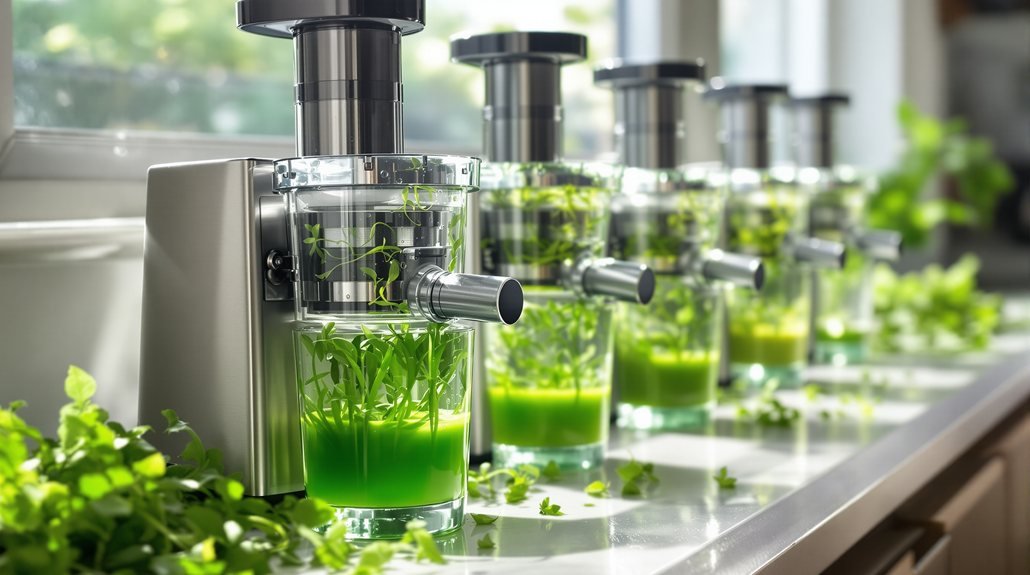
If you want to squeeze real nutrition from those tiny, nutrient-dense microgreens, you’ll need a slow masticating juicer that won’t turn your harvest into sad green foam. I’m looking at models running between 50 and 80 RPM with wide feed chutes, high-torque motors, and reverse functions to handle delicate stems without jamming. The five juicers below balance extraction efficiency, easy cleanup, and solid warranties, so let’s break down what makes each one worth your counter space.
Key Takeaways
- Slow masticating juicers operating at 40–80 RPM extract 20–40% more juice from microgreens while minimizing heat and oxidation.
- Wide feed chutes (5–6 inches) reduce prep time, though fibrous greens benefit from slower RPM to prevent jamming.
- Motors rated 150–250W with hardened stainless-steel augers handle stringy microgreen stems without straining or overheating.
- Reverse functions on models like AMZCHEF and LUFVEBUT quickly clear leafy clogs, maintaining consistent juice flow.
- BPA-free removable parts and minimal seams simplify cleaning, preventing residue buildup that affects juice quality and hygiene.
| AMZCHEF 5.8″ Self-Feeding Cold Press Juicer Machine | 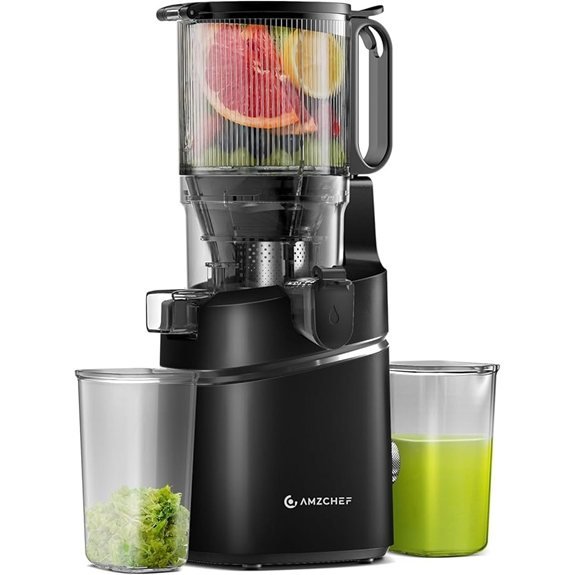 | Best Overall | Motor Speed (RPM): 60 RPM | Feed Chute Size: 5.8 inches | Motor Power: 250W | VIEW LATEST PRICE | Read Our Analysis |
| Slow Masticating Cold Press Vegetable & Fruit Juicer | 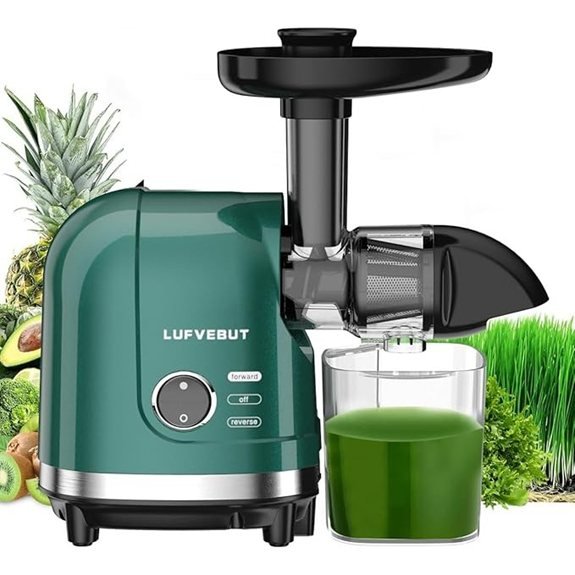 | Budget-Friendly Pick | Motor Speed (RPM): 80 RPM | Feed Chute Size: Standard (not specified) | Motor Power: 200W | VIEW LATEST PRICE | Read Our Analysis |
| AMZCHEF 5.8″ Cold Press Juicer Machine Green | 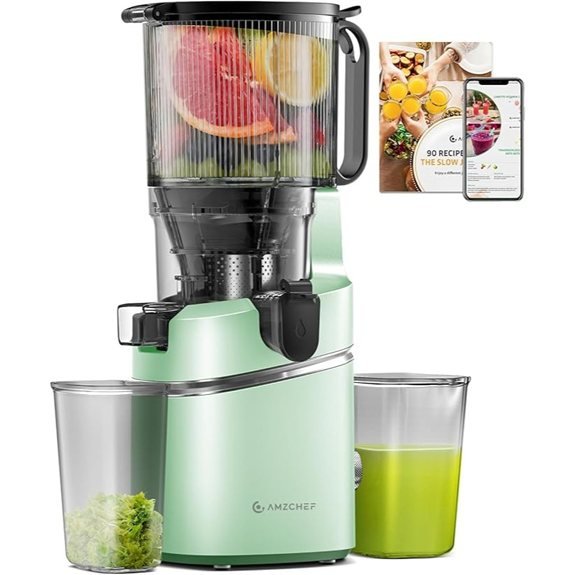 | Best Color Option | Motor Speed (RPM): 60 RPM | Feed Chute Size: 5.8 inches | Motor Power: 250W | VIEW LATEST PRICE | Read Our Analysis |
| Nama J2 Cold Press Self-Feeding Masticating Juicer | 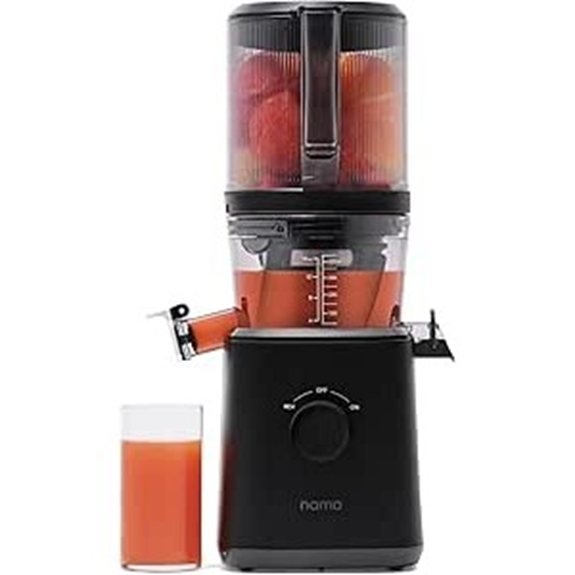 | Premium Choice | Motor Speed (RPM): 50 RPM | Feed Chute Size: Wide-mouth hopper | Motor Power: 200W | VIEW LATEST PRICE | Read Our Analysis |
| Cold Press Masticating Juicer with Large Feed Chute | 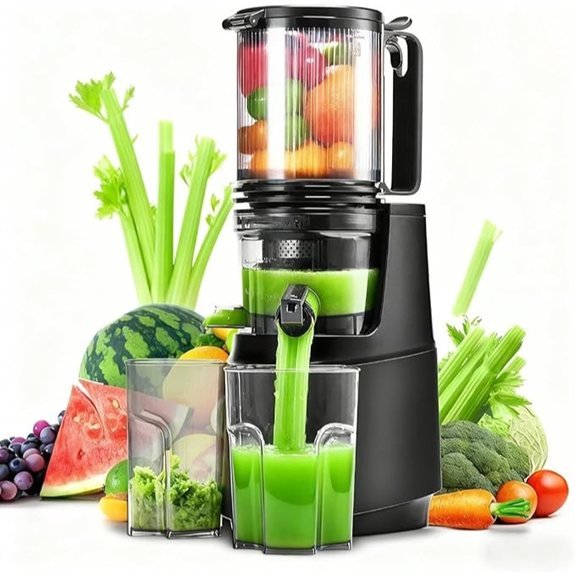 | Best Value | Motor Speed (RPM): 55 RPM | Feed Chute Size: 5.3 inches | Motor Power: 250W | VIEW LATEST PRICE | Read Our Analysis |
More Details on Our Top Picks
AMZCHEF 5.8″ Self-Feeding Cold Press Juicer Machine
For home cooks who dread the endless chopping that comes before juicing, the AMZCHEF Juicer Machines SJ-036 PRO might just become their new best friend. That 5.8-inch feed chute swallows whole fruits without the tedious prep work, and honestly, who has time for that?
The 60 RPM slow masticating system works through microgreens gently, extracting up to 30% more juice while keeping those precious nutrients intact. No heat damage here. The triple filtration system delivers silky-smooth juice, free from unwanted pulp chunks. Got a clog? Just hit the REV button for a few seconds. Problem solved.
- Motor Speed (RPM):60 RPM
- Feed Chute Size:5.8 inches
- Motor Power:250W
- Number of Speeds:2 speeds
- Item Weight:9.66 lbs
- Cleaning Method:Hand wash only
- Additional Feature:Triple filtration system
- Additional Feature:Smart safety lock
- Additional Feature:REV blockage clearing
Slow Masticating Cold Press Vegetable & Fruit Juicer
Growers who harvest delicate microgreens and leafy vegetables need a juicer that won’t destroy the very nutrients they’ve worked so hard to foster. The LUFVEBUT slow masticating juicer operates at just 80 RPM, which means less heat, less oxidation, and more of the good stuff in your glass.
Its 7-segment auger system cuts, squeezes, grinds, and extracts through seven distinct steps. The result? A claimed 98% juice yield from wheatgrass, spinach, kale, and other greens. BPA-free parts pop off for easy cleaning, and the reverse function clears jams without drama.
- Motor Speed (RPM):80 RPM
- Feed Chute Size:Standard (not specified)
- Motor Power:200W
- Number of Speeds:1 speed
- Item Weight:10.65 lbs
- Cleaning Method:Dishwasher safe
- Additional Feature:72-hour juice freshness
- Additional Feature:BPA-free detachable parts
- Additional Feature:Lifelong technical support
AMZCHEF 5.8″ Cold Press Juicer Machine Green
Those who want to juice whole fruits and vegetables without spending forever on prep work will appreciate what the AMZCHEF SJ-036 PRO brings to the table. The 5.8-inch feed chute swallows whole produce, which means less chopping and more actual juicing.
The slow 60 RPM masticating system extracts up to 30% more juice while keeping oxidation low. Good news for microgreens enthusiasts who hate wasting precious nutrients. Triple filtration delivers ultra-smooth results, and the self-feeding design keeps things moving without constant babysitting.
One catch, though. Hand wash only for all removable parts. No dishwasher shortcuts here.
- Motor Speed (RPM):60 RPM
- Feed Chute Size:5.8 inches
- Motor Power:250W
- Number of Speeds:2 speeds
- Item Weight:10.69 lbs
- Cleaning Method:Hand wash only
- Additional Feature:20 years brand expertise
- Additional Feature:3.8 lb max capacity
- Additional Feature:Triple strainer system
Nama J2 Cold Press Self-Feeding Masticating Juicer
Busy home juicers who want fresh microgreens juice without standing over their machine will appreciate what the Nama J2 brings to the counter. Its wide-mouth hopper accepts whole ingredients, so individuals can load their recipe and walk away. Hands-free juicing, finally.
The masticating design runs at just 50 RPM, keeping things quiet while maximizing extraction from delicate greens. No heat damage, no wasted nutrients. Quick-release parts make cleanup less of a chore, though everything requires hand washing.
At 12 pounds and nearly 18 inches tall, this juicer needs dedicated counter space. The 15-year warranty suggests serious longevity, which helps justify the investment.
- Motor Speed (RPM):50 RPM
- Feed Chute Size:Wide-mouth hopper
- Motor Power:200W
- Number of Speeds:1 speed
- Item Weight:12.1 lbs
- Cleaning Method:Hand wash only
- Additional Feature:15-year warranty
- Additional Feature:Hands-free operation
- Additional Feature:Makes sorbet/sauces
Cold Press Masticating Juicer with Large Feed Chute
Anyone who has ever tried to juice delicate microgreens knows the struggle is real. The Cold Press Masticating Juicer with Large Feed Chute offers a 250W motor running at 55 RPM, which means slow, thorough extraction without generating heat that destroys nutrients. The 7-layer sectional screw impeller claims a 99% juice yield, pretty impressive for getting every last drop from those tiny greens. The 5.3-inch feed chute handles whole apples, though microgreens obviously need no pre-cutting. Only three parts to assemble, and a reverse mode clears jams when leafy stuff gets stubborn. Hand wash only, unfortunately.
- Motor Speed (RPM):55 RPM
- Feed Chute Size:5.3 inches
- Motor Power:250W
- Number of Speeds:1 speed (with reverse)
- Item Weight:10.34 lbs
- Cleaning Method:Hand wash only
- Additional Feature:3-part assembly
- Additional Feature:All-copper motor
- Additional Feature:Double-layer filter
Factors to Consider When Choosing Microgreens Juicers
When you’re shopping for a microgreens juicer, there are several key factors that’ll make or break your experience. I want to walk you through juice extraction efficiency, feed chute size, motor power, RPM speed settings, and ease of cleaning, because honestly, getting any of these wrong can leave you with a pricey paperweight. Let’s break down each factor so you can find the perfect match for your leafy green obsession.
Juice Extraction Efficiency
Because microgreens pack so much nutrition into such tiny leaves, you’ll want a juicer that actually captures all that goodness instead of leaving it behind in a soggy pile of wasted greens. Low-speed masticating juicers running at 40–80 RPM minimize heat and oxidation, which means more enzymes stay intact.
Here’s the thing. A slow-compression auger with high torque can increase your yield by 20–40% compared to basic models. That’s a lot of extra liquid from expensive greens. Multi-stage filtration systems also help by separating juice from fiber more thoroughly, recovering liquid that coarse screens miss.
Look for tightly conformed auger geometry that gently presses leaves rather than shredding them. A reverse function prevents clogs mid-run, maintaining consistent extraction throughout your entire batch.
Feed Chute Size
Most microgreens juicers come with feed chutes ranging from about 3 to 6 inches wide, and that size difference matters more than you’d think. A wider chute lets you toss in whole microgreen stems and small bunches without tedious chopping. Less prep, more juice, happier morning.
Narrow chutes? They’re a bit of a headache. You’ll find yourself compacting delicate greens repeatedly, which risks clogging and bruising those tender leaves.
Here’s something to consider: if you’re juicing mixed batches with larger produce, pick a chute that fits your biggest item. No one wants to cube apples at 6 AM.
One catch, though. Very large chutes need juicers with stronger auger torque or slower RPM to prevent jamming and guarantee smooth, even extraction.
Motor Power Considerations
A wide feed chute won’t matter much if your motor can’t cope with the workload. Microgreens are surprisingly tough on juicers, all that fibrous, leafy material demands serious torque. I’m talking 150 to 250 watts or higher for consistent extraction without annoying clogs.
Here’s the thing, you want slow speeds. Look for masticating motors running 40 to 100 RPM. Slower means less heat, less oxidation, more nutrients in your glass.
Pay attention to duty cycles too. Some motors need a five-minute break after fifteen to twenty minutes of use. Thermal protection and automatic shutoff features save you from burnout disasters.
One more consideration. A reverse function is genuinely helpful. When those dense green packs jam up, a quick backward burst clears everything without straining the motor.
RPM Speed Settings
When you’re shopping for a microgreens juicer, RPM settings matter way more than you might think. Lower speeds, typically 40–80 RPM, employ slow masticating action that keeps heat and oxidation at bay. This preserves those delicate enzymes and nutrients you’re chasing in the first place.
Here’s the thing about higher RPMs. They generate more centrifugal force and heat, which basically destroys fragile microgreen cell walls. Not ideal when you’re paying premium prices for tiny greens.
I’d recommend looking for variable speed settings. You’ll want 50–70 RPM for leafy microgreens, the sweet spot for juice yield and minimal oxidation. Your fresh juice will actually last longer too.
One feature worth seeking out, a reversible or “REV” function. It clears clogs at low speeds without damaging your precious greens.
Ease of Cleaning
Because microgreens leave behind stubborn chlorophyll residue and tiny fiber strands, ease of cleaning should rank high on your priority list. Trust me, you don’t want to spend twenty minutes scrubbing green gunk out of impossible crevices.
Look for juicers with just three to six detachable parts. Fewer pieces means faster disassembly and reassembly. Simple as that.
Smooth-surfaced screens and wide feed chutes prevent those tiny microgreen fibers from getting trapped. A reverse or back-flush function? Absolute game-changer for clearing jams.
I’d also prioritize dishwasher-safe components or at least non-porous, BPA-free plastics and stainless steel that won’t absorb odors or stain green. Removable silicone gaskets you can dry separately help prevent mold growth.
And honestly, minimal seams and crevices make the difference between a quick rinse and an archaeological excavation.
Build Quality Materials
Since microgreens are so delicate and nutrient-dense, the last thing you want is cheap plastic leaching weird chemicals into your carefully grown greens. Look for food-grade, BPA-free plastics or, even better, stainless-steel contact parts. Your juice touches these surfaces constantly, so material quality matters more than you might think.
For the motor, all-copper windings or high-torque designs with solid metal housings handle fibrous microgreens without shaking your countertop like a tiny earthquake. Hardened stainless-steel augers and screens resist wear from those stringy little stems, trust me on this one.
Also check for sealed bearings, silicone gaskets, and rust-resistant fasteners. Wet environments and frequent cleaning can destroy lesser machines. Tight seams, smooth edges, and secure locking mechanisms aren’t just nice-to-haves, they prevent pulp bypass and sneaky bacteria buildup.
Safety Lock Features
Solid materials keep your juicer running for years, but those same powerful motors and sharp augers demand respect. That’s why I look for mechanical safety locks that prevent the motor from starting unless the lid and hopper click into perfect alignment. No guessing, no accidents.
The best models feature automatic shut-off when you lift the lid mid-juice. Opens up, power cuts. Simple as that. I also appreciate thermal protection that kills power after 15–20 minutes of continuous use, because overheated motors and kitchen fires don’t mix well.
Got a jam? A reverse mode that only works when safety interlocks are engaged lets you clear blockages without sticking fingers where they shouldn’t go. Look for visible alignment arrows and audible clicks. These little details matter more than you’d think.
Warranty Coverage Options
When you’re dropping serious cash on a masticating juicer, that warranty card isn’t just paper to lose in a drawer. I’m talking real protection here. Look for coverage spanning 5 to 15 years on motors and major components, not just a measly 12 months.
Here’s the thing, though. Motors, augers, and electrical parts often get different coverage than removable accessories. Those wear items? Usually shorter protection.
Read the fine print carefully. Tossing parts in the dishwasher, DIY repairs, or juicing stuff you shouldn’t can void everything. And who wants to pay shipping both ways for warranty service?
I always check whether the manufacturer offers local repair centers or just mail-in options. Also, clear claim procedures with online forms, documented timelines, and actual customer support make a huge difference when something goes wrong.
Related Questions
How Long Can Fresh Microgreen Juice Be Stored in the Refrigerator?
I recommend drinking fresh microgreen juice within 24-48 hours for maximum nutrition. You’ll want to store it in an airtight glass container, filled to the brim to minimize oxidation, and keep it cold.
Can Microgreens Juicers Also Be Used to Make Nut Milks?
Many microgreen juicers are jack-of-all-trades machines. I’ve found that masticating juicers work beautifully for making creamy nut milks. You’ll simply soak your nuts, blend them with water, and run everything through your juicer.
What Is the Ideal Ratio of Microgreens to Other Vegetables When Juicing?
I recommend using a 1:3 ratio of microgreens to other vegetables when juicing. You’ll get powerful nutrition without overwhelming bitterness. Start with milder greens like sunflower or pea shoots, then adjust to your taste.
How Do You Prevent Microgreens From Clogging the Juicer Screen?
Like clearing a clogged drain, I alternate microgreens with watery vegetables like cucumber or celery. I’ve found this pushes the fibrous greens through, keeping your screen clear and your juice flowing smoothly.
Which Microgreen Varieties Produce the Highest Juice Yield?
I’ve found sunflower, pea shoots, and wheatgrass deliver the highest juice yields due to their thick, succulent stems. Buckwheat and broccoli microgreens also juice well, while delicate varieties like amaranth produce significantly less liquid.
Wrap-up
So there you have it, my friend. Finding the perfect juicer for your precious microgreens doesn’t have to be a massive headache. Whether you pick a budget-friendly option or splurge on something swanky, the secret is simply starting somewhere. Fresh, fantastic, flavor-packed juice awaits you. Your body will thank you, your taste buds will celebrate, and honestly, your morning routine might just become something you actually look forward to.