
Microgreens World
Why any of this exists
What started all of this
In 2023 I went looking for why microgreens businesses fail. The best answer I found was written in 1987, by a man who died before I could thank him.
A curiosity for plant life, a newsletter from October 1981, a line from 1727, and a farmer who grew his first crop without any soil at all.
By D. Andrew Neves · Founder, Microgreens World · Pull up a chair.
“Do things worth writing about, or write things worth doing, and you will be remembered after death.”
Thomas Fuller, 1727
A farmer named Booker T. Whatley put that line at the top of the first page he ever published. He was not writing about microgreens. He was writing about the same problem this site exists to solve, which is that small growers usually know how to grow and lose money anyway. He was writing it forty years before microgreens had a market at all.
The newsletter
October 1981
Whatley grew up in Anniston, Alabama, the oldest of twelve children on a family farm. The Army drafted him during the Korean War and handed him a hydroponic farm in Japan, growing clean food for the troops stationed there. He took his doctorate in horticulture at Rutgers in 1957 and spent the rest of his working life teaching agriculture at Tuskegee.
In October of 1981 he started a newsletter to say something nobody in Washington wanted said out loud. “Small farms are disappearing at an alarming rate,” he wrote in that first issue, and he meant it as an accusation. The USDA and the land grant colleges had programs for the biggest farms in the country and nothing built for a grower working ten to a hundred acres. No plan built for that size, and not even a bad one.
So he wrote his own. Every issue walked one small operation start to finish, planting through to the plate. The real failure point was never the growing. Small farmers already knew how to grow things. Selling it before it rotted was what killed them, and nobody was teaching that part.
His phrase for the way out was smaller and smarter.
He picked high-value specialty crops on purpose, not the same corn and soybeans as the farm down the road at ten times the acreage. A small farm competing on a commodity loses to a bigger farm doing the same thing cheaper, every single time. A small farm growing something nobody else has gets to name its own price.
The letter went out monthly for years. At its height it reached around twenty thousand subscribers across fifty states and twenty-five countries, every copy of it on paper, one man writing to people nobody else was writing to.
One short quote here, and everything else told rather than reproduced. The newsletter carries its own 1981 copyright notice, all rights reserved, so his sentences stay his.
The throughline
Ten rules, and the one that runs backwards
Six years after that first issue, Whatley put the whole system into one book, Booker T. Whatley’s Handbook on How to Make One Hundred Thousand Dollars Farming Twenty-Five Acres. Near the front of it sit ten rules, written out as commandments, half in earnest and half with his tongue in his cheek. Every one of them describes a microgreens operation, though one of them only does it in reverse. Here they are, next to what each looks like on a rack.
| Whatley’s rule | On a rack, in 2026 | |
|---|---|---|
| I | Year-round, daily cash flow. | Seven to fourteen days from seed to cut. Something comes off a rack every week of the year. |
| II | The one that reversesBe a pick-your-own operation. | Live trays on the stall, cut to order in front of the buyer. Same act, only the farm does the travelling. |
| III | A guaranteed market, through a Clientele Membership Club. | The standing weekly order and the subscription box. His idea, forty years early. |
| IV | Year-round, full-time employment. | No dead season indoors. A rack does not know it is February. |
| V | On a hard-surfaced road, inside forty miles of a population centre of at least fifty thousand. | The delivery radius, and the reason a market finder exists at all. |
| VI | Produce only what thy clients demand, and nothing else. | Stop growing fourteen varieties on the strength of a pretty seed catalogue. |
| VII | Shun middlemen and middlewomen like the plague, for they are a curse unto thee. | Sell direct and keep the margin that used to go to whoever stood in between. |
| VIII | Crops that earn a minimum of three thousand dollars per acre, every year. | A revenue floor, set per square foot per week instead of per acre per year. |
| IX | Weatherproof, as far as drip and sprinkler irrigation allow. | Indoors and climate controlled. Weather stops being a variable. |
| X | Carry at least two hundred and fifty thousand dollars of liability insurance. A million is better. | The rule nobody running a farm wants to hear, and it ties straight to food safety. |
One of the ten needed reworking, and it is the second. Whatley had city families driving out for the afternoon to cut their own crop and paying for the privilege of doing it. A microgreens grower runs that backwards. The trays reach the market still alive and the buyer cuts what they want standing at the stall, which is pick-your-own with the farm doing the travelling. Nine rules carry as written and the tenth carries in reverse. Worth saying out loud rather than claiming a clean sweep, since a forty year old framework that fits perfectly usually means somebody bent it.
The reason it fits is that the ten rules are one rule applied seven ways. Seasonality, unsold crop, weather, distance, dependence on a middleman, a footprint too big to pay for itself, one bad event that ends you. Whatley wrote a variance-elimination system and put it in farming language.
Variance is a property of being small, not of being a farm. A large operation absorbs a bad month across acres, years and a credit line. A small one has no buffer. That holds for a rack in a garage as squarely as it did for twenty-five acres in Alabama.
One more thing about rule nine. The first crop Whatley ever managed was grown without soil, indoors, under orders, for an army that needed feeding. He knew what weatherproof meant long before he sat down to write it out.
The number
One hundred thousand dollars, on twenty-five acres, in 1987.
Dr. Booker T. Whatley’s 1987 small-farm benchmark. It is his number, not a projection of yours.
Run his hundred thousand through the consumer price index and it lands close to three hundred thousand dollars in today’s money, which is the figure worth holding in your head. It is a real target another era hit doing exactly this, decades before anyone grew a crop indoors under lights for a living. That is what let the framework outlast the crop it was written for. It was never about the crop. It was about the ten rules.
Both figures are his, one as he printed it and one adjusted for inflation. Neither is a projection of what you will earn. The attribution sentence above appears on the business page word for word, on purpose, since a number meaning one thing in one room and something looser in another is not a benchmark.
Why I built this
My own part starts in 2017
Red radish microgreens, nine days from seed.

D. Andrew Neves
MSc · PCQI · CPHC · CHPC · CPBC
Founder, Microgreens World. Writing this one myself.
A colleague mentioned microgreens almost in passing, and I remember thinking, for what, a garnish? I went looking for the research anyway. That is what I do. What I found stopped me. Microgreens harvested one to three weeks after germination can carry several times the nutrient concentration of the same plant grown out to maturity. Broccoli, kale, red cabbage, the whole Brassica family, glucosinolates converting to sulforaphane, a compound studied for its antioxidant and anti-inflammatory activity in cell and clinical research.
Whatley came much later, in the summer of 2023. I was reading about why small businesses fail, microgreens businesses in particular, and the numbers there are ugly. Close to half of new businesses are gone inside five years, a figure the Bureau of Labor Statistics has been publishing for decades. Every year one opens and another one closes, and the count barely moves. I wanted to know why. Then his name crossed my feed. I read everything about him I could find, his own manual included, and the answer turned out to have been sitting in print since 1987.
Two books came out of all that reading. They answer two different questions, and it is worth saying which is which.

The growing book
Children of the Soil
The nine day blueprint inside The Easy Guide to Growing Microgreens at Home, with a foreword by Lou Duncanson, who has spent three decades in this industry. It answers how to grow it.
The eating book
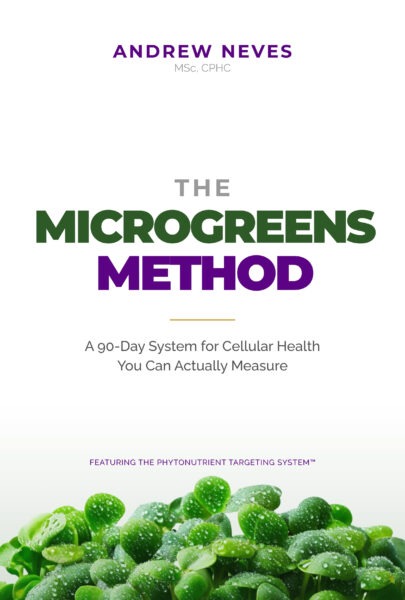
The Microgreens Method
The fuller telling of what microgreens do once they are on your plate rather than how they got there, with MSc research and CPHC training behind it. It answers what it does once you eat it.
“Andrew Neves is not only a phenomenal writer for his wealth of knowledge, but also for his exceptional literature that flows beautifully throughout.”Red Headed Book Lover, book review blog. Printed with permission.
The librarian
I built someone to sit at the desk
People call Doc Green my AI clone. He is not a clone and he is not me. He is my reading.
Every library needs somebody at the desk who has actually read the books, so I trained him on this site’s published posts and guides and on nothing else. That last part is the whole point of him. Ask what the research says about a crop and he answers out of what has been published here, then names the post it came from. Ask something the library has not covered and he tells you so in one sentence, rather than inventing a number to fill the hole.
He will not tell you a microgreen treats a condition. And when somebody brings him the forty times more nutrients line, he does what I would do. He says the most repeated numbers about microgreens usually belong to different crops entirely, and the honest answer is crop by crop.
That is why he exists. There is no shortage of confident microgreens facts online that nobody ever measured. I wanted one place where a question gets answered out of the reading, with the source attached, and where “the library hasn’t published on that yet” is an allowed answer.

Doc Green
An AI assistant trained on Microgreens World’s published work. Educational, not medical. He can be wrong, and his sources are one click away.
Three jobs
What the site is actually for
- Read the research instead of repeating whatever is already going around, and publish only what survives the reading.
- Teach what is provable, plainly, to anyone who wants to grow this, sell this, or eat better for it.
- Keep pointing at the ten rules that make any of it pay, the way Whatley pointed at them for a different crop, on a different kind of farm, forty years before this one had a name.
Three doors
Where to go from here
You came in through one of these. Here is what sits behind each one.
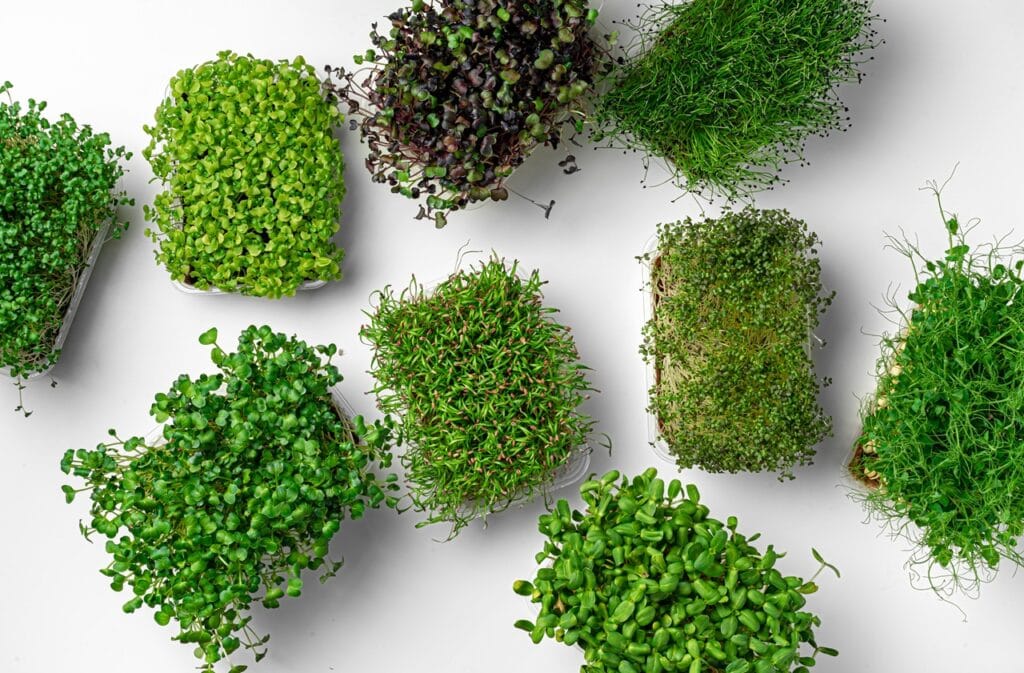
Came here to know what the evidence says about eating this?
The nutrition side runs that argument all the way through, crop by crop, citation by citation.
Nutrition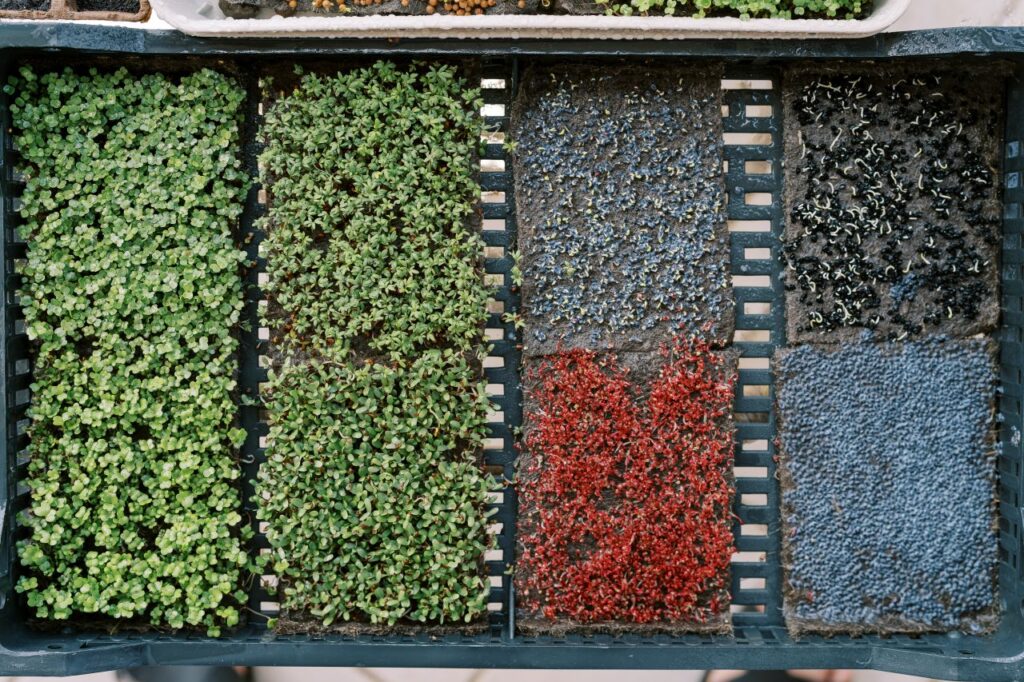
Came here to grow it yourself, this week, in a real tray with real problems?
The growing side and Children of the Soil are both built for exactly that tray.
Growing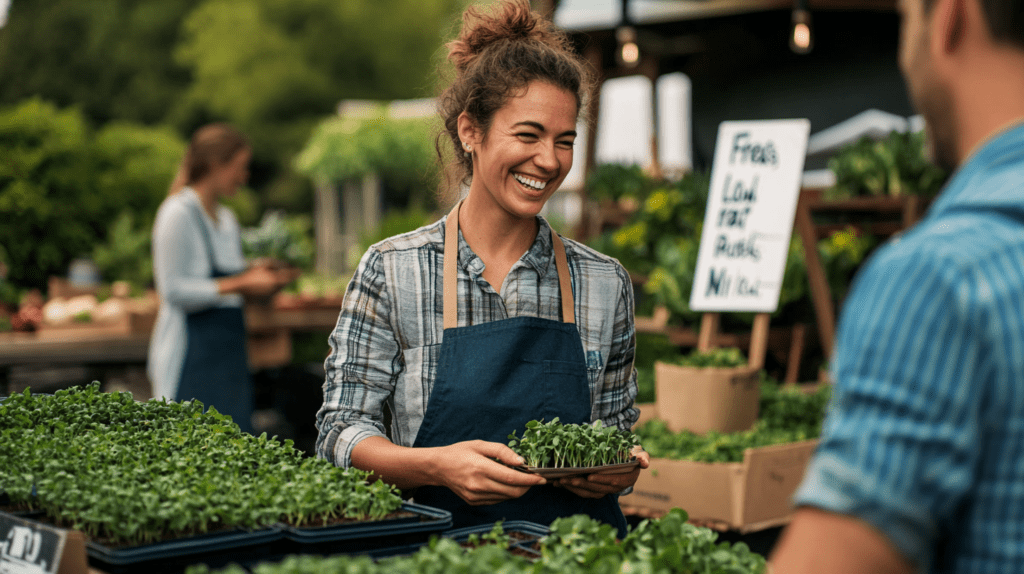
Already growing, and wondering whether any of this can pay?
The business side runs on the same ten rules this page just walked through, worked out in full.
BusinessNone of those yet? Start with the letter.
Whatley mailed his monthly, to twenty thousand people across fifty states and twenty-five countries, every copy of it on paper. Mine goes out weekly and it goes by email. Same instrument, cheaper postage.
One letter a week. Leave any time. No charge, and nothing else lands in your inbox.
Before you go
Everything on this page and this website is educational. It is not medical, legal, financial or business advice. Microgreens are food, and nothing here says a crop treats or prevents a condition. No income is promised. The one hundred thousand dollar figure, and its inflation-adjusted equivalent, are Dr. Booker T. Whatley’s own 1987 benchmark for small-acreage farming rather than a projection of what anyone will earn. Rules for selling what you grow change from state to state and country to country, so check yours before you sell anything.
