You water your microgreen tray. A small cloud of tiny black flies rises up and scatters. Sound familiar? Those are fungus gnats—and they’re one of the most common complaints from indoor growers.
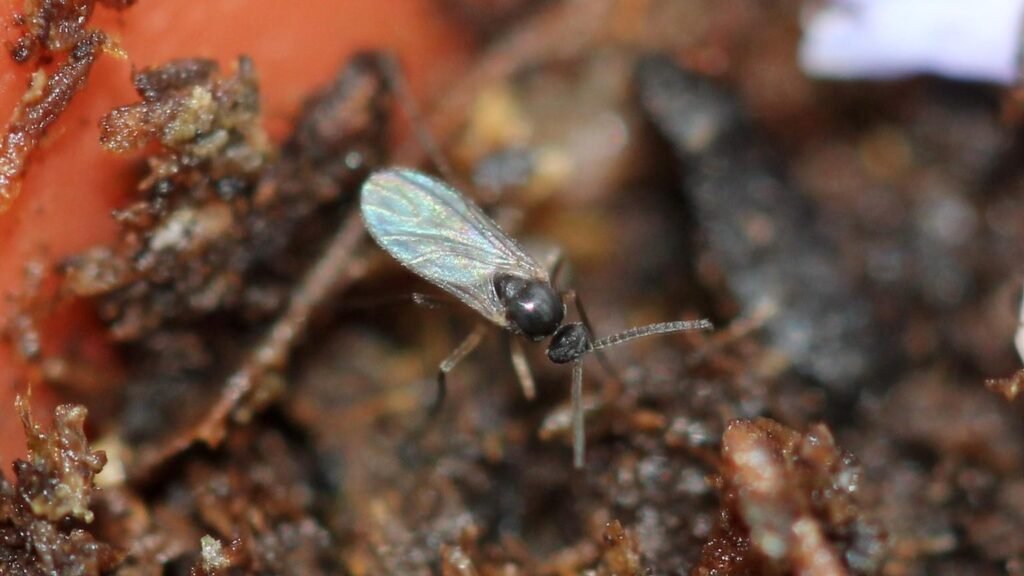
Fungus gnats (Bradysia spp.) are 2–4 mm flies whose larvae inhabit moist growing media, feeding on organic matter and seedling roots. They target microgreens like radish, sunflower, and broccoli because dense plantings, shallow trays, and frequent watering create an optimal breeding habitat.
Here’s the thing: the adult gnats flying around your grow room aren’t really the problem. They don’t bite. They don’t chew on your plants. They mostly just annoy you. The real trouble sits in your growing medium, where gnat larvae feed on organic matter and—when populations spike—start munching on tender seedling roots.
Fungus gnats belong to the family Sciaridae. The genus Bradysia causes most of the headaches in greenhouse and indoor growing operations. Research into controlling these pests in floriculture production has documented how their populations can multiply rapidly under the right conditions (Harris et al., 1995). Warm temperatures, constant moisture, organic-rich substrate. That description fits pretty much every microgreen tray ever grown.
Key Takeaways
- Adult gnats don’t damage plants—their translucent, soil-dwelling larvae chew fine roots and stem bases.
- One female lays ~200 eggs. Full lifecycle: 3–4 weeks. Populations explode within a single month.
- Warm temps, constant moisture, organic substrate, dense seeding—microgreen conditions perfectly match fungus gnat breeding requirements.
- Fast harvests mask infestations. Microgreens mature before damage shows, but gnats keep breeding between crops.
- Moisture control beats chemicals. Bottom watering, surface drying, and airflow crash populations without pesticides.
What Do Fungus Gnats Look Like?
Adults measure roughly 2–4 mm. Dark gray to black bodies. Long, spindly legs. Segmented antennae. A Y-shaped vein pattern marks their wings, though you’d need magnification to spot that detail. Most growers just see “tiny flies everywhere” and know they’ve got a problem.
The larvae look completely different. Small, translucent, worm-like. Shiny black heads. You’ll find them wriggling through the top inch or so of your substrate if you poke around. They feed on fungi, algae, and decomposing organic matter—stuff that exists in abundance in peat, coco coir, and soil-based growing mixes. When larval populations get dense, or when their preferred food runs low, they’ll also chew on fine root hairs and soft stem tissue right at the soil line.
How Fast Do They Reproduce?
Fast. Really fast.
A single female can lay around 200 eggs during her short adult life. She deposits them directly into moist growing medium. Within 4–6 days at typical indoor temperatures, those eggs hatch.
The larvae go through four growth stages over roughly two weeks. They stay near the substrate surface, eating and growing. Then they pupate. A few days after that, new adults emerge. The whole cycle—egg to adult—takes about 3–4 weeks in warm conditions.
Do the math. One female arrives in your grow room. Three weeks later, her offspring are laying eggs. Three weeks after that, you’ve got grandchildren doing the same. Populations compound quickly. What starts as a few flies becomes a swarm in a month or two.
Why Microgreens Attract Fungus Gnats
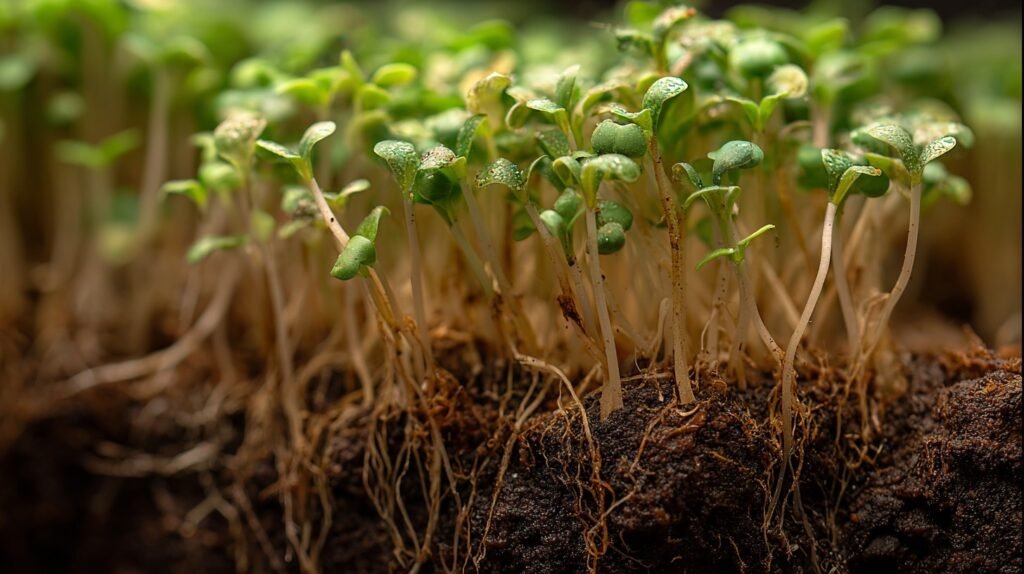
Microgreens pack serious nutritional density. Research has documented high concentrations of vitamins, carotenoids, and other beneficial compounds in these young shoots compared to their mature vegetable counterparts (Xiao et al., 2012). Growing them requires specific conditions: consistent warmth, steady moisture, and nutrient-rich media.
Unfortunately, fungus gnats love those exact same conditions.
Moisture everywhere. Seeds need dampness for germination. Seedlings need regular watering. The substrate surface rarely dries out between irrigations. Fungus gnat females always have available egg-laying sites. Larvae never face drought.
Shallow trays. Microgreen containers typically hold just an inch or two of growing medium. Water doesn’t drain and disperse the way it would in a deeper pot. Moisture concentrates right where larvae like to feed.
Dense seeding. Growers pack seeds tightly for maximum yield per tray. All those seedlings create a canopy that traps humidity at the substrate surface. Air circulation slows. Conditions at soil level stay warm and wet.
Organic substrates. Peat, coco coir, compost-based mixes—they all contain organic matter that breaks down over time. That decomposition feeds fungi and bacteria. Which feeds gnat larvae.
Indoor temperatures. Most microgreen operations run between 65–75°F. Perfect for plant growth. Also perfect for fungus gnats. Warmer temperatures speed up their lifecycle, producing more generations in less time.
Quick crop cycles. Microgreens go from seed to harvest in 7–14 days. Short cycles mean trays constantly rotate through germination and early seedling stages—the most vulnerable window for gnat damage.
How Do You Know You’ve Got a Problem?
The flying adults are the obvious giveaway. They hover near trays, cluster at windows, rise in little clouds when you water or disturb the medium. Yellow sticky cards placed near your growing area will catch adults and give you a sense of population trends.
But adult counts only show part of the picture. Larvae stay hidden underground. To check for them, gently scrape through the top layer of substrate. Look for small, translucent worms with dark heads.
Plant symptoms offer another clue. Stunted growth. Yellowing. Wilting even when moisture seems adequate. Patches where seedlings have collapsed—often with visible damage right at the base where stems meet soil.
Here’s the tricky part: mild infestations often don’t show obvious symptoms. Fast-growing microgreens mature and get harvested before larval damage becomes severe. But those gnats keep reproducing. Each crop cycle feeds another generation. Skip the monitoring, and populations quietly build until suddenly you’ve got a serious problem.
How Much Damage Can They Actually Cause?
Let’s keep this in perspective. Fungus gnats in a well-managed microgreen setup rarely wipe out entire crops. The larvae primarily eat decaying organic material and fungi. Root feeding happens, sure. But healthy seedlings in good conditions can often tolerate moderate larval populations without obvious stress.
The real concerns:
Reduced root function. Even sublethal damage weakens plants. Seedlings may grow more slowly. Vigor drops.
Pathogen entry. Feeding wounds give soilborne disease organisms a way into plant tissue. Root rot and damping-off fungi sometimes follow gnat damage.
Product quality. Nobody wants larvae or pupae showing up in harvested microgreens. Visible insects create obvious problems even if plants look otherwise healthy.
Compounding populations. What’s tolerable in a few hobby trays becomes unmanageable at a commercial scale. Large operations cycling many trays can develop persistent gnat populations requiring constant attention.
Keeping Populations Under Control
Fungus gnats need moisture, warmth, and organic matter to reproduce. Reduce any of those factors and populations struggle to build.
Manage moisture carefully. This matters most. Let substrate surfaces dry slightly between waterings when possible. Bottom watering keeps top layers drier than overhead irrigation. Good drainage prevents waterlogged conditions. Some growers use trays with holes and water from below, letting capillary action pull moisture up to the roots while the surface stays relatively dry.
Move some air. A gentle fan dries surfaces faster and disrupts the still, humid microclimate gnats prefer. Nothing aggressive—just enough airflow to keep things from staying constantly damp. Position fans to move air across tray surfaces without blasting seedlings directly.
Stay clean. Spent growing medium sitting around becomes a breeding site. Old trays with decomposing roots serve as food for larvae. Remove finished trays promptly. Wash and sanitize containers between uses. Bleach solutions or hydrogen peroxide work well for tray sanitation.
Monitor consistently. Yellow sticky cards catch adults before populations explode. Check the cards regularly. Rising numbers mean it’s time to act. Place cards at canopy height near your trays—that’s where adults tend to fly.
Consider biological controls. Entomopathogenic nematodes—microscopic worms that parasitize gnat larvae in the soil—have demonstrated effectiveness against Bradysia species in controlled research settings (Harris et al., 1995). Applied as a drench, they attack larvae directly in the growing medium. Beneficial nematodes work best when applied to a moist substrate at appropriate temperatures, typically above 60°F.
You don’t need zero gnats. A few adults flying around won’t destroy your harvest. The goal is to keep populations low enough that larval feeding stays minimal and doesn’t snowball across multiple crop cycles. Consistent attention to moisture and sanitation usually keeps things manageable without dramatic interventions.
Frequently Asked Questions
What is the fastest way to get rid of fungus gnats?
Drying out substrate surfaces. Fungus gnat eggs and larvae can’t survive without constant moisture. Populations crash quickly once the top inch of growing medium dries between waterings.
What bugs are on my microgreens?
Most likely fungus gnats (Bradysia spp.)—tiny black flies, 2–4 mm, with long legs and segmented antennae. Their translucent larvae with black heads live in the top inch of substrate.
Do fungus gnats actually harm plants?
Adults don’t. Larvae do. They feed on the fine roots and stem bases of seedlings such as radish and sunflower microgreens, weakening plants and creating entry points for root-rot pathogens.
Will coffee grounds keep fungus gnats away?
No. Coffee grounds are organic matter—exactly what gnat larvae eat. Adding grounds to microgreen trays increases food supply for larvae and can worsen infestations.
References
Harris, M. A., Oetting, R. D., & Gardner, W. A. (1995). Use of entomopathogenic nematodes and a new monitoring technique for control of fungus gnats, Bradysia coprophila (Diptera: Sciaridae), in floriculture. Biological Control, 5(4), 412–418. https://doi.org/10.1006/bcon.1995.1047
Xiao, Z., Lester, G. E., Luo, Y., & Wang, Q. (2012). Assessment of vitamin and carotenoid concentrations of emerging food products: Edible microgreens. Journal of Agricultural and Food Chemistry, 60(31), 7644–7651. https://doi.org/10.1021/jf300459b